 listicle
Best Hardwood Flooring Installation Warranty
Table of Contents
- What Hardwood Flooring Installation Warranty Covers
- Understanding Hardwood Flooring Workmanship Warranty
- Hardwood Floor Labor Warranty: Duration and Terms
- Common Hardwood Floor Warranty Exclusions
- How to File a Hardwood Flooring Warranty Claim
- Evaluating a Contractor's Installation Warranty Before Hiring
- Warranty Protection vs. Maintenance Responsibility
- Frequently Asked Questions
Last Updated: October 8, 2026
What Hardwood Flooring Installation Warranty Covers
A hardwood flooring installation warranty guarantees workmanship and materials related to hardwood floor installation, protecting you against problems from improper installation such as gaps, squeaks, uneven surfaces, or adhesive failures. At Freddie Sanchez Hardwood Floors, we stand behind our installation work.
Installation warranties cover labor defects, the work performed by the contractor. This is distinct from a manufacturer's product warranty, which covers the flooring material itself.
Coverage usually includes problems like:
- Squeaks caused by improper fastening
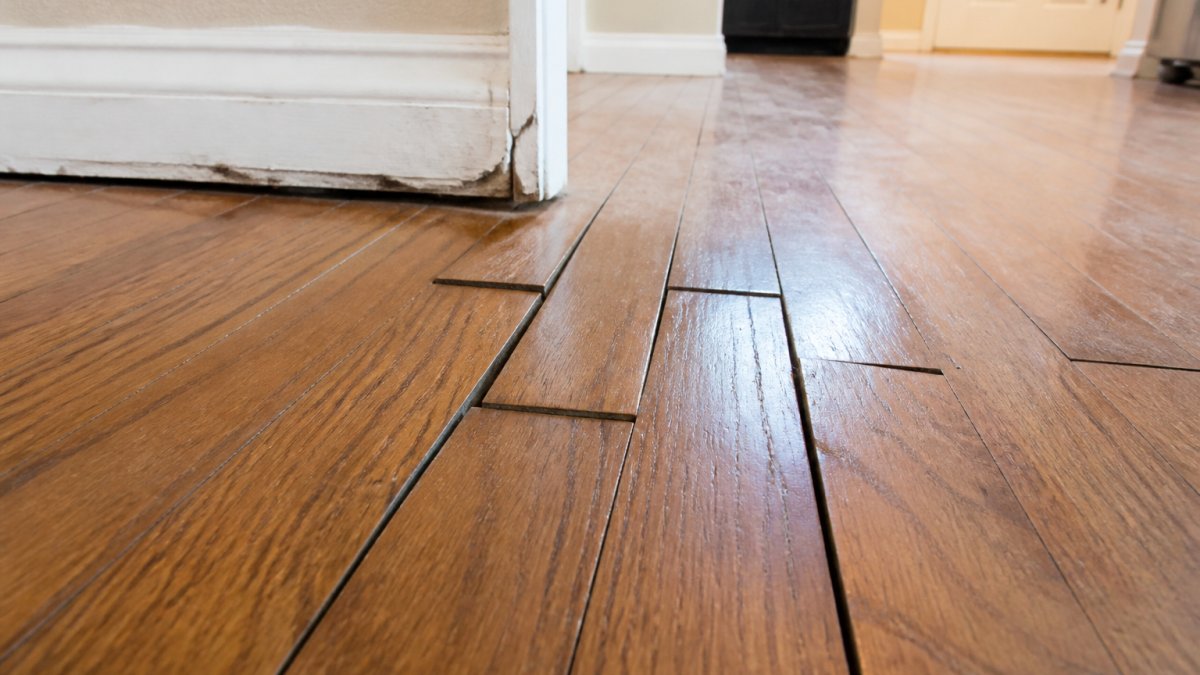
- Gaps between planks from incorrect acclimation or installation technique
- Buckling or cupping from moisture mismanagement during installation
- Loose or separated boards
- Uneven surfaces or high spots
Scope depends on the terms: some cover only defects visible immediately after installation, others extend for months or years. Understanding what's included and excluded before you sign is critical.
Understanding Hardwood Flooring Workmanship Warranty
Your hardwood flooring workmanship warranty is the installer's promise that the installation will be performed correctly and remain sound for a specified period, your protection against poor craftsmanship.
A strong workmanship warranty should specify:
- The exact duration (e.g., 5 years, lifetime)
- What defects trigger coverage
- Whether the contractor will repair or replace failing sections
- The process for filing a claim
- Any conditions that void the warranty (like improper maintenance)
Ask contractors directly: "What does your installation warranty cover, and for how long?" A vague answer is a red flag.
Some contractors bundle their workmanship warranty with the manufacturer's product warranty, which can be confusing.
Hardwood Floor Labor Warranty: Duration and Terms
The hardwood floor labor warranty pays for the installer's time, not the flooring material. That distinction matters because labor is often the larger share of a repair bill once you account for tear-out, disposal, subfloor prep, and re-finishing. Two warranties can both say "five years" and deliver wildly different value.
How to Read a Labor Warranty Like a Comparison Shopper
Instead of comparing headline durations, compare these five variables in writing before you sign.
| Variable | What to Look For | Why It Changes the Value |
|---|---|---|
| Duration | Start date and end date stated explicitly | A "5-year" warranty that starts at delivery, not installation, can lose weeks |
| Covered failures | Named defects: squeaks, gaps, cupping, buckling, adhesive release, fastener pop | Vague language like "defective workmanship" is hard to enforce |
| Remedy | Repair, replace affected boards, or full re-install | Repair-only terms can leave a mismatched patch in a visible area |
| Labor vs. material split | Who pays for tear-out, disposal, and re-finish | Some warranties cover labor but not the replacement boards, or vice versa |
| Transferability | Whether a new owner can file claims | Affects resale value and how long the warranty actually protects anyone |
Typical Duration Bands and What They Signal
- 30 days to 1 year. Common for handyman-style operations and small repair jobs. Usually covers only defects visible at the walkthrough.
- 2 to 5 years. The most common range among established residential installers, covering failure modes that show up in the first few years: fastener pop, board separation, and adhesive release in glue-down applications.
- 10 years or longer. Less common. Read exclusions carefully; long terms are sometimes paired with strict maintenance and humidity requirements that void coverage.
- Lifetime. Rare in residential hardwood. Usually means the lifetime of the original purchaser or the floor under specific conditions, not an unlimited obligation.
Prorating, Transferability, and the Fine Print That Changes the Math
A warranty can look generous on the cover page and shrink in practice. Watch for:
- Prorating. Some warranties pay 100% in year one and step down over time, so a year-four claim might cover only a fraction of labor. Ask for the schedule in writing.
- Transferability. Many are transferable only to the first subsequent owner, within a set window, and with a written request and fee.
- Response-time commitments. A warranty with no stated response window can leave you waiting indefinitely. Look for language like "inspect within 14 days of written notice."
- Repair vs. replace. A patch may be reasonable for a closet but not the middle of a living room. Ask how they handle visible-area repairs.
What "Best" Actually Means for a Labor Warranty
The best hardwood flooring installation warranty is not the longest one. It names the defects it covers, states a remedy you can live with, commits to a response window, and is delivered in writing before work begins. A three-year warranty with clear terms usually beats a ten-year warranty full of escape hatches.
Ask each contractor for their written warranty language, not a verbal summary. The written version governs a dispute.
Common Hardwood Floor Warranty Exclusions
Understanding what's excluded from your hardwood flooring installation warranty matters as much as knowing what's covered. Exclusions are where disputes happen.
Most warranties exclude damage caused by:
- Moisture and humidity problems (unless the installer failed to follow acclimation guidelines)
- Improper maintenance or cleaning
- Damage from water spills, flooding, or plumbing leaks
- Normal wear and tear
- Damage from furniture legs, pet claws, or dropped objects
A common exclusion involves moisture. If your subfloor has existing moisture problems or your HVAC fails to maintain proper humidity, the flooring may cup or buckle, but this often falls outside coverage.
Read the exclusions carefully. If a warranty excludes common problems like squeaks, minor gaps, or separation, it offers limited real protection. At Freddie Sanchez Hardwood Floors, we aim for clear, straightforward coverage.
How to File a Hardwood Flooring Warranty Claim
Filing a hardwood flooring warranty claim should be straightforward, but the process varies by contractor. Knowing the steps helps you act quickly if problems arise.
Most contractors require:
- Notification within a specific timeframe. Many warranties have a deadline, often 30 to 90 days after installation, to report defects. If you notice squeaks, gaps, or unevenness, contact your installer immediately.
- Proof of the problem. Take clear photos or videos showing the defect, and document where it is and when you first noticed it.
- Proof of purchase. Keep your contract, receipt, and warranty documentation; manufacturers may require proof of professional installation.
- Evidence of proper maintenance. Be ready to show you've followed care instructions; improper cleaning or neglect can void coverage.
- Written claim submission. Some contractors require a formal written claim, while others accept email or phone calls. Ask your installer for their preferred process.
Once you file a claim, the contractor should inspect within a reasonable timeframe, typically 7 to 14 days.
Evaluating a Contractor's Installation Warranty Before Hiring
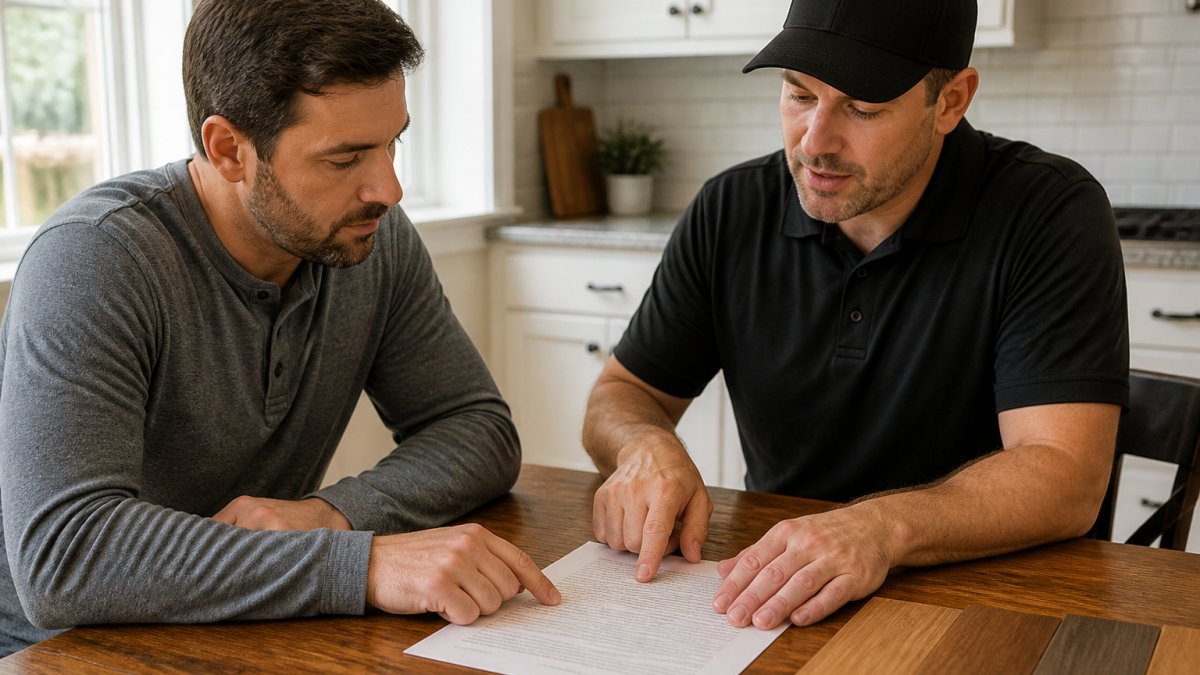
Don't wait until a problem emerges. Evaluate the contractor's installation warranty before you sign. The goal is to walk away from the estimate with a written document you can enforce, not a verbal promise.
The Pre-Hire Warranty Checklist
Use this checklist during every estimate. A contractor who cannot answer these in writing is a risk, however good their portfolio looks.
- Written warranty document provided before signing. Not a paragraph in the estimate, but a standalone warranty page you can keep.
- Exact start and end dates. Confirm whether the clock starts at completion, at final payment, or at delivery of materials.
- Named covered defects. Look for specific language: squeaks, gaps, cupping, buckling, board separation, adhesive failure, fastener pop.
- Named exclusions. Moisture events, HVAC failure, pet damage, and improper cleaning are common. Know them before you sign.
- Remedy defined. Repair, replace affected boards, or full re-install. Ask how they handle a visible-area repair versus a hidden one.
Red-Flag Language to Watch For
Certain phrases signal a warranty that will be hard to enforce:
- "Defective workmanship" with no examples. Too vague to hold anyone to.
- "At our sole discretion." Gives the installer full control over whether a claim is covered.
- "Normal wear and tear" used broadly. Can be stretched to cover almost anything.
- No response-time commitment. A warranty without a clock is a promise without a deadline.
- Verbal-only terms. If it is not in writing, assume it does not exist.
How to Compare Two Contractors Side by Side
Once you have written warranties in hand, score them against the same criteria:
- Duration. Write down the exact number of months or years.
- Coverage breadth. Count how many named defects appear.
- Exclusion count. More exclusions is not automatically worse, but unexplained exclusions are.
- Remedy strength. Full re-install beats patch repair for visible areas.
- Response commitment. A stated inspection window beats silence.
- Transferability. A transferable warranty adds resale value.
A contractor who scores well on all six signals confidence in their work. One who scores well on duration but poorly on remedy and response is offering a headline, not protection.
Verify the Track Record, Not Just the Paper
A warranty is only as good as the business standing behind it. Before you hire:
- Ask for two or three references from jobs completed at least two years ago. Older jobs reveal how the floor held up after a full heating and cooling cycle.
- Ask those references whether they ever filed a claim and how the contractor responded.
- Confirm the contractor is licensed and insured where required. An unlicensed installer may not be around to honor a warranty.
- Check for a physical address and local history. A warranty from a company that relocates or closes is worth little.
The Bottom Line on Pre-Hire Evaluation
The best hardwood flooring installation warranty is the one you understand before the first board goes down. Read the document, ask the checklist questions, compare contractors on the same criteria, and verify the track record. Then you'll know exactly what you're buying, not just how many years the cover page promises.
Warranty Protection vs. Maintenance Responsibility
Your warranty covers installation defects, but your maintenance responsibilities determine whether coverage applies.
The installer's warranty covers their work: improper installation, faulty fastening, adhesive failure, and similar issues.
Most warranties require you to:
- Keep indoor humidity between 30% and 50%
- Maintain consistent room temperature (typically 60-80°F)
- Clean the floor only with products recommended by the manufacturer
- Use area rugs in high-traffic zones
- Place felt pads under furniture legs
Keep documentation of your maintenance: receipts for cleaning products, thermostat settings, and photos of the floor's condition over time.
At Freddie Sanchez Hardwood Floors, we communicate maintenance expectations upfront, so you know exactly what keeps the warranty valid.
| Warranty Type | Duration | Coverage Focus | Best For |
|---|---|---|---|
| Short-term (30 days-1 year) | Limited | Obvious defects only | Budget-conscious homeowners, simple installations |
| Mid-range (2-5 years) | Moderate | Most installation defects | Most residential projects, quality contractors |
| Extended (10+ years) | Long | Comprehensive labor coverage | Premium installations, high-value homes |
| Lifetime | Indefinite | Ongoing labor protection | Long-term homeowners, high-confidence contractors |
Frequently Asked Questions
What should a hardwood flooring installation warranty cover?
A solid hardwood flooring installation warranty should cover labor defects, improper subfloor preparation, and installation mistakes that cause visible damage or failure. Coverage typically includes gaps, cupping, buckling, or separation caused by installer error. Most warranties do not cover damage from moisture, humidity fluctuations, or owner negligence. Always request a written warranty that specifies what the contractor guarantees for materials, labor, and workmanship quality.
How long should a hardwood floor installation warranty last?
Installation warranties typically range from one to five years, though some contractors offer longer terms. A five-year hardwood floor labor warranty is considered strong for residential projects. Manufacturer product warranties may extend to 25 or 50 years for the flooring material itself, but installation labor is usually covered separately and for shorter periods. Always confirm the warranty period in writing before work begins.
What can void a hardwood flooring installation warranty?
Common exclusions that void warranty coverage include moisture damage from basement flooding or high humidity, improper maintenance or cleaning, failure to acclimate the home to consistent temperature, damage from HVAC system failure, and wear and tear from normal use. Damage caused by moving heavy furniture or failing to follow care guidelines also typically voids coverage. Review the warranty document carefully to understand all exclusions.
How do I make a claim under a hardwood floor warranty?
To file a hardwood flooring warranty claim, contact your installer or contractor in writing with photos and details of the damage. Provide proof of purchase and documentation showing the work was completed within the warranty period. The contractor will typically inspect the damage and determine if it qualifies for repair or replacement. Keep records of all communication and maintain proper maintenance to strengthen your claim eligibility.