 how-to
Choosing Durable Wood for High Traffic: A 2026 Guide
Table of Contents
- Why Wood Species Matter for High-Traffic Spaces
- Understanding Hardwood Floor Hardness Rating and Durability
- Best Wood Species for High-Traffic Areas
- Engineered Hardwood vs Solid Hardwood Durability
- Best Finish for Hardwood Floors in Busy Households
- How to Protect Hardwood Floors in High-Traffic Areas
- Selecting the Right Wood for Your Home
- Frequently Asked Questions
Last Updated: October 11, 2026
Why Wood Species Matter for High-Traffic Spaces
Choosing durable wood for high traffic is one of the most important decisions you'll make when installing or refinishing hardwood floors.
Not all hardwood species are created equal. Some woods are naturally harder and more resilient than others. This difference comes down to the wood's cellular structure and density. Denser woods resist impact better and hold up to constant foot traffic far better than softer species.
We work with homeowners and commercial property managers who need flooring that performs under pressure. The species question comes up constantly, especially for busy households with kids, pets, or high-traffic hallways.
The stakes are real. A soft wood in a high-traffic area will show wear quickly. Dents appear within months. Scratches multiply. Your floor ages faster than it should. The right species choice, paired with proper finishing and maintenance, can keep your floors looking sharp for decades.
Understanding Hardwood Floor Hardness Rating and Durability
Janka Hardness Scale Explained
The Janka Hardness Scale measures how resistant a wood species is to denting and wear. The scale ranges from 0 to over 4,000, with higher numbers indicating harder, more durable wood. The test involves dropping a steel ball onto the wood surface and measuring how deep it penetrates.
Why does this matter for your home? A higher Janka rating means your floors can handle more abuse. Heavy furniture, dropped objects, pet claws, and constant foot traffic all leave marks on softer woods. Harder woods shrug off this daily punishment.
For high-traffic areas, aim for wood species with a Janka rating above 1,000. This threshold separates woods that perform well in busy spaces from those better suited to bedrooms or offices with lighter use.
Species Comparison: Hickory, Oak, and Maple
Three species dominate the conversation when choosing durable wood for high traffic: hickory, oak, and maple. Each has distinct hardness ratings and performance characteristics.
Hickory ranks as one of the hardest domestic hardwoods, with Janka ratings typically between 1,820 and 2,200. This extreme hardness makes it nearly bulletproof against dents and scratches.
White Oak offers a Janka rating around 1,360, while Red Oak sits lower at approximately 1,290. Both perform well in high-traffic areas, though they're softer than hickory.
Maple typically rates between 1,450 and 1,630 on the Janka scale. Hard maple provides excellent durability for busy households while offering a lighter, more refined appearance than oak or hickory.
| Wood Species | Janka Hardness | Best For | Maintenance Level |
|---|---|---|---|
| Hickory | 1,820-2,200 | Maximum durability, active households | Moderate |
| White Oak | 1,360 | High-traffic areas, traditional style | Moderate |
| Red Oak | 1,290 | High-traffic areas, warm tones | Moderate |
| Maple | 1,450-1,630 | Durability with light appearance | Moderate to High |
Best Wood Species for High-Traffic Areas
Hickory: The Hardest Choice
Hickory is the heavyweight champion of hardwood flooring. Its extreme hardness makes it the top choice for homes where durability is non-negotiable. If your household includes multiple children, active pets, or heavy furniture traffic, hickory delivers the performance you need.
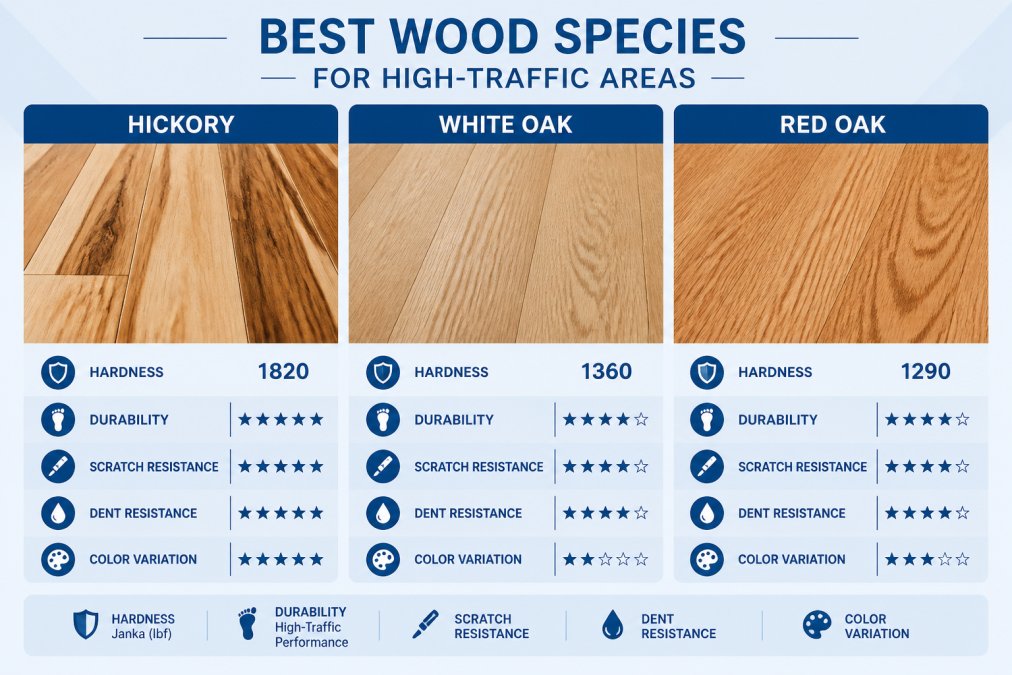
The downside? Hickory's grain is highly variable, with dramatic color shifts and mineral streaks throughout each plank. This creates a rustic, busy appearance that doesn't suit every design aesthetic. Some homeowners love the character; others find it too bold.
Hickory also demands respect during installation and finishing. Its density makes it harder to sand and refinish compared to softer species. Working with experienced professionals ensures the job is done right the first time.
Oak Options: Red Oak and White Oak
White Oak offers a balanced combination of hardness and beauty. Its Janka rating of 1,360 provides solid durability for high-traffic spaces. The grain is more uniform than hickory, with subtle color variation that works with traditional and contemporary design schemes.
White Oak also resists moisture better than Red Oak, making it a smarter choice if your home has basement moisture issues or you live in a humid climate. This moisture resistance reduces the risk of cupping or warping over time.
Red Oak is the warmer, more affordable option. Its reddish-brown tones and grain pattern appeal to many homeowners. The Janka rating of 1,290 still qualifies as suitable for high-traffic areas, though it's more vulnerable to denting than White Oak.
Red Oak works well in living rooms, hallways, and other busy spaces where you want warmth and character. It's less ideal for kitchens or entryways where moisture exposure is higher.
Maple as a Durable Alternative
Hard Maple ranks as one of the hardest domestic hardwoods, with Janka ratings between 1,450 and 1,630. It delivers durability comparable to White Oak while offering a distinctly different aesthetic.
Maple's grain is fine and uniform, creating a smooth, refined appearance. The natural color ranges from pale cream to light tan. This lighter palette works beautifully in contemporary homes and brightens smaller spaces.
The trade-off? Maple shows dirt and dust more visibly than darker woods. It also requires more frequent refinishing over its lifetime because its light color makes wear patterns obvious. For homeowners willing to invest in regular maintenance, maple rewards you with elegance and durability.
Maple also takes stain exceptionally well. If you want to customize the color without sacrificing hardness, maple is your best choice among the high-performance species.
Engineered Hardwood vs Solid Hardwood Durability
Engineered hardwood consists of a veneer of real hardwood bonded to a plywood or high-density fiberboard base. Solid hardwood is 100% wood throughout.
For high-traffic areas, this distinction matters. Engineered hardwood's layered construction makes it more stable in environments with moisture or temperature fluctuations. The plywood base resists cupping and warping better than solid wood in basements or kitchens.
However, solid hardwood is harder and more durable for pure wear resistance. Once the veneer on engineered wood wears through, you can't refinish it indefinitely like you can solid wood.
For busy households in stable climates, solid hardwood in hickory, white oak, or maple offers superior longevity. For homes with moisture concerns or dramatic seasonal changes, engineered hardwood with a quality hardwood veneer provides the best balance of durability and stability.
Best Finish for Hardwood Floors in Busy Households
Sheen Levels and Surface Texture
The finish you choose affects both appearance and performance in high-traffic areas. Sheen levels range from flat (matte) to gloss (shiny).
Matte finishes hide footprints and dust better than glossy finishes. They create a natural, understated look. However, matte finishes show scratches more prominently and require more frequent recoating.
Satin finishes offer a middle ground. They provide subtle sheen without the slipperiness of gloss finishes. Satin works well in hallways and living rooms where you want durability without a plastic appearance.
Gloss finishes create maximum shine and protection. They're easier to clean but show every footprint and dust particle. Gloss also creates slip hazards in high-traffic areas, especially on stairs.
For high-traffic spaces, satin finish delivers the best balance of protection, appearance, and practicality.
Polyurethane vs Water-Based Finishes
Polyurethane finishes (oil-based or water-based) are the industry standard. They create a hard protective layer that resists scratches and dents better than natural finishes.
Oil-based polyurethane offers superior durability and amber warmth. It penetrates deeper into the wood and builds a thicker protective coat. The downside: longer drying times and stronger fumes during application.
Water-based polyurethane dries faster and produces minimal odor. It maintains the wood's natural color without adding amber tones. However, it doesn't penetrate as deeply and may require more frequent recoating in heavily trafficked areas.
For maximum durability in high-traffic spaces, oil-based polyurethane is the stronger choice. For homes sensitive to fumes or those prioritizing natural wood color, water-based polyurethane works well with more frequent maintenance.
How to Protect Hardwood Floors in High-Traffic Areas
Maintenance and Long-Term Care
Daily maintenance prevents damage before it starts. Sweep or vacuum high-traffic areas at least twice weekly to remove grit and debris. Grit acts like sandpaper, abrading the finish with every footstep.
Damp mop with a microfiber cloth and hardwood-specific cleaner monthly. Never use excessive water, hardwood and moisture are enemies. Wring out your mop thoroughly before applying to the floor.
Place area rugs in entryways, hallways, and under furniture. Rugs protect the finish from constant foot traffic and reduce wear patterns. Use rug pads underneath to prevent slipping and moisture buildup.
Felt pads on furniture legs protect against scratches and dents. Replace worn pads regularly. Avoid dragging heavy furniture across the floor; lift and carry instead.
Moisture, Climate, and Installation Conditions
Moisture is hardwood's silent killer. Humidity levels should stay between 35% and 55% year-round. Use a humidifier in winter when heating dries indoor air. Use a dehumidifier in summer or in naturally humid climates.
Proper installation matters enormously. Hardwood must acclimate to your home's humidity level before installation. Rushing this process leads to cupping, gaps, or buckling months after installation.
Subfloor preparation is critical. The subfloor must be clean, dry, and level. Moisture barriers prevent ground moisture from wicking up into the wood. Freddie Sanchez Hardwood Floors handles these installation fundamentals with precision to ensure your floors stay stable for decades.
Climate considerations influence your species choice. In humid climates, white oak or engineered hardwood outperform red oak or soft species. In dry climates, most species perform well, but maintaining adequate humidity prevents gaps and shrinkage.
Selecting the Right Wood for Your Home
Start by honestly assessing your household's traffic patterns. Entryways and hallways bear the most wear. Bedrooms and formal dining rooms see lighter use. Match the wood species to the space's demands.
Consider your design goals. Hickory brings rustic character. White Oak offers timeless elegance. Maple provides contemporary refinement. Red Oak delivers warmth at a lower price point.
Think about maintenance commitment. Hickory and oak require moderate maintenance. Maple demands more frequent care to maintain its light appearance. Be realistic about your willingness to refinish or recoat periodically.
Budget matters, but don't prioritize price over performance. Spending more upfront on a harder species saves money on repairs and refinishing later.
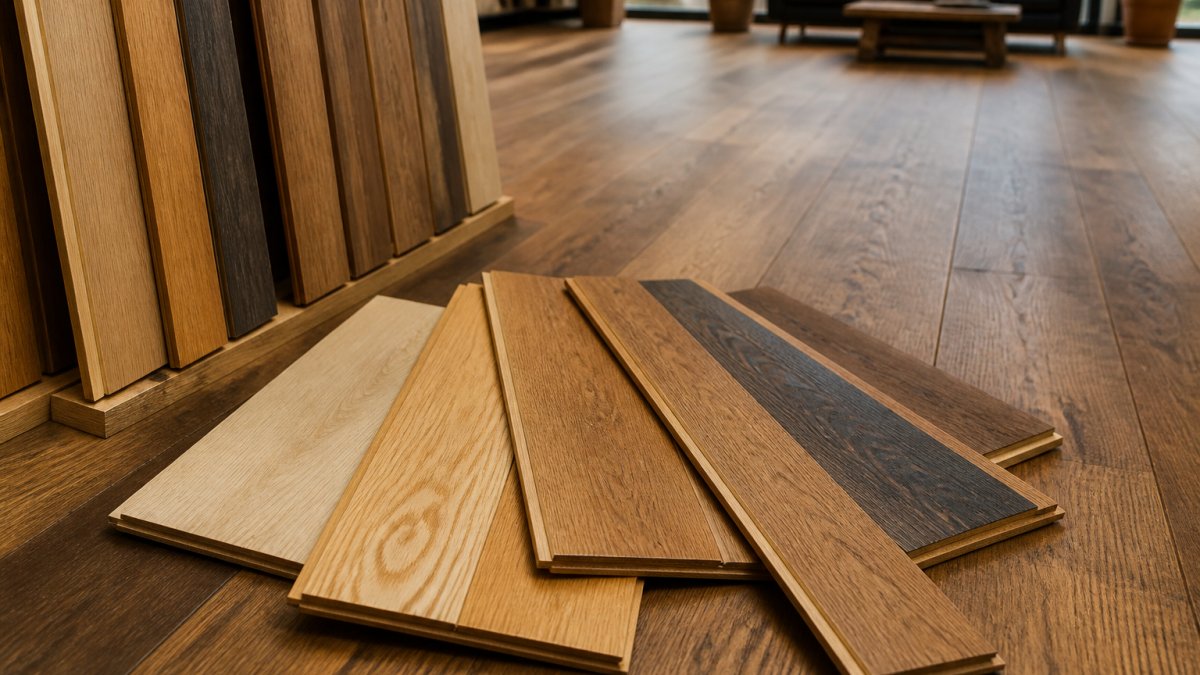
Get samples. Place potential wood species in your home under your actual lighting and furniture. Live with the samples for a few days.
Choosing durable wood for high traffic is an investment in your home's long-term performance. The right species, combined with quality finishing and consistent maintenance, keeps your floors beautiful and functional for decades.
Frequently Asked Questions
Which wood flooring is best for high-traffic areas?
Hickory ranks highest for durability in high-traffic spaces, with a Janka hardness rating of 1820. White oak (1360) and maple (1450) also perform well. Choose based on your household's traffic patterns: hickory for active families, oak for moderate to heavy use, and maple for those balancing durability with lighter aesthetics. Finish quality matters equally, a premium polyurethane protects any species better than a thin coat.
What is the hardwood floor hardness rating and why does it matter?
The Janka hardness rating measures wood's resistance to denting and wear on a scale of 0-4000. Higher ratings resist everyday damage better. For high-traffic hallways and living rooms, choose species rated 1200 or above. Hickory (1820) withstands heavy foot traffic, while softer species like pine (540) show dents quickly. This rating predicts real-world performance in busy households.
Is engineered hardwood more durable than solid hardwood for high traffic?
Engineered hardwood and solid hardwood offer different advantages. Solid hardwood is harder overall and can be refinished multiple times, making it ideal for permanent high-traffic zones. Engineered hardwood resists moisture and temperature swings better, preventing cupping and gaps, critical in basements or kitchens near water sources. For pure durability in dry, high-traffic areas, solid hardwood with a hard species like hickory wins. For challenging environments, engineered construction provides stability.
How often should high-traffic hardwood floors be refinished?
High-traffic solid hardwood floors typically need refinishing every 7-10 years, depending on finish quality and foot traffic intensity. Engineered hardwood cannot be refinished as deeply, so it lasts longer between touch-ups but has a shorter overall lifespan. A premium polyurethane finish extends intervals by 2-3 years. Regular maintenance, sweeping, damp mopping, and protective pads under furniture, delays refinishing and preserves your floor's appearance and structure.