 blog
Hardwood Floor Installation Cost 2026: What to Expect
Table of Contents
- What Drives Hardwood Floor Installation Cost in 2026
- Hardwood Flooring Labor Cost Per Square Foot
- Solid vs. Engineered Hardwood: How Material Choice Affects Price
- Pre-Finished vs. Site-Finished Hardwood Cost
- Hardwood Floor Installation Timeline: What Adds Time and Cost
- Hidden Costs Homeowners Miss: Subfloor, Moisture, and Removal
- DIY vs. Professional Installation: Where the Real Value Sits
- Frequently Asked Questions
Last Updated: September 27, 2026
What Drives Hardwood Floor Installation Cost in 2026
Hardwood floor installation cost 2026 depends on four main variables: square footage, wood species, installation method, and your home's current site conditions. Understanding how these factors interact gives you real negotiating power before a single plank is laid.
At Freddie Sanchez Hardwood Floors, we walk every customer through these cost drivers before work begins, because surprises on the final invoice erode trust faster than anything else in this trade.
Here's the core tension in 2026: material prices have stabilized somewhat, but labor rates keep climbing as skilled installers become harder to find. That means the gap between a cheap quote and a realistic one has widened, and the cheapest bid is usually the one that cuts corners on subfloor prep or acclimation.
The sections below break down each cost layer so you can budget with confidence instead of guesswork.
Hardwood Flooring Labor Cost Per Square Foot
Hardwood flooring labor cost per square foot is the single largest line item in most estimates, and it varies widely based on installation complexity, room layout, and regional labor rates. Most homeowners find that labor accounts for roughly half of the total project cost, though this shifts depending on the wood you choose.
What most guides miss is that labor isn't one flat rate. It's a bundle of separate tasks, each with its own time requirement:
- Subfloor preparation (leveling, repair, moisture checks)
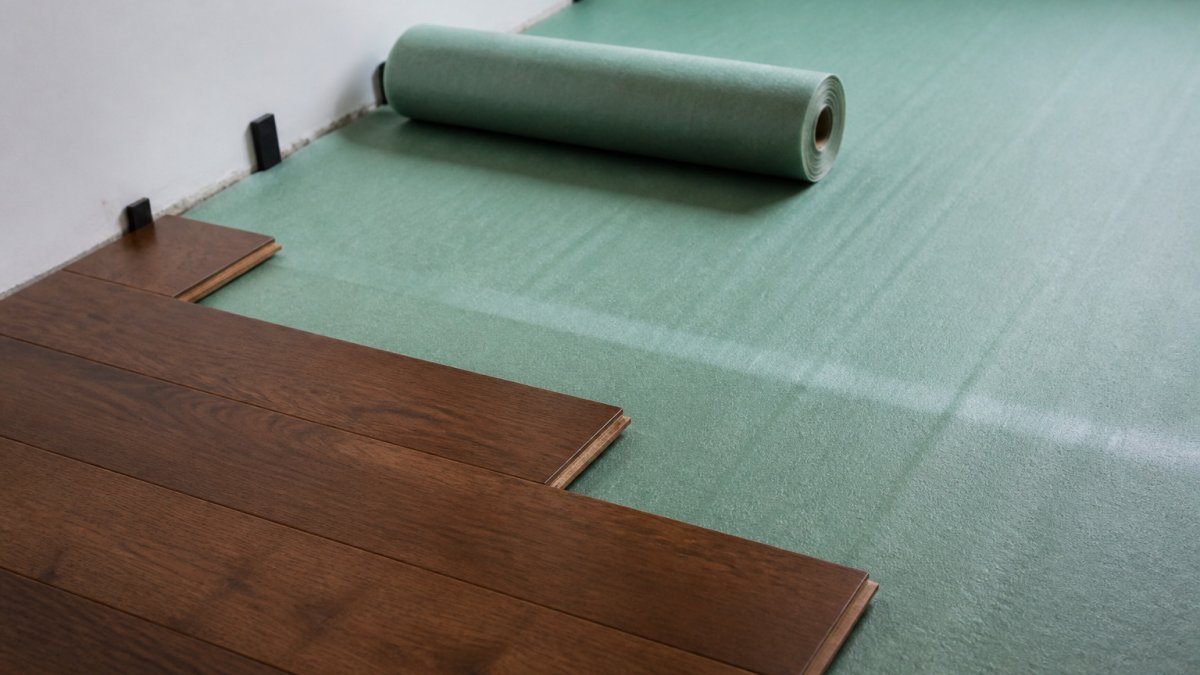
- Acclimation waiting period (materials rest in your home before installation)
- Baseboard removal and reinstallation
- Cutting and fitting around doorways, vents, and corners
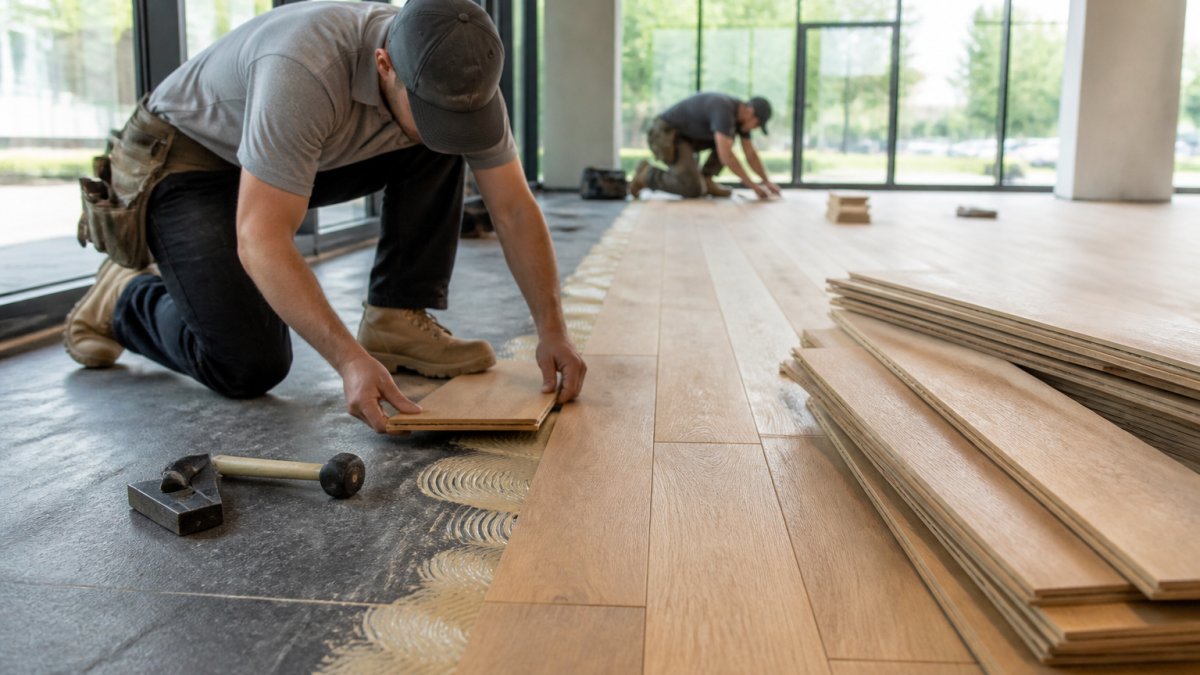
- Nailing or gluing each plank
- Finishing, sanding, and sealing (for site-finished floors)
A simple rectangular room with clean, level subfloors takes far less labor than an older home with uneven joists and multiple doorways. That's why two houses of identical square footage can receive wildly different quotes.
Solid vs. Engineered Hardwood: How Material Choice Affects Price
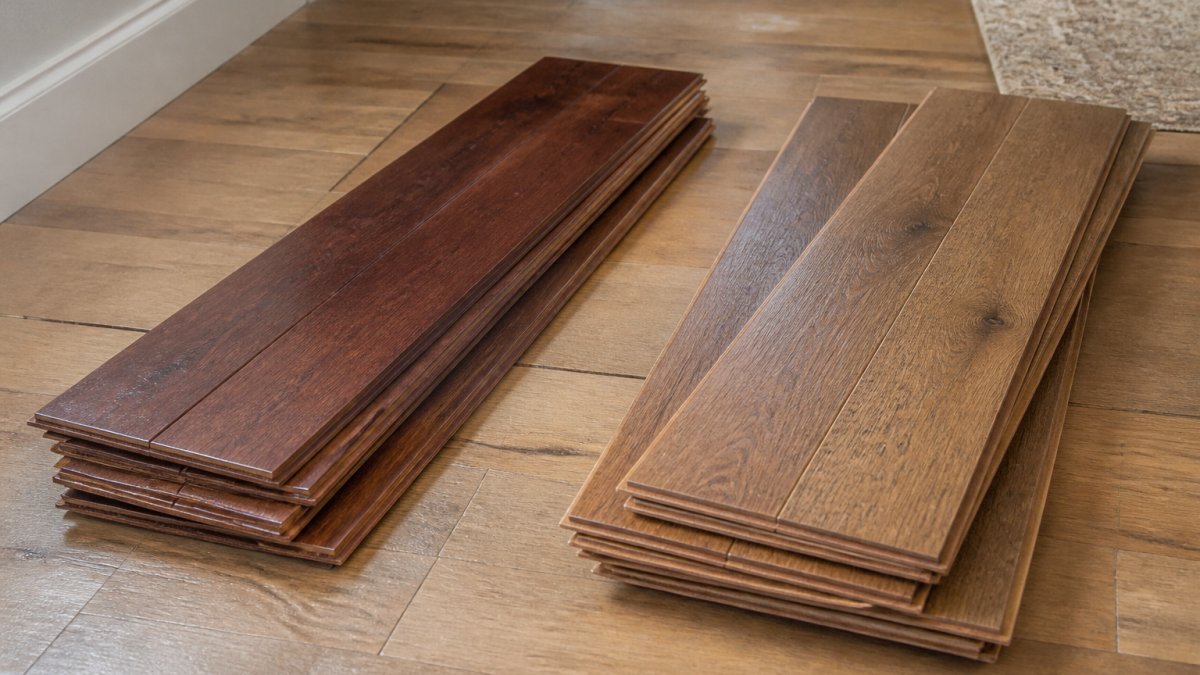
Solid hardwood and engineered wood differ in construction, and that difference shows up directly in your material costs. Solid planks are milled from a single piece of wood. Engineered planks use a real wood top layer bonded to a plywood core.
Both are legitimate hardwood floors. The choice affects price, stability, and where the floor can be installed.
| Factor | Solid Hardwood | Engineered Wood |
|---|---|---|
| Construction | Single wood piece | Real wood top layer on plywood core |
| Moisture stability | Lower | Higher |
| Best for | Above-grade rooms | Basements, concrete slabs |
| Refinishing potential | Multiple times | Limited by wear layer thickness |
| Typical material cost | Higher | Moderate |
| Installation method | Nail-down | Glue-down or floating |
Plank thickness and wear layer thickness matter more than most buyers realize. A thicker wear layer means the floor can be refinished more times over its life, which affects long-term value.
Wood species also drives price. The Janka hardness scale measures how well a species resists dents and wear. Harder species like hickory and maple cost more than softer options like pine, but they hold up better in high-traffic homes.
Pre-Finished vs. Site-Finished Hardwood Cost
Pre-finished hardwood arrives from the factory already sanded, stained, and sealed. Site-finished hardwood is installed raw, then sanded and finished in your home. The cost difference comes down to labor time and finish quality.
Pre-finished floors cut installation time significantly because there's no on-site sanding or staining. That reduces labor costs and means you can walk on the floor sooner. The trade-off: factory finishes can look slightly more uniform, and you're limited to the colors the manufacturer offers.
Site-finished floors cost more in labor but give you a custom stain match and a seamless, gap-free surface. If you're refinishing existing floors or matching an older home's character, site-finishing is often the only way to get the look right.
A common mistake is choosing pre-finished purely to save money, then discovering the color doesn't match adjacent flooring. Always compare samples in your actual room lighting before committing.
Hardwood Floor Installation Timeline: What Adds Time and Cost
A hardwood floor installation timeline typically runs three to seven days for an average room, but the calendar is only half the story. Every extra day on site is also an extra day of labor, equipment, and disruption, and the factors that stretch the schedule are the same ones that stretch the budget.
Here's how the timeline breaks down and what each delay actually costs you:
Acclimation period (2 to 5 days, no labor cost but a schedule cost). Wood must rest in your home to equilibrate with local indoor humidity before installation. Skipping or shortening this step is the single most common cause of cupping, crowning, and gapping. There's no labor charge during acclimation, but it blocks the room and pushes every downstream trade, painters, trim carpenters, furniture delivery, back by the same number of days.
Subfloor preparation (1 to 3 days, the biggest cost variable). This is where timelines and budgets both blow up. Common subfloor conditions and their rough time and cost impact:
- Minor leveling over a small dip or hump: a few hours with a self-leveling compound or floor patch.
- Widespread leveling across a wavy slab or out-of-plane joists: one to two days of grinding, patching, or installing a plywood underlayment.
- Subfloor replacement where plywood or OSB has water damage, delamination, or rot: one to three days, plus material.
- Moisture mitigation over a concrete slab: a vapor barrier or moisture-cure coating, typically a half-day to a full day depending on the product's cure time.
Hidden Costs Homeowners Miss: Subfloor, Moisture, and Removal
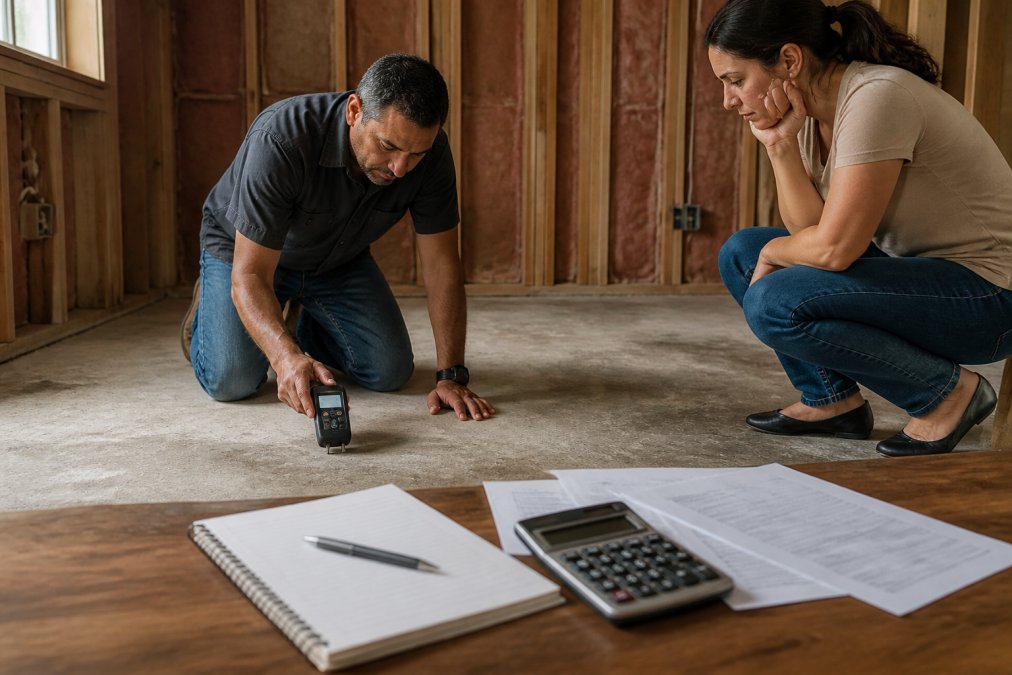
Hidden site condition costs are where budgets blow up. The quote covers the visible work; the surprises live under the surface.
DIY vs. Professional Installation: Where the Real Value Sits
Most cost guides tell you DIY saves money and leave it there. That's not useful. The honest answer is that DIY can save real money on a simple, above-grade, nail-down install over a flat plywood subfloor, and it can cost you more than hiring a pro on anything else. Here's the math and the mechanics.
- Flooring nailer rental: roughly $40 to $70 per day at a big-box rental counter, and you'll need it for multiple days.
- Compressor rental: another $30 to $50 per day.
- Miter saw: $150 to $300 to buy, or $40 to $60 per day to rent.
- Moisture meter: $30 to $150 to buy; rarely available for rent.
- Miscellaneous: tapping block, pull bar, spacers, underlayment tape, blades, fasteners.
The realistic ROI comparison.
- Best DIY candidates: a single rectangular room, above grade, over a flat and dry plywood subfloor, straight plank layout, pre-finished product, and a homeowner with prior carpentry experience and access to tools.
- Worst DIY candidates: basements and slabs (moisture), herringbone or diagonal layouts (precision), site-finished floors (sanding and finishing skill), stairs (code and safety), and any room where a mistake means tearing out thousands of dollars of material.
Frequently Asked Questions
How much does it cost to install 1000 square feet of hardwood flooring?
Total cost depends on material, labor rates, and site conditions. Material alone typically runs a wide range depending on wood species and plank thickness, while labor adds a significant per-square-foot charge. Add subfloor preparation, old floor removal, and trim work, and the total climbs. A 1000-square-foot project can vary by thousands of dollars based on whether you choose solid or engineered wood and pre-finished or site-finished planks. Get a written quote for your specific space before committing to a budget.
How do labor costs impact total hardwood installation pricing?
Labor is usually the largest variable in any hardwood installation cost estimate. Hardwood flooring labor cost per square foot changes with the installation method: nail-down is faster on a wood subfloor, glue-down takes longer and uses more adhesive, and floating floors go down quicker but require precise underlayment. Complex layouts, stairs, and rooms with lots of angles slow crews down and raise labor. Always ask for a line-item quote that separates labor from material so you can see exactly what you are paying for.
Is it cheaper to install pre-finished or site-finished hardwood floors?
Pre-finished planks cost more per square foot as a material, but they install faster, so labor is lower. Site-finished floors use cheaper raw planks but require sanding, staining, and sealing on site, which adds labor days and a longer cure time. The pre-finished vs site-finished hardwood cost gap often narrows once you factor in the extra labor and the days you cannot walk on the floor. Site-finished gives a more custom look and a seamless surface, which some homeowners prefer despite the higher total.
What factors cause hardwood installation quotes to vary so much?
Quotes swing because every home is different. Subfloor condition, moisture levels, old flooring removal, baseboard removal and reinstallation, stair work, and room layout all affect the final number. The wood species and plank thickness you pick change material costs, and the Janka hardness scale tells you how durable that species will be. A waste factor of 5 to 10 percent is standard, and that gets added to material orders. Ask any contractor to walk you through each line so you can compare quotes fairly.
Hardwood flooring is a long-term investment, and the difference between a floor that lasts decades and one that fails in a year comes down to preparation and craftsmanship. Freddie Sanchez Hardwood Floors specializes in expert wood floor installation built on high standards of craftsmanship and durability, with constant communication from your first quote to the final walkthrough. Get a free quote and see how a properly planned installation protects your investment.