 blog
5 Critical Steps for Hardwood Flooring Installation for Businesses
Last Updated: October 25, 2026
Quick Summary
Hardwood flooring installation for businesses requires professional planning to manage tight schedules, daily foot traffic, and durability demands that differ fundamentally from residential work. The process involves choosing between solid and engineered hardwood, budgeting for materials and labor across 2-4 weeks, and coordinating installation around your operating hours to minimize disruption.
- Solid hardwood suits high-traffic retail and offices; engineered hardwood works better in moisture-prone areas and installs faster.
- Commercial estimates should separate materials, labor, subfloor prep, removal, and scheduling so you can compare bids and manage budget variables.
- A typical installation runs through nine phases: assessment, material ordering, mobilization, removal, subfloor prep, acclimation, installation, finishing, and handover.
- Phased installation keeps your business open but extends the timeline; planned closures are often faster and cheaper for smaller spaces.
- Budget 10-15% contingency for unexpected subfloor repairs or moisture mitigation, especially in older buildings.
Table of Contents
- Why Hardwood Flooring Installation for Businesses Demands Professional Planning
- Best Wood Flooring for Commercial Use: Solid vs. Engineered Hardwood
- Understanding Commercial Wood Floor Installation Cost and Budgeting
- Hardwood Floor Installation Timeline: What to Expect
- The Installation Process: From Subfloor Preparation to Final Finish
- Commercial Flooring Installation Checklist for Business Owners
- Installation Around Business Operations: Minimizing Disruption
- Getting Your Free Consultation and Project Estimate
- Frequently Asked Questions
Why Hardwood Flooring Installation for Businesses Demands Professional Planning
Hardwood flooring installation for businesses differs fundamentally from residential work: tight schedules, daily foot traffic, and durability that justifies the investment. At Freddie Sanchez Hardwood Floors, we've seen owners rush in without understanding scope, timeline, or disruption costs, and end up with floors that fail prematurely.
The stakes are higher when floors shape customer experience: poorly installed hardwood floors create a negative first impression in retail, gaps signal poor maintenance in restaurants, and squeaking boards frustrate office staff. Professional planning eliminates these problems before they start.
Best Wood Flooring for Commercial Use: Solid vs. Engineered Hardwood
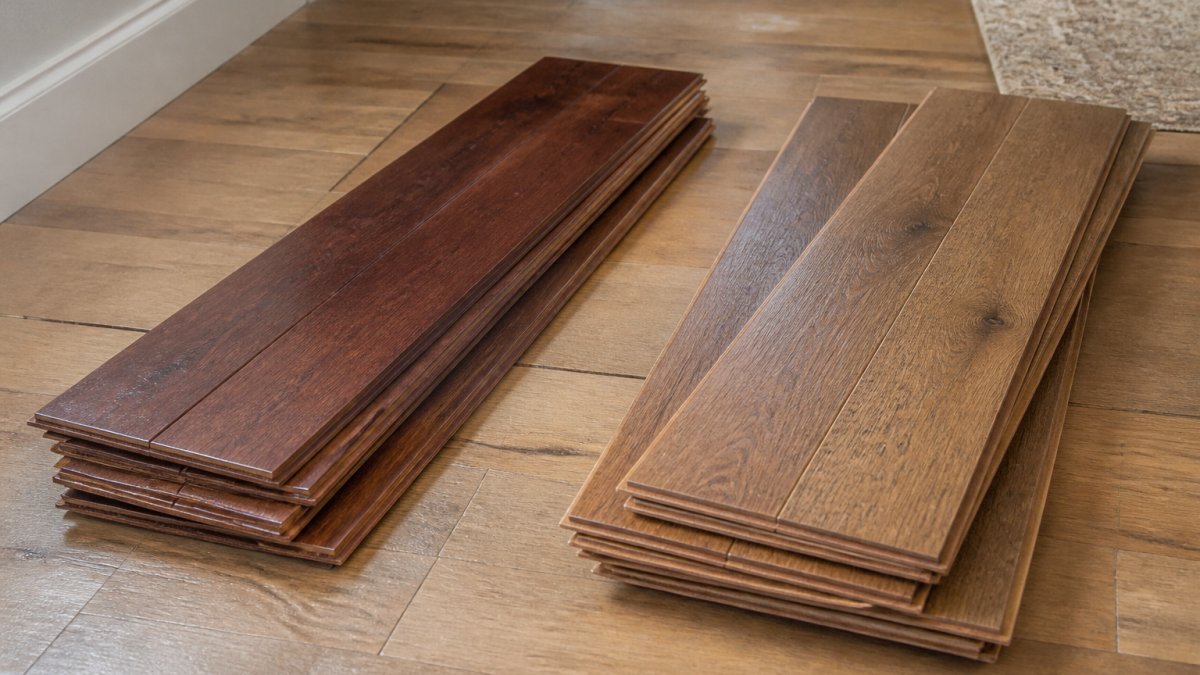
Choosing between solid and engineered hardwood is the first critical decision for any business installation. Each option has distinct advantages depending on your environment, traffic level, and moisture conditions.
Solid Hardwood for High-Traffic Spaces
Solid hardwood is one piece of wood from top to bottom, the traditional choice for commercial spaces prioritizing appearance and longevity.
High-traffic environments, retail stores, offices, restaurants, benefit from solid hardwood's density, which handles constant foot traffic without showing wear as quickly as engineered alternatives, and refinishing restores damage to like-new condition.
The trade-off is cost and installation complexity: more careful subfloor prep, longer acclimation, and climate control. For businesses with stable indoor environments and proper HVAC, solid hardwood delivers unmatched performance.
Engineered Hardwood for Moisture-Prone Areas
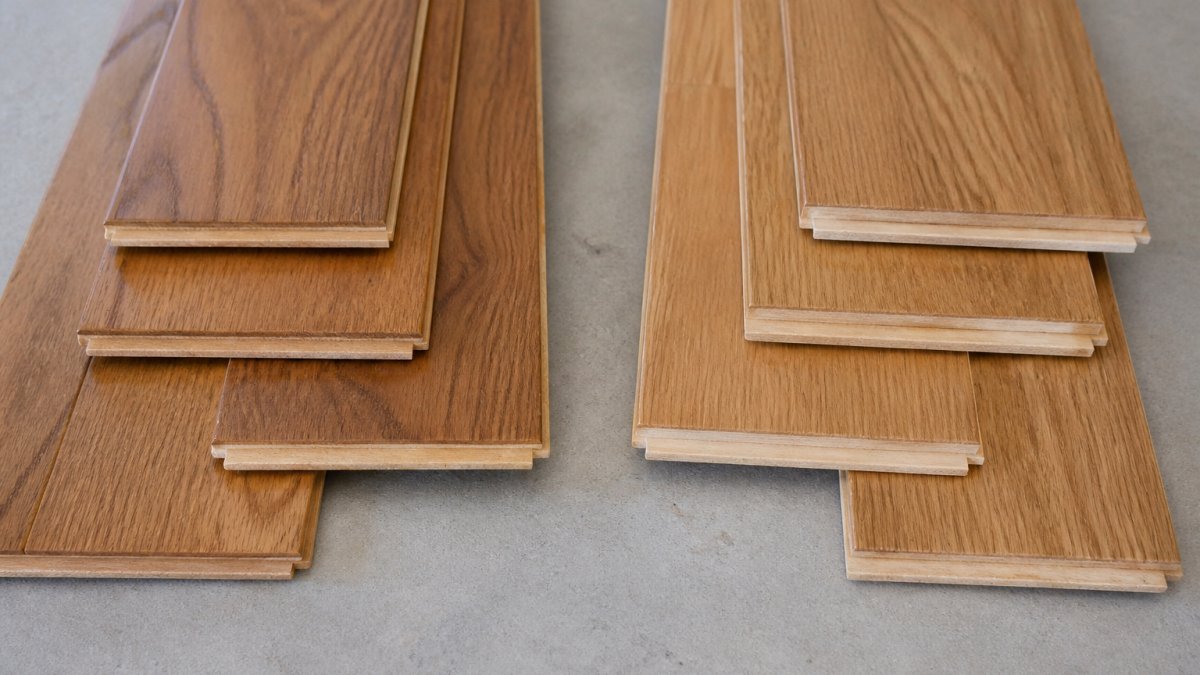
Engineered hardwood bonds a hardwood veneer to a plywood base, making it more stable in varying moisture conditions, ideal for basements, kitchens, or areas near exterior doors.
Engineered installs faster with less acclimation time, reducing disruption for businesses with tight timelines or moisture concerns. The plywood core resists the cupping and warping solid hardwood might experience in humid environments.
Understanding Commercial Wood Floor Installation Cost and Budgeting
Commercial hardwood flooring installation cost is the first question every business owner asks, and the one most service pages dodge. Here is how commercial projects actually break down so you can build a realistic budget.
What Drives the Price of a Commercial Hardwood Floor
Five variables account for nearly all of the variance between one commercial quote and another:
- Square footage and layout complexity. Large open floors cost less per square foot than spaces chopped up by offices, hallways, and transitions. Every doorway, column, and cabinet cut adds labor.
- Wood species and grade. Domestic species such as red oak and hard maple sit at the lower end of the material range; exotic species and wide-plank or rift-and-quartered cuts push material costs up sharply. Clear grades cost more than character grades.
- Solid versus engineered. Solid hardwood typically costs more in material and requires more subfloor prep and acclimation time. Engineered installs faster and tolerates moisture swings better, lowering labor and schedule costs.
How to Read a Commercial Hardwood Estimate
A credible commercial estimate separates line items so you can compare bids apples to apples. Ask for these categories:
- Materials, flooring, underlayment, trim, transition pieces, and finish products, with species, grade, and square footage stated.
- Labor, installation, sanding and finishing (if site-finished), and any custom layout or border work.
- Subfloor preparation, leveling, moisture barrier, patching, or overlay, listed as a separate line so you can see what prep is assumed.
- Removal and disposal, demolition, haul-away, and dumpster fees.
- Mobilization and scheduling, after-hours or weekend premiums, phased-work coordination, and site protection.
- Contingency, an explicit allowance for hidden subfloor damage discovered after demolition.
Budgeting Rules of Thumb for Business Owners
Most commercial flooring practitioners recommend a contingency of roughly 10-15% of the project total for unexpected subfloor repairs, moisture mitigation, or material adjustments.
Budget for the full lifecycle, not just the install. A solid hardwood floor that can be refinished multiple times spreads its cost over decades, while an engineered floor with a thin wear layer may need replacement sooner.
Getting Comparable Bids
Request two or three itemized estimates using the same scope: same square footage, species and grade target, and subfloor assumptions so the numbers are comparable. A free consultation and on-site measurement is standard for commercial work, ask each installer to walk you through what their subfloor and removal lines assume.
Freddie Sanchez Hardwood Floors provides itemized commercial estimates that separate materials, labor, preparation, removal, and scheduling so you can see exactly where your budget is going and plan for the variables that matter.
Hardwood Floor Installation Timeline: What to Expect
Timeline is where commercial hardwood projects succeed or fail, because every day of downtime carries a dollar cost. A typical installation runs two to four weeks from mobilization to handover, but what matters is how many of those days your business cannot operate normally, a scheduling decision, not just a construction one.
The Phase-by-Phase Schedule
A commercial hardwood project moves through predictable phases. Treat these as planning ranges, not promises, because subfloor discoveries and material lead times move them:
- Site assessment and measurement (1-2 days). Confirming square footage, subfloor type, moisture readings, and access routes.
- Material ordering and lead time (varies widely). Stock species ship quickly; special-order species, wide plank, and custom-milled profiles can take weeks. Order early, this is the most common cause of schedule slippage.
- Mobilization and protection (1 day). Moving furniture, protecting adjacent surfaces, and setting up dust control.
Scheduling Around Your Business Operations
The biggest lever a business owner has is how the work is sequenced. Three common models:
Phased installation. The crew completes one section, a wing of the office, half the retail floor, while operations continue elsewhere. It stretches the calendar but keeps you open, and works best in larger spaces with clear zoning and separate entrances.
After-hours and weekend work. Crews install outside business hours so the space is usable each morning, common for retail, restaurants, and offices that cannot close.
Planned closure. Smaller spaces, or projects where demolition creates too much disruption, are best done during a planned closure, a slow season, renovation window, or holiday break.
Controlling Noise, Dust, and Disruption
Hardwood installation is dusty and loud, and both affect employees and customers. Ask your installer how they will handle:
- Dust containment, plastic sheeting, negative air machines, and sealed doorways to keep sanding dust out of occupied areas.
- Noise windows, scheduling the loudest work (demolition, sanding, nailing) outside peak hours.
- Access and egress, maintaining safe, code-compliant paths for employees and customers, including ADA-accessible routes, throughout the project.
Communication and Milestones
A professional commercial installer gives you a written schedule with milestone dates and a single point of contact: daily or weekly updates, immediate notice of subfloor issues that change scope, and a handover walkthrough before final payment.
Freddie Sanchez Hardwood Floors plans commercial schedules around your operating hours, coordinates phased and after-hours work, and keeps you informed at every milestone so your business keeps running while your floor is installed.
Commercial hardwood projects move through predictable phases, each with typical duration ranges.
| Phase | Duration | Notes |
|---|---|---|
| Site assessment and measurement | 1-2 days | Confirming square footage and subfloor type |
| Material ordering and lead time | Varies widely | Stock species ship quickly; special orders take weeks |
| Mobilization and protection | 1 day | Moving furniture and setting up dust control |
| Existing flooring removal | 2-5 days | Glue-down and tile removal take longest |
| Subfloor preparation | 3-7 days | Includes drying time for liquid products |
| Acclimation | 5-7 days | Can run concurrently with subfloor prep |
| Installation | 5-10 days | Scales with square footage and complexity |
| Sanding and finishing | 3-7 days | Site-finished only; factory-finished skips this |
The Installation Process: From Subfloor Preparation to Final Finish
Professional hardwood flooring installation for businesses follows a structured process. Understanding each step helps you communicate expectations with your installer and recognize quality work as it progresses.
Removing Existing Flooring and Preparing the Subfloor
Installation begins with assessing what's already there.
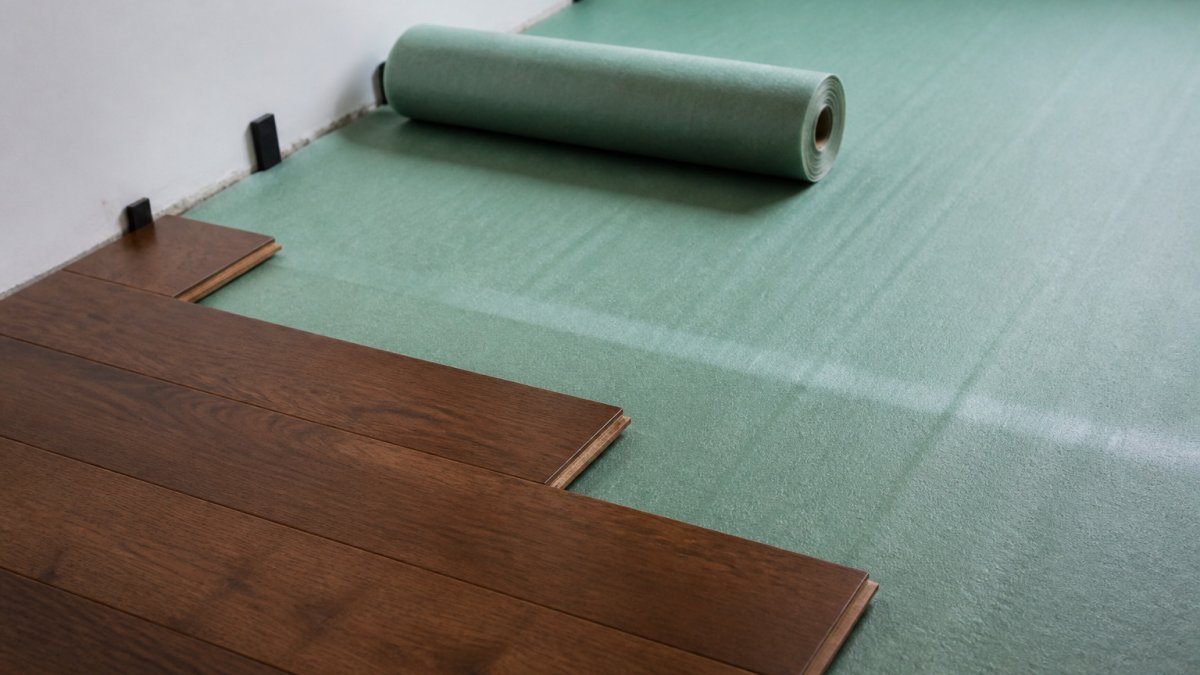
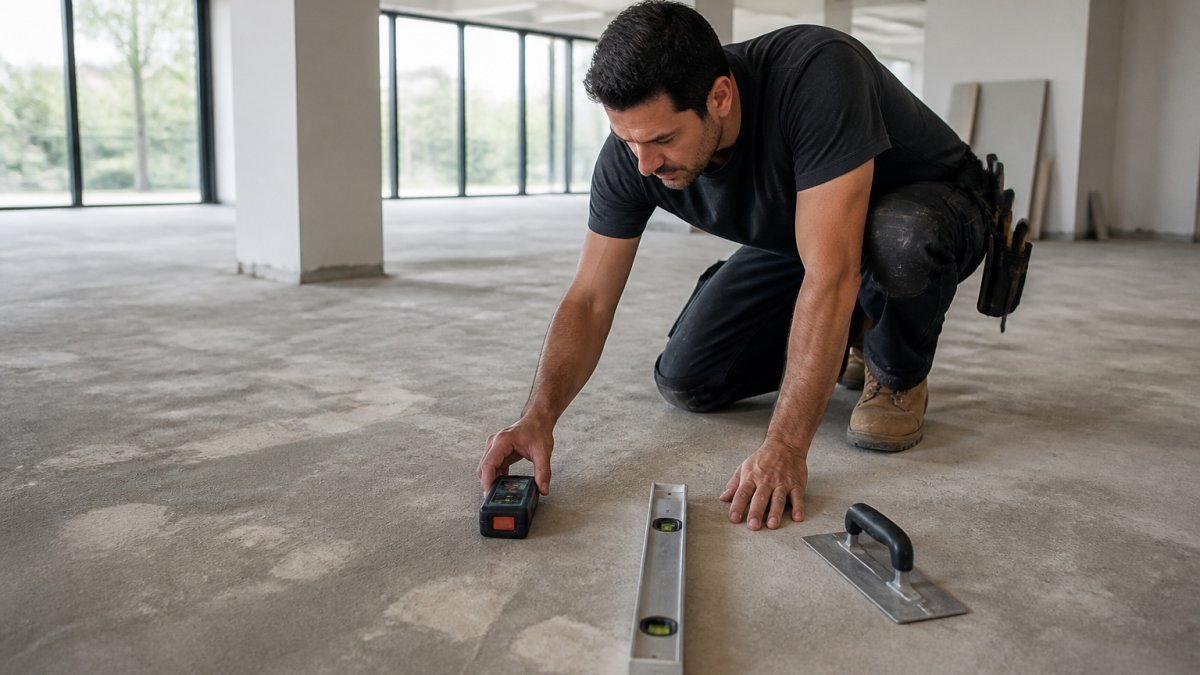
Once the old floor is gone, the subfloor is inspected for damage, moisture, and structural integrity; soft spots, rot, or unevenness must be fixed before new hardwood goes down.
Acclimation, Layout, and Installation Methods
Before installation begins, hardwood must acclimate to your space's temperature and humidity for 5-7 days, preventing cupping or shrinking after installation. Skipping acclimation is a common mistake that leads to floor failure.
Layout planning determines plank arrangement: random-width layouts create visual interest, staggered patterns ensure structural integrity. Your installer balances aesthetics with performance, accounting for doorways, transitions, and natural light.
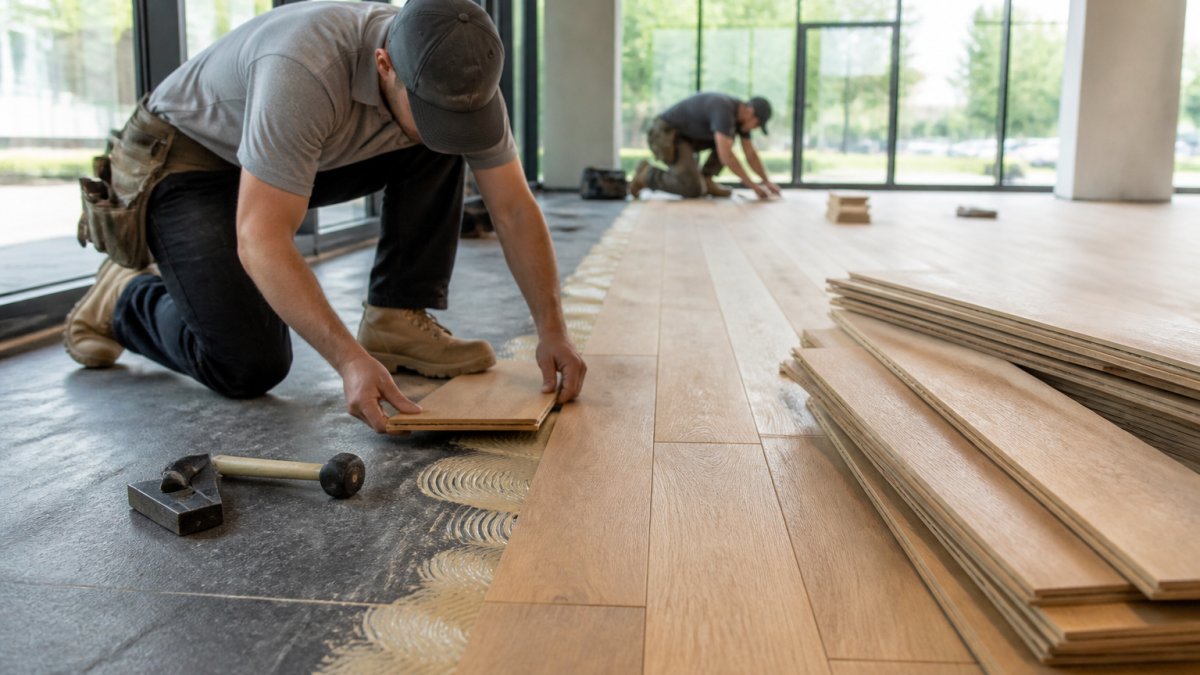
Installation methods include nailing, stapling, or gluing depending on the subfloor type and wood species. Solid hardwood typically uses pneumatic nailers or staples; engineered hardwood often uses adhesive for added stability.
Site-Finished Floors and Custom Design Options
Site-finished floors offer flexibility for custom colors and designs: raw hardwood is installed, then sanded and finished on-site, allowing seamless transitions between rooms and custom stain colors that match your brand.
Site finishing adds 3-7 days to the project timeline but delivers superior aesthetic results. The finish is applied in multiple coats with sanding between coats for a smooth, durable surface. Custom designs, borders, inlays, or mixed wood species, are possible with site finishing.
Pre-finished hardwood installs faster and minimizes on-site dust and odor. The trade-off is less customization and visible seams between planks. Both approaches work for commercial spaces; the choice depends on your timeline, budget, and design priorities.
Commercial Flooring Installation Checklist for Business Owners
Use this checklist to ensure your installation is planned thoroughly and executed professionally:
- Schedule a free consultation with your installer to assess your space
- Obtain a detailed project estimate including materials, labor, and timeline
- Confirm subfloor condition and any required repairs
Installation Around Business Operations: Minimizing Disruption
The key to installing while your business operates is phased scheduling and clear communication.
Phased installation works for larger spaces: your installer completes one section, half your retail floor or one office wing, while operations continue elsewhere.
Full closures are sometimes necessary for smaller spaces or when removal creates too much disruption.
Communication during installation prevents surprises: your installer should provide daily updates on progress, issues discovered, and timeline adjustments.
Getting Your Free Consultation and Project Estimate
The first step toward professional hardwood flooring installation for businesses is a consultation with an experienced installer.
Request a detailed estimate that breaks down materials, labor, preparation work, and finishing. The estimate should include a timeline with key milestones.
Freddie Sanchez Hardwood Floors offers free consultations and project estimates for commercial hardwood flooring installation.
Frequently Asked Questions
How much does hardwood flooring installation for businesses typically cost?
Commercial wood floor installation cost varies based on square footage, wood species, subfloor condition, and labor complexity. Solid hardwood generally costs more than engineered options. For an accurate estimate of your commercial hardwood flooring installation cost, contact Freddie Sanchez Hardwood Floors for a free consultation. Pricing depends on your specific project scope, site conditions, and timeline requirements.
What type of hardwood flooring is best for a busy commercial space?
Species like oak, maple, and hickory offer superior durability. The best wood flooring for commercial use depends on your traffic level, moisture conditions, and aesthetic goals. A professional installer can recommend the ideal option for your specific business environment.
How long does commercial hardwood floor installation take?
Hardwood floor installation timeline typically ranges from one to three weeks for most commercial projects, depending on square footage, subfloor preparation needs, and whether floors are site-finished on-site. Smaller projects may take 5-7 days, while larger installations with custom designs can extend longer. Your installer should provide a detailed hardwood floor installation timeline during the consultation.
Can hardwood floors be installed while my business remains open?
Yes, but it requires careful planning. Professional installers can schedule work during off-hours, weekends, or in phases to minimize disruption. Dust containment and safety protocols are essential. Discuss your operational needs during the free consultation so the team can coordinate installation around your business schedule and ensure minimal impact on customers and staff.
Get a free quote from Freddie Sanchez Hardwood Floors. Our team will evaluate your space, discuss your timeline and budget, and provide a detailed estimate for your hardwood flooring installation project. Professional planning and expert execution ensure your commercial floors deliver beauty and durability for years to come.