 blog
7 Things to Know Before Choosing PreFloors vs New Age Got Wood
Last Updated: October 26, 2026
Quick Summary
PreFloors vs New Age Got Wood is not a like-for-like matchup: PreFloors sells prefinished flooring products, while New Age Got Wood sells flooring supply and installation as a combined service. Compare both on the same written specification, since a bundled quote can hide missing floor preparation and moisture testing.
- Prefinished planks arrive sanded, stained, and sealed at the factory, so there is no sanding dust in your home.
- Bundled supply-and-install pricing makes it harder to see what you pay for materials versus labor.
- A thin wear layer may only tolerate one or two full sandings before replacement.
- Keep indoor humidity in the 35-55% range to avoid gapping and cupping.
- A typical installation runs two to four weeks from contract to walkthrough.
Table of Contents
- PreFloors vs New Age Got Wood: What Each One Actually Sells
- Engineered Hardwood Flooring Pros and Cons for Bay Area Homes
- Appearance, Durability, and Moisture: How the Two Options Perform
- How to Compare Flooring Estimates Line by Line
- Questions to Ask a Flooring Contractor Before You Sign
- Hardwood Floor Installation Timeline: What to Expect Week by Week
- Get a Free Quote from Freddie Sanchez Hardwood Floors
- Frequently Asked Questions
PreFloors vs New Age Got Wood: What Each One Actually Sells
PreFloors vs New Age Got Wood is not a like-for-like matchup, and that is the first thing to understand before you request an estimate. PreFloors sells prefinished flooring products. New Age Got Wood sells flooring supply and installation as a combined service. At Freddie Sanchez Hardwood Floors, we quote installation work every week, and the confusion we see most often comes from comparing a product catalog against a service quote as if they were the same thing. They are not, and the numbers will mislead you if you treat them that way.
PreFloors: Prefinished Solid and Engineered Wood
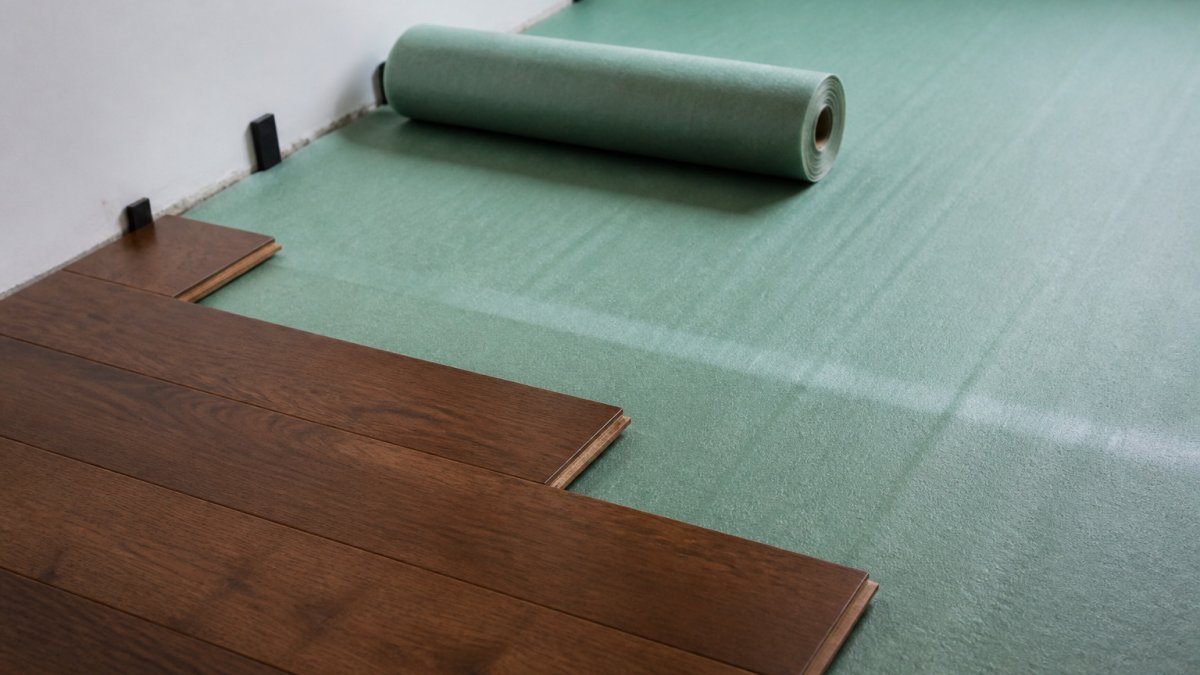
PreFloors is a flooring supplier. Its core offering is prefinished solid and engineered wood planks, meaning the boards arrive sanded, stained, and sealed at the factory. A contractor or homeowner then installs them on site. That model has real advantages: no sanding dust in your home, a factory-applied finish that is typically more consistent than a site finish, and faster move-in timelines. The trade-off is that factory finishes cannot be customized to your exact stain preference after the fact, and any future refinishing depends on how much wear layer the plank carries. When you buy from a supplier, installation and floor preparation are separate line items you must source and price independently.
New Age Got Wood: Flooring Supply and Installation
New Age Got Wood positions itself as a supply-and-install operation, bundling materials with labor. For homeowners who do not want to coordinate two vendors, that single-source model removes some scheduling friction. The catch is that bundled pricing makes it harder to see what you are paying for materials versus labor, which matters when you are comparing bids. Ask for a materials-and-labor breakdown in writing. If a quote arrives as one lump sum, you cannot tell whether the savings are real or whether the installation quality is being compressed to hit a package price.
Engineered Hardwood Flooring Pros and Cons for Bay Area Homes
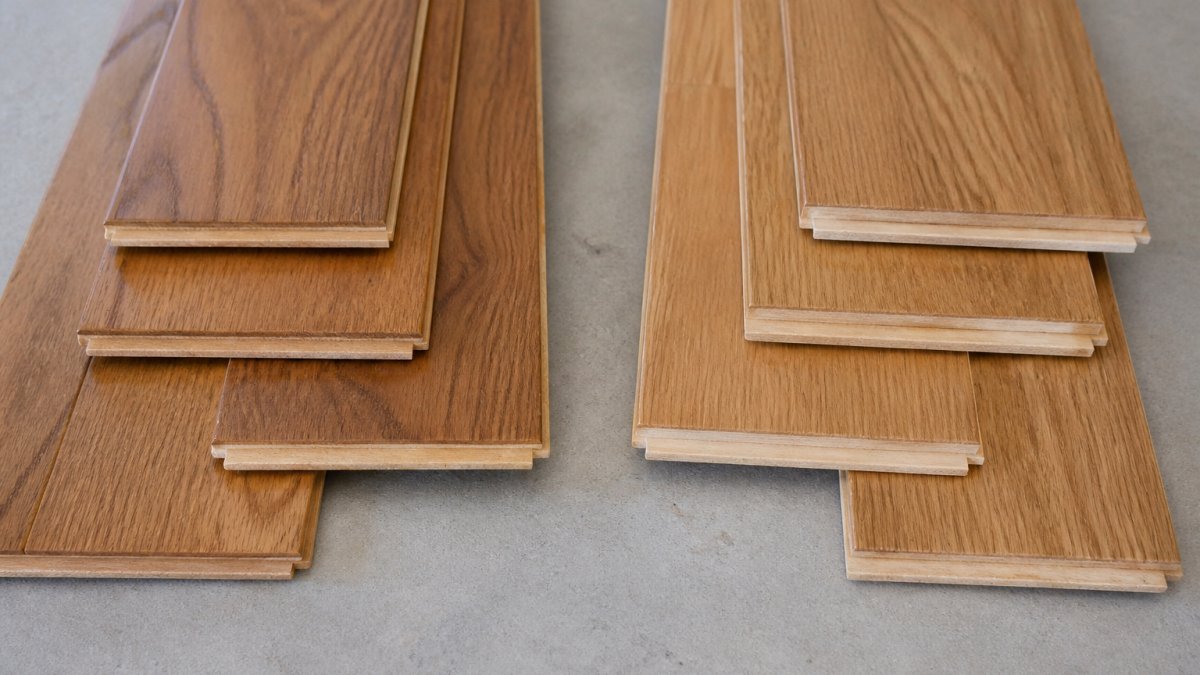
Engineered hardwood is a plank built from a plywood core topped with a real wood veneer, and it is the right call for many local homes.
The pros, stated concretely. Engineered planks are more dimensionally stable than solid wood because the cross-ply core resists expansion and contraction across humidity swings. That stability is why engineered is the common specification over concrete slabs and in homes with a damp crawlspace or basement.
The cons, stated concretely. The wear layer determines how many times the floor can be sanded and refinished, and a thin veneer may only tolerate one or two full sandings before you are looking at replacement. Some homeowners find the feel underfoot less solid than three-quarter-inch solid oak, and the resale-value story is weaker than solid hardwood in most markets because buyers and appraisers treat engineered as a finish floor rather than a lifetime asset. If you plan to refinish repeatedly over decades, solid hardwood remains the more durable long-term asset.
What the brand choice actually changes. With PreFloors, you are buying a product and sourcing installation and floor preparation separately, which means the moisture test, subfloor repair, and workmanship warranty are your responsibility to arrange.
Performance by household and room. Match the specification to the way the room is actually used:
- Pets and children. A factory-finished engineered plank with a thicker wear layer handles claws and dropped toys better than a thin site-finished floor, and a matte sheen hides scratches better than a high gloss. Ask for the wear layer in millimeters and the finish sheen.
- Kitchens. Neither engineered nor solid wood is waterproof; standing water is the enemy of both. Engineered is more forgiving of humidity swings, but a kitchen still needs a moisture-tolerant specification and prompt cleanup.
- Basements and slabs. Engineered over a moisture-tested slab is the standard recommendation. Solid wood over a slab is a specialty installation and should be priced and warranted as such.
- High-traffic hallways. A site-finished floor that can be screened and recoated in worn spots extends service life; a prefinished floor with a thin wear layer may need replacement instead.
- Humid climates. Stable indoor humidity in the 35-55% range protects both options; engineered tolerates the swings better, but neither is a substitute for a functioning HVAC and dehumidification strategy.
Long-term ownership. Compare the two options over a stated period rather than on day-one price. Over ten years, a site-finished solid floor that can be recoated once and refinished once typically outlasts a thin-wear-layer engineered plank that must be replaced. Over the same period, a factory-finished engineered plank avoids the dust, cure time, and finish-cure scheduling of a site finish, which has real value for occupied homes.
Appearance, Durability, and Moisture: How the Two Options Perform
The practical differences between the two options show up in three areas: appearance, wear, and moisture behavior. The key is to compare like with like, a factory-finished plank against a factory-finished plank, and a site-finished floor against a site-finished floor, because the finish system, not the brand name, drives most of what you see and feel underfoot.
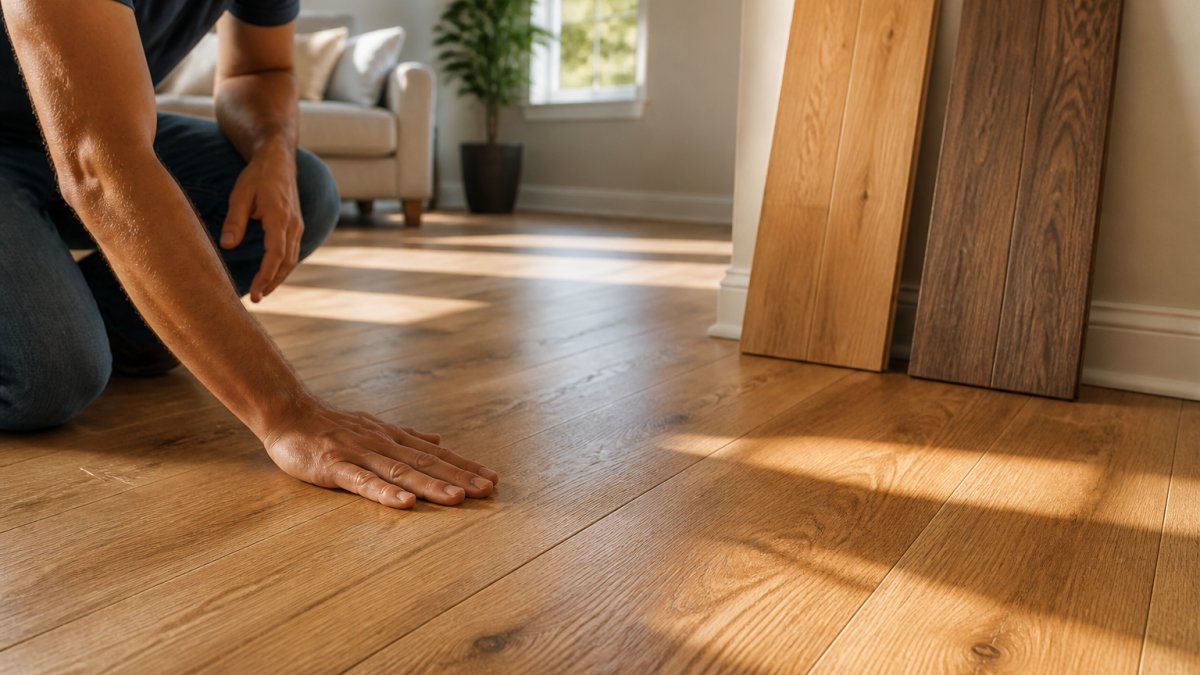
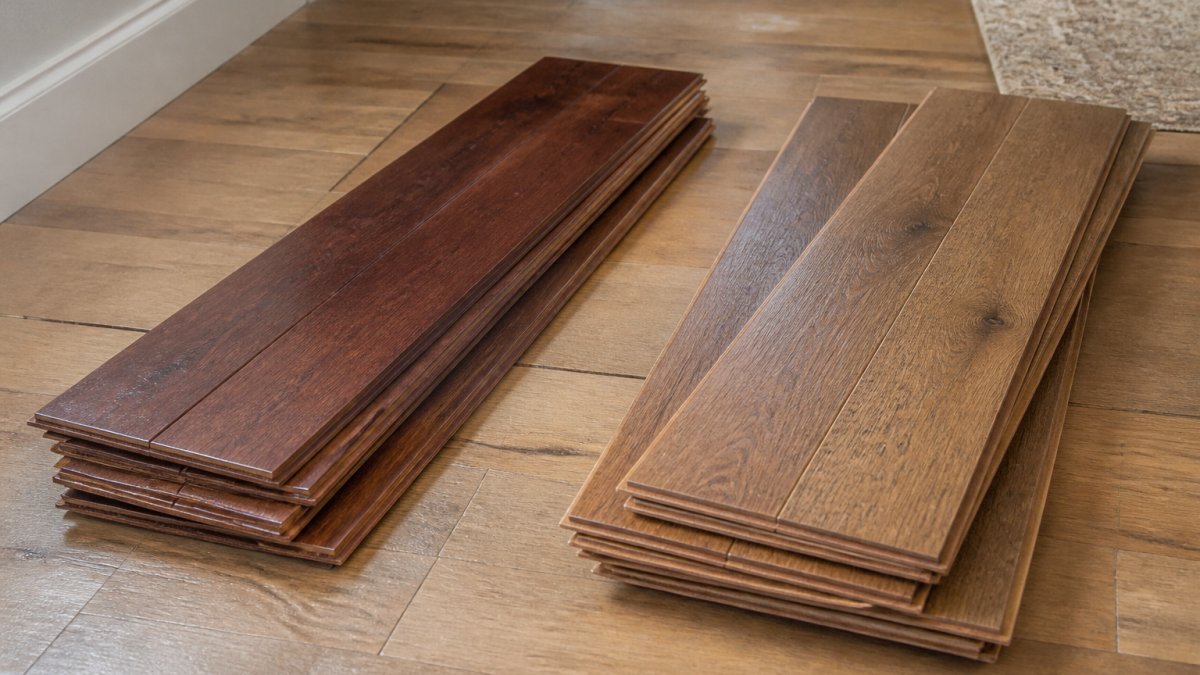
Appearance. PreFloors ships prefinished planks with a factory-controlled sheen and color, so the floor reads uniform from room to room and there is no sanding dust in the house.
Durability. Both hold up to daily traffic in hallways and living rooms, but the failure modes differ.
Moisture. Engineered planks handle humidity variation better than solid wood because the cross-ply core resists expansion and contraction. Solid hardwood moves with the seasons and needs stable indoor humidity, typically in the 35-55% range, to avoid gapping and cupping.
| Factor | PreFloors (product) | New Age Got Wood (supply-and-install) |
|---|---|---|
| What you buy | Materials only | Materials plus labor |
| Finish | Factory-applied | Factory or site-applied, confirm in writing |
| Custom stain | Limited after the fact | Depends on finish system; ask |
| Wear layer | Ask for thickness in mm | Ask for thickness in mm |
| Moisture testing | Your responsibility | Confirm it is in scope |
| Warranty | Manufacturer product warranty | Product plus workmanship, get both in writing |
How to Compare Flooring Estimates Line by Line
Comparing flooring estimates is the step where most homeowners lose money, because a low total often hides missing scope. Here is how we would read any bid, including one you bring to us for a second opinion.
- Square footage and waste factor. Confirm the measured area and the waste percentage. Ten percent is common for a straightforward room; more for diagonal layouts.
- Floor preparation. Tear-out, subfloor repair, leveling, and moisture testing should each appear as a line item.
- Materials specification. Get the exact product name, plank width, wear layer thickness, and wood species.
- Trim and transitions. Baseboard removal and reinstall, stair nosings, and thresholds are frequently omitted from low bids.
- Finish and cure time. If site-finished, ask how many coats and how long before furniture can return.
- Warranty terms. Separate the manufacturer warranty from the installer's workmanship warranty.
Questions to Ask a Flooring Contractor Before You Sign
Before signing, ask these questions and get the answers in writing. How long have you installed this specific product? Who handles subfloor repair if rot or moisture damage turns up mid-project? What is your workmanship warranty, and what does it exclude? Can you provide photos of similar completed projects? How do you communicate schedule changes? For sellers preparing a home for showings, ask directly whether the timeline accounts for cure time before photography. A contractor who answers these without hesitation is usually the one who will not disappear mid-job. At Freddie Sanchez Hardwood Floors, we build our schedules around these answers from the first walkthrough.
Hardwood Floor Installation Timeline: What to Expect Week by Week
A typical installation runs two to four weeks from contract to walkthrough, depending on scope and finish type.
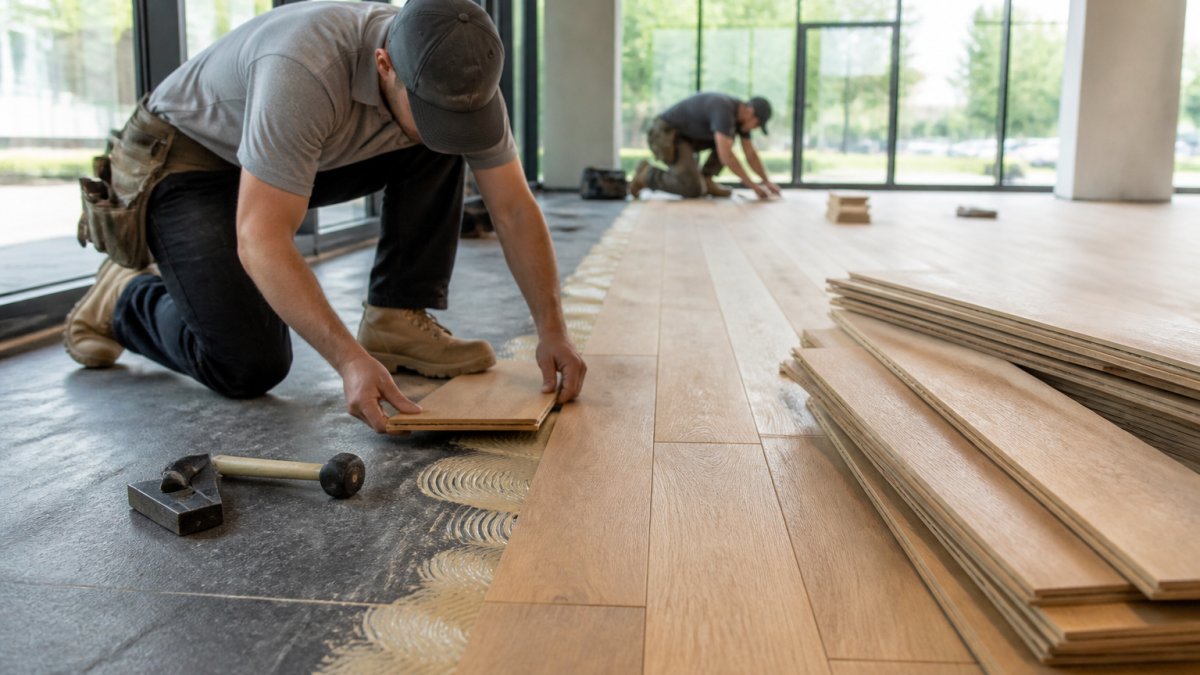
Week one: site measurement, material ordering, and delivery scheduling. Week two: tear-out of old flooring, subfloor inspection and repair, and moisture testing. Week three: installation of planks, followed by sanding and staining if the floor is site-finished. Week four: final coats, cure time, trim reinstall, and a walkthrough with the homeowner. Prefinished products compress the schedule because there is no on-site sanding or staining phase. Add buffer time if your project is part of a larger remodel and must coordinate with other trades.
Get a Free Quote from Freddie Sanchez Hardwood Floors
The real risk in this comparison is not picking the wrong brand. It is signing a quote that leaves out floor preparation, moisture testing, or trim work, then discovering the gap after the first rain. A flooring decision should rest on a written scope, a verified product specification, and a contractor who answers your questions before the contract, not after. Freddie Sanchez Hardwood Floors brings expert wood floor installation, high standards of craftsmanship and durability, and constant communication with you until the job is done. Get a free quote and we will walk your layout and give you a line-by-line estimate you can compare against any other bid.
Frequently Asked Questions
What is the difference between PreFloors and New Age Got Wood?
PreFloors focuses on prefinished solid and engineered wood flooring, so planks arrive sanded and sealed and install faster with less dust. New Age Got Wood operates as a flooring supply and installation provider with a broader material mix. The practical difference shows up in product depth, finish options, and how much site work happens after delivery. Ask each for a written scope listing species, construction, finish, and warranty terms before comparing quotes.
Which flooring option offers better value: PreFloors or New Age Got Wood?
Value depends on how long you plan to stay and how the floor will be used. Prefinished engineered hardwood handles humidity swings better and installs in fewer days, which lowers disruption and labor hours. Solid wood can be sanded and refinished more times, which matters in a long-term home. Compare like-for-like quotes: same species, same square footage, same subfloor prep, and same warranty length. A lower headline number often hides extra prep charges.
What should I compare when choosing between flooring providers?
Compare four things: the exact product specification (species, wear layer thickness, finish), the installed cost including subfloor preparation and trim, the warranty with its exclusions, and the schedule with a start and completion date. Ask for the moisture testing method and the acclimation period in writing. Request references from projects with similar subfloor conditions, especially older homes with basement moisture. A provider that answers these in writing is easier to hold to the scope.
How long does hardwood floor installation usually take?
A single room typically takes one to three days for prefinished material, while a whole-house project runs one to two weeks depending on square footage, furniture moving, and subfloor repairs. Site-finished solid wood adds several days for sanding, staining, and curing before furniture goes back. Moisture testing and acclimation add time before installation starts. Get the timeline in writing with a completion date so it coordinates with your contractor's schedule.