 comparison
Hardwood Floor Repair vs Replacement Cost
Table of Contents
- Hardwood Floor Repair vs Replacement Cost: A Quick Comparison
- Hardwood Floor Repair Cost: When Localized Damage Makes Sense
- Hardwood Floor Refinishing Cost: The Middle Ground Option
- Hardwood Floor Replacement Cost: Full Removal and Installation
- Cost to Replace Hardwood Floor Planks: Board-by-Board Repair
- Decision Framework: Condition-Based Guidance
- Factors That Affect Project Cost
- Itemized Estimates and Hidden Costs
- Frequently Asked Questions
Last Updated: October 18, 2026
Hardwood Floor Repair vs Replacement Cost: A Quick Comparison
When hardwood floors show damage, homeowners face a critical decision that hinges on understanding hardwood floor repair vs replacement cost: repair the affected boards, refinish the entire floor, or replace it altogether. We help customers weigh these trade-offs against their budget and floor condition.
The cost difference between these approaches can be substantial: localized repairs cost far less than refinishing an entire room, which costs less than full replacement. The right choice depends on what's wrong with your floor, how much needs attention, and how long you plan to stay.
This guide breaks down the real costs and decision points for hardwood floor repair, refinishing, and replacement so you can move forward with confidence.
Comparison Table: Repair, Refinishing, and Replacement
| Approach | Scope | Timeline | Best For |
|---|---|---|---|
| Board-by-board repair | 1-10 boards | 1-3 days | Localized damage, squeaks, gaps |
| Refinishing | Entire floor | 5-7 days | Widespread wear, surface scratches, dull finish |
| Full replacement | Entire floor removal and installation | 7-14 days | Structural damage, extensive water damage, cupping |
Hardwood Floor Repair Cost: When Localized Damage Makes Sense
Board-by-board repair addresses specific problem areas without touching the rest of your floor, and makes sense when damage is confined to a few boards and the subfloor is sound.
Common repair scenarios include squeaky spots from loose fasteners, small gaps from seasonal humidity changes, surface scratches that haven't penetrated the finish, and isolated water stains. When damage is limited to these issues, repair keeps costs down because you're only addressing the affected area.
The scope of work determines the price: tightening fasteners or filling gaps takes less time and materials than replacing a board. If a board is warped, cupped, or deeply gouged, that single board must be replaced. Our team assesses the damage in person for an accurate estimate.
Repair-Only Scenarios and Cost Drivers
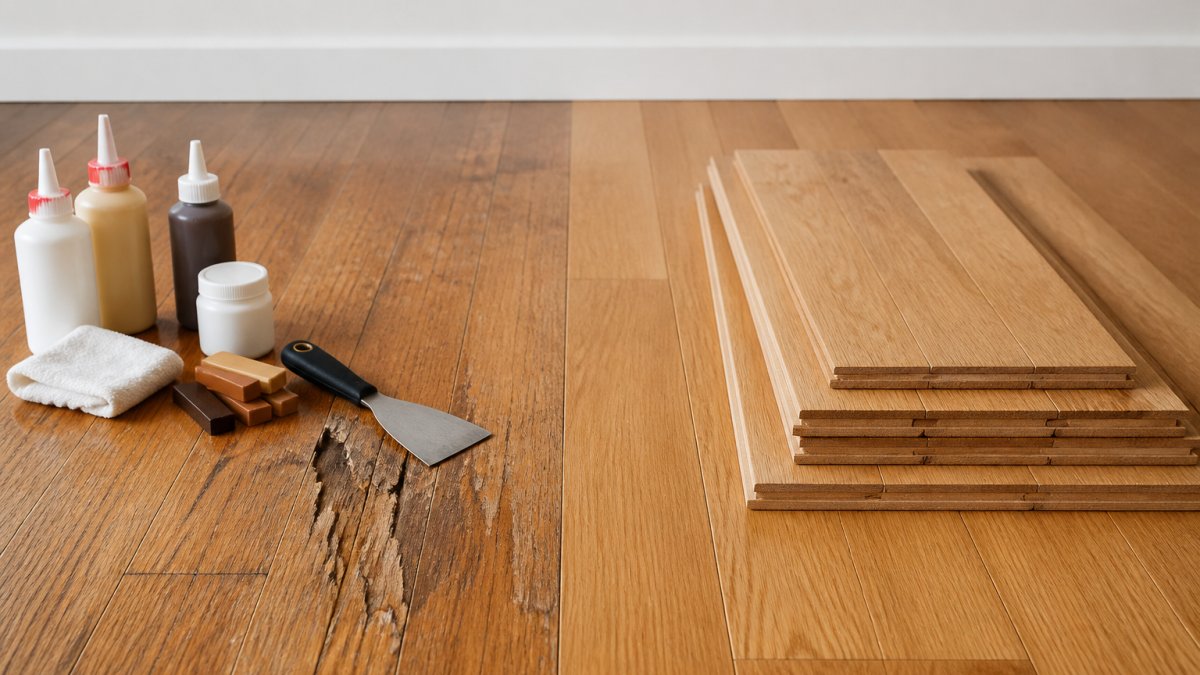
Squeaky floors often come from subfloor movement or loose nails; tightening fasteners from above or below stops the noise without replacing boards. Surface scratches and minor stains can be spot sanded and stained to match.
Water damage is where repair gets tricky. If moisture has caused cupping (edges higher than the center) or buckling, the board typically needs replacement. Identifying the moisture source is critical: if water is still entering, replacing the board won't solve the problem. Subfloor damage may push you toward refinishing or replacement instead.
The cost to repair damaged boards depends on wood species, floor thickness, and whether the floor can be refinished again afterward. Thicker solid hardwood allows multiple refinishing cycles, so repairs blend seamlessly; engineered hardwood's veneer limits refinishing, making finish matching harder.
Hardwood Floor Refinishing Cost: The Middle Ground Option
Refinishing addresses surface-level wear across your entire floor when the structure is sound but the finish is worn, scratched, or dull. It removes the old finish, sands the surface, and applies new stain and polyurethane.
Refinishing costs less than replacement because the subfloor and boards stay in place; you're only replacing the protective layer on top. It typically takes 5-7 days including drying time between coats, during which you'll need to stay off the floor.
This option suits homeowners who want a like-new floor without the expense and disruption of full replacement, whether before selling, after years of foot traffic, or to change the stain color.
What Refinishing Covers and Cost Factors
Refinishing starts with sanding away the old finish and surface imperfections to reveal the raw wood, removing minor scratches, stains, and wear patterns. Deep gouges or significant damage become visible during sanding and may need repair before refinishing continues.
After sanding, the floor is stained to your chosen color, from light naturals to dark espresso. Once dry, multiple coats of polyurethane protect the wood: water-based dries faster but shows less grain detail, while oil-based brings out wood character but cures slower.
Square footage is a primary cost driver for refinishing, since larger floors need more materials and labor. Floor condition also matters: heavy damage, hard-to-remove old finishes, or uneven surfaces take longer to prepare, and mixed species or color variation may require extra stain coats for a uniform look.
Hardwood Floor Replacement Cost: Full Removal and Installation
Full replacement removes the existing floor and installs new hardwood from scratch. It's the most expensive and disruptive option, requiring 7-14 days depending on floor size and subfloor condition.
Replacement makes sense when structural damage is extensive, water damage has compromised the subfloor, or you want a completely different look, such as upgrading from engineered to solid hardwood or to a premium species.
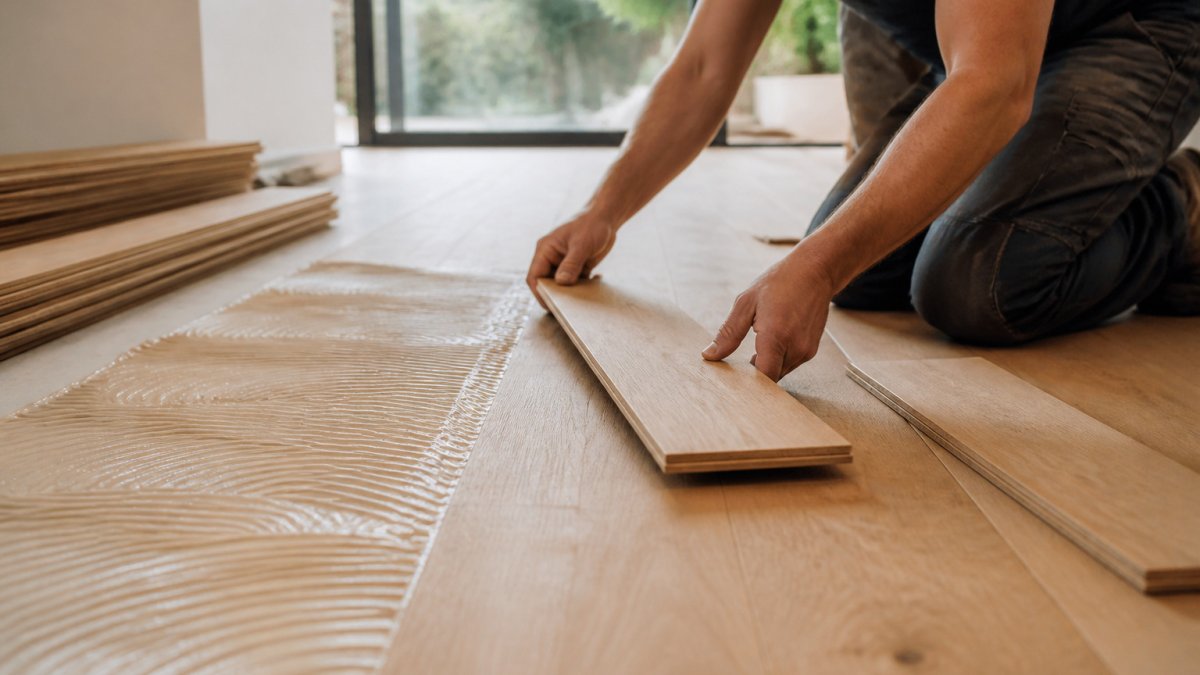
The process begins with removing the old floor, which can be messy and time-consuming. The subfloor is then inspected and repaired if needed, and any moisture issues must be resolved before installation. New hardwood is laid, fastened, and finished; pre-finished hardwood skips on-site refinishing, reducing timeline and disruption.
Material, Labor, and Hidden Costs in Replacement
Material costs vary by species: common domestic options like oak or hickory cost less than exotics like Brazilian walnut or cumaru. Solid hardwood costs more than engineered but can be refinished multiple times over decades.
Labor for removal, subfloor repair, and installation makes up a significant portion of replacement cost, requiring skill to ensure boards are properly fastened, transitions are smooth, and the finished floor is level and safe.
Hidden costs often surprise homeowners: subfloor damage from water or age adds repair or replacement to the bill, old flooring generates disposal costs, transitions to other rooms or floor heights need special molding, and appliances or cabinetry on the floor may need temporary relocation.
Cost to Replace Hardwood Floor Planks: Board-by-Board Repair
Replacing individual boards is a targeted repair between simple fixes and full refinishing. When boards are damaged beyond repair, warped, deeply gouged, or water-damaged, replacing just those boards keeps costs manageable.
This works best when damage is isolated and the surrounding floor is in good condition.
The process involves carefully removing the damaged board without disturbing neighbors, cutting a new board to fit, securing it with fasteners, and finishing it to match. Blending is straightforward on a recently refinished floor, but matching color and sheen on an old, aged finish is more challenging.
Decision Framework: Condition-Based Guidance
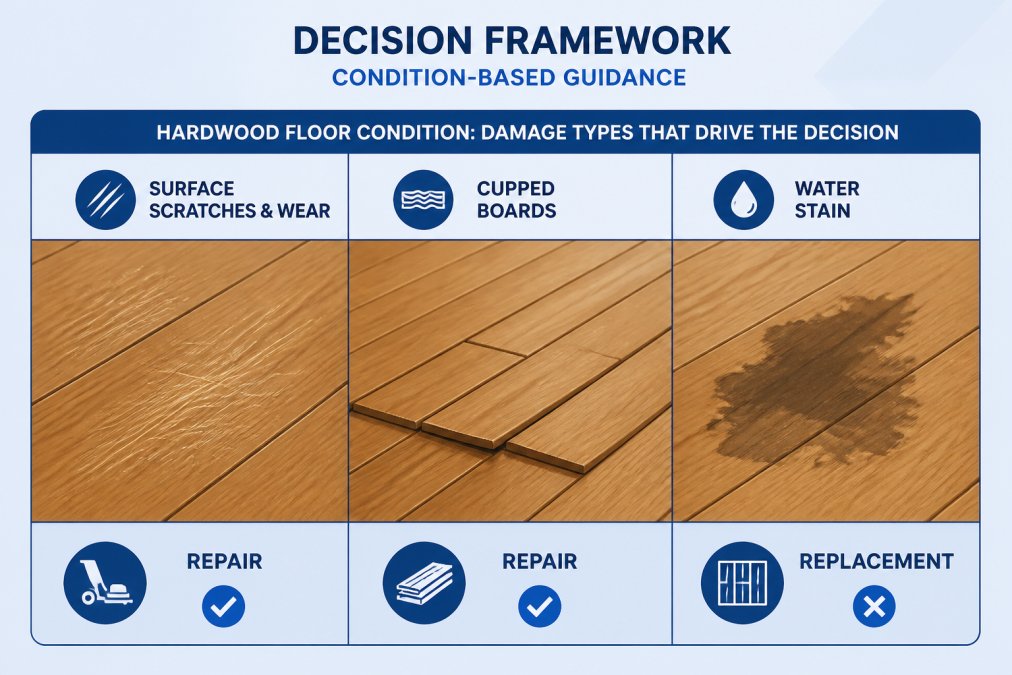
Choosing between repair, refinishing, and replacement comes down to assessing your floor's actual condition and your goals.
Floor Condition Assessment
Start by identifying what's wrong. Squeaky spots, minor scratches, small gaps, and surface stains are repair-only issues. If the structure is sound and only the finish is worn or dull, refinishing is right. If boards are cupped, buckled, deeply gouged, or water has reached the subfloor, replacement becomes necessary.
Walk your entire floor and note problem areas: are issues isolated to one or two rooms or widespread? Do you see gaps, cupping, or soft spots? Is the finish still protective or worn through to bare wood in high-traffic areas? These observations guide your decision.
Hardwood Type, Thickness, and Refinishing Capacity
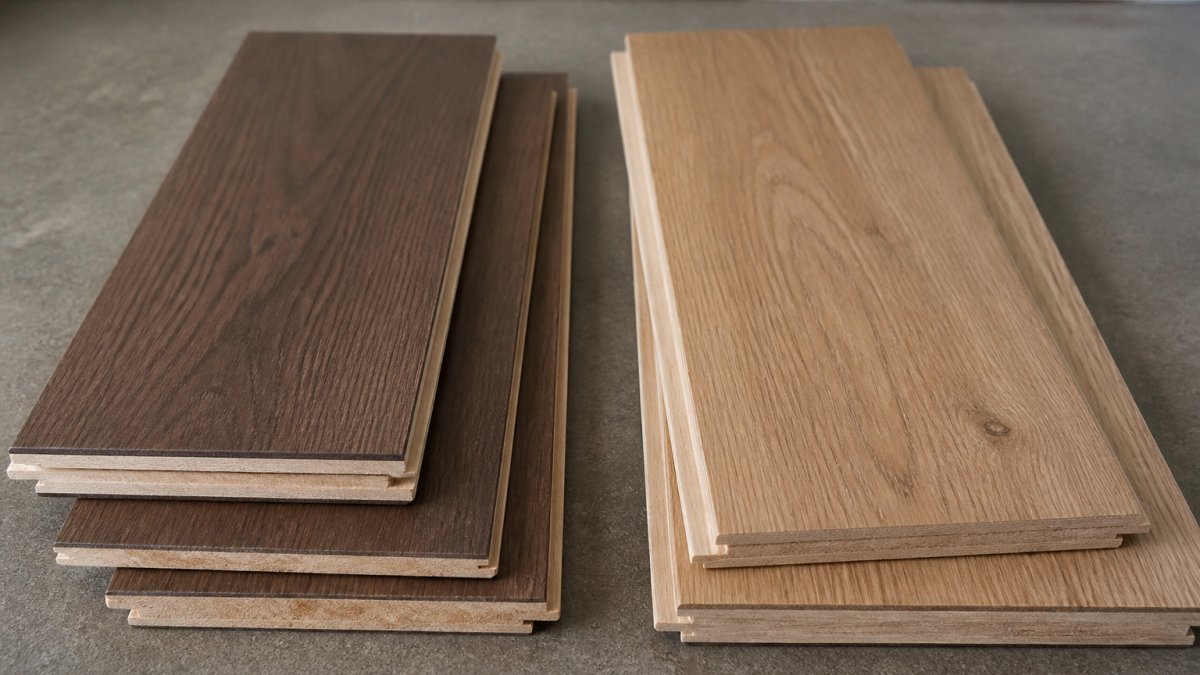
Solid hardwood is typically 3/4 inch thick and can be sanded and refinished 5-10 times over its life, depending on the species and how aggressively it was sanded. Engineered hardwood has a veneer layer over plywood, usually 1/8 to 1/4 inch of real hardwood on top.
This matters because it affects your long-term options. A solid hardwood floor can be refinished repeatedly, making repair and refinishing viable strategies throughout its life. Engineered hardwood has more limited refinishing capacity, so once the veneer is compromised, replacement may be the only option.
Floor age also influences decisions. Older solid hardwood floors are often thicker and made from wood species that are now rare or expensive. Matching a replacement board to an old floor can be difficult and costly. Refinishing preserves the original character while updating the appearance.
Timeline and Disruption Considerations
Repair work is quick, often completed in 1-3 days. You can return to normal use immediately after. Refinishing takes 5-7 days and requires you to stay off the floor during the process, including drying time. Replacement takes 7-14 days and involves noise, dust, and temporary displacement of furniture.
If you're selling your home, refinishing offers the fastest path to a like-new appearance. If you're staying long-term and can absorb the disruption, replacement gives you the longest-lasting result and maximum flexibility for future changes.
Factors That Affect Project Cost
Several variables influence the final price of repair, refinishing, or replacement work.
Damage Type and Extent
Surface scratches and minor stains are inexpensive to address through refinishing. Cupped or buckled boards require board replacement or full refinishing. Deep water damage that reaches the subfloor triggers more extensive, and expensive, work. The more extensive the damage, the higher the cost and the longer the timeline.
Wood Species and Floor Age
Common domestic species like oak and maple are less expensive to repair and replace than exotic woods. Older floors made from species no longer widely harvested are harder and costlier to match. Rare or antique wood species may require special sourcing, which adds time and expense.
Subfloor Condition and Water Damage
A sound subfloor is essential for any hardwood floor. If water has damaged the subfloor, it must be repaired or replaced before new flooring is installed. Moisture issues must be resolved, whether through improved drainage, ventilation, or waterproofing, or the problem will recur. Subfloor repair can add significant cost and timeline to a project.
Itemized Estimates and Hidden Costs
When you request an estimate, ask for a detailed breakdown. A transparent estimate lists labor, materials, disposal, and any additional work discovered during the project.
Labor, material costs, and disposal of old flooring are all factors. If subfloor repair is needed, that's separate from the main flooring work. Transitions, molding, and finishing details should be itemized so you know what's included.
Hidden costs emerge when work begins. If the subfloor is damaged, it needs repair before new flooring goes down. If your home has moisture issues, those must be addressed or the new floor will fail.
Ask your contractor about potential hidden costs upfront. A thorough inspection before work starts catches most surprises, but some issues only become visible once the old floor is removed.
Hardwood floors are a long-term investment in your home's value and appearance. When you're ready to move forward, Freddie Sanchez Hardwood Floors provides expert assessment and transparent estimates. Our team inspects your floor carefully, explains your options clearly, and delivers high-quality craftsmanship on every project. Get a Free Quote today and let us help you restore your hardwood floors.
Frequently Asked Questions
Is it cheaper to repair or replace hardwood floors?
Repair is almost always cheaper upfront than full replacement. However, if damage is widespread or affects the subfloor, refinishing or replacement may be more cost-effective long-term than multiple repair attempts. The right choice depends on the extent and type of damage.
How much does hardwood floor repair cost compared to refinishing?
Hardwood floor repair addresses localized damage like scratches, gouges, or individual board replacement. Refinishing addresses surface wear across the entire floor. Repair handles specific damage spots; refinishing restores the whole floor's appearance. Pricing depends on the extent of the work and materials needed.
When should hardwood floors be replaced instead of repaired?
Replace hardwood floors when damage is extensive, the subfloor is compromised by water damage, boards are cupping or buckling severely, or the wood is too thin to refinish again. If repair costs approach a significant portion of replacement cost, replacement often makes better financial sense.
Can damaged hardwood floor boards be replaced individually?
Yes. Individual boards can be replaced if damage is isolated and the subfloor is sound. This works best for solid hardwood floors. Engineered hardwood individual replacement can be more complex. A professional assessment ensures the subfloor and surrounding boards are stable before proceeding.