 comparison
Is Engineered Hardwood Worth the Investment
Last Updated: October 30, 2026
Quick Summary
Engineered hardwood is often worth the investment for basements, slab floors and humid rooms, because its layered core resists moisture-driven movement better than solid wood. Its value depends on the wear layer thickness, which determines how many times the floor can be sanded and refinished.
- Engineered boards stack wood layers with alternating grain, which resists expansion and contraction better than solid planks.
- A 1 mm wear layer may allow only one light screen-and-recoat, while 3 to 4 mm can take several full sandings.
- Published material prices range from $4.50 to $16 per square foot, depending on species, wear layer and core.
- Compare cost per year of service over your ownership period, not just the price per square foot.
- Confirm the wear layer thickness in writing before buying, since a full sanding can destroy a thin veneer.
Table of Contents
- What Engineered Hardwood Is and How It Is Built
- Engineered Hardwood Pros and Cons for Real Homes
- Engineered vs. Solid Hardwood: Which Holds Up Better
- Engineered Hardwood Flooring Cost and Lifecycle Value
- Can Engineered Hardwood Be Refinished and How Often
- Where Engineered Hardwood Works Best: Basements, Slabs and Moisture
- Deciding Whether to Invest and Booking a Free Quote
- Frequently Asked Questions
What Engineered Hardwood Is and How It Is Built
Engineered hardwood is a flooring product made of a thin top layer of real hardwood bonded over a stack of cross-laminated plywood or high-density fiberboard. Is engineered hardwood worth the investment? For many American homeowners, yes, but the answer depends on how the floor is built, where it goes and how long you plan to stay. Freddie Sanchez Hardwood Floors installs hardwood flooring, and the same questions come up often.
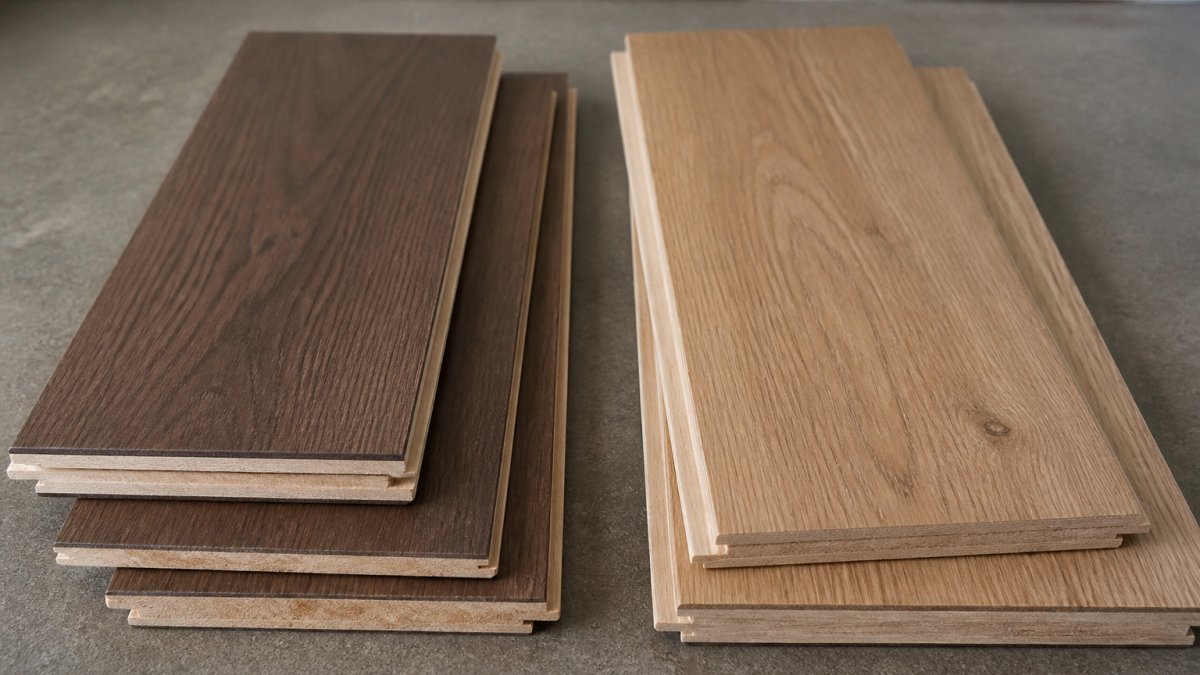
The core idea is simple. Solid hardwood is milled from a single plank of wood, so it expands and contracts across its full thickness as humidity changes. Engineered boards stack thin layers of wood with the grain alternating direction, which resists that movement.
Layers, Wear Layer Thickness and Plywood Core
A typical engineered board has three parts: the wear layer, the core and the backing. The wear layer is the visible species, and its thickness decides how many times the floor can be sanded and refinished. The core is usually multi-ply plywood, which gives the board its stability. The backing balances the board so it stays flat.
Wear layer thickness matters more than most buyers expect. A thin veneer of about 1 millimeter may allow only one light screen-and-recoat, while a thicker layer of 3 to 4 millimeters can take several full sandings over its life. When comparing boards, ask for the wear layer measurement in writing before you buy.
Engineered Hardwood Pros and Cons for Real Homes
Engineered hardwood earns its place for several practical reasons.
The drawbacks are real too. A thin wear layer limits refinishing. Cheap boards can delaminate or gap at the seams. And the price advantage over solid wood shrinks quickly as you move into premium species and thicker veneers.
Best for: homeowners who want the look of hardwood in basements, over slabs or in rooms with humidity swings.
Skip if: you plan to sand the floor many times over decades and want the lowest long-term cost per year.
Engineered vs. Solid Hardwood: Which Holds Up Better
Solid hardwood, when properly acclimated and installed, has a long track record. It can be sanded many times, and a well-kept solid floor can last generations. Engineered hardwood holds up better under moisture and temperature change, but its lifespan depends on the wear layer and the quality of the core.
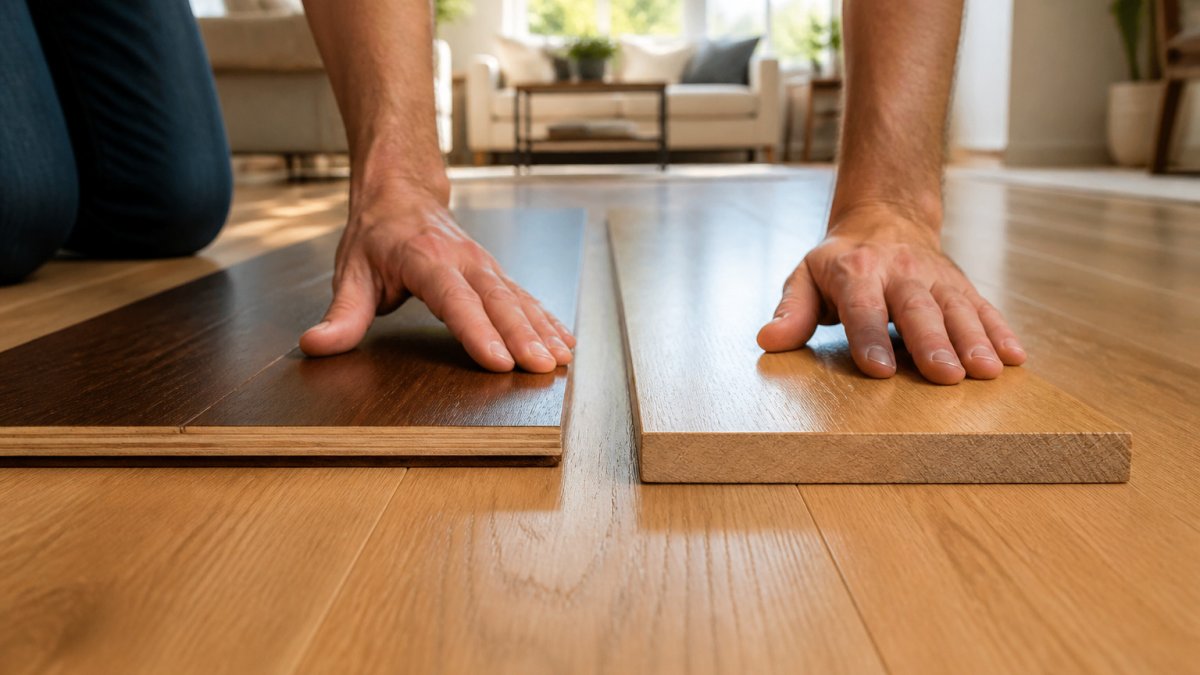
For a bedroom or living room above a crawl space, solid wood often performs well. For a basement, a kitchen with a leaky dishwasher or a home with heavy seasonal humidity, engineered boards tend to stay flatter. Neither is automatically the better product. The right choice depends on the room.
Engineered Hardwood Flooring Cost and Lifecycle Value
Cost is where most buying decisions turn, and the mistake most homeowners make is comparing only the sticker price per square foot. The number that actually matters is cost per year of service over the life of the floor. That means separating material, labor, maintenance, refinishing and replacement, and comparing them over a realistic ownership period.
Material Cost: What You Pay for the Board
Published pricing for engineered flooring varies widely by species, wear layer and core. Robbins, a flooring manufacturer, lists a typical engineered hardwood range of $4.50 to $16 per square foot for the material itself (Robbins guide comparing solid and engineered hardwood). At the low end you are typically looking at a thin veneer (around 1 mm) over a plywood core in a domestic species. At the high end you are paying for a 3-4 mm wear layer, a premium species such as white oak or hickory, a wider plank and a more durable factory finish. Ask for the wear layer measurement in writing, it is the single biggest driver of both price and longevity.
Labor and Installation Cost: The Half Most Quotes Hide
Material is only part of the total. Installation, subfloor preparation, underlayment, trim and transitions add to the figure, and the labor component swings sharply by project type:
- Above-grade over wood subfloor: installation over an already flat and dry subfloor.
- Slab-on-grade: typically requires moisture testing and may need a vapor barrier or adhesive system.
- Basement: typically requires moisture testing and subfloor preparation before installation.
- Removal and disposal of existing flooring: may be a separate line item to plan for.
Because labor rates, material prices and project conditions vary, a written quote after measurement is the reliable way to get project pricing. Freddie Sanchez Hardwood Floors can provide that after inspecting the subfloor.
Lifecycle Cost: The Comparison That Actually Decides It
A cheaper board that needs replacing in 10 years can cost more per year than a better board you can refinish twice. Here is the framework to run before you buy:
- Purchase + installation, the upfront number on the quote.
- Maintenance, routine cleaning and occasional screen-and-recoat. A recoat is far cheaper than a full sand and extends the finish life.
- Refinishing, only possible if the wear layer is thick enough. A 3-4 mm veneer may take several full sandings; a 1 mm veneer may allow only a light screen-and-recoat.
- Replacement, the scenario most buyers ignore. If the wear layer is too thin to refinish, the end of the finish life means replacement, not restoration.
Run those four numbers over the years you actually plan to stay in the home. A floor that lasts 25 years with one refinish can beat a floor that lasts 10 years with no refinish, even at a higher upfront price. When you compare quotes, ask three questions: what is the wear layer, how many times can it be refinished, and what does the warranty actually cover, including exclusions for moisture, pets and improper maintenance.
For current numbers on your project, our team can give you a written quote after we measure and inspect the subfloor.
The table below compares the main cost components the article describes, so you can see what each one covers.
| Cost component | Typical value | Note |
|---|---|---|
| Engineered material | $4.50 to $16 per sq ft | Varies by species, wear layer and core |
| Thin veneer | About 1 mm | Often allows only a light screen-and-recoat |
| Thick veneer | 3 to 4 mm | Can take several full sandings over its life |
| Installation and labor | Varies by project | Depends on subfloor, moisture and removal needs |
| Lifecycle comparison | Cost per year of service | Compare purchase, maintenance, refinishing and replacement |
Can Engineered Hardwood Be Refinished and How Often
Yes, but the limit is set by the wear layer, not by the brand or the marketing. Understanding the mechanism is what separates a floor you can restore from a floor you will eventually have to replace.
How Refinishing Actually Works
Sanding removes a thin layer of the wood surface to expose fresh material, then the floor is refinished. Each full sanding removes a small but real amount of veneer, practitioners commonly plan on a fraction of a millimeter per pass, which is why the wear layer thickness is the deciding number. A 1 mm veneer leaves almost no margin: it may allow only a light screen-and-recoat to refresh the finish, not a full sand. A 3-4 mm veneer can typically take several full sandings over its life. If a sanding cuts through the veneer and exposes the plywood core, the damage cannot be fixed by refinishing, the board has to be replaced.
A Product-Level Quality Checklist for Buyers
Before you commit to a refinishing plan, evaluate the product on measurable criteria, not on the showroom sample:
- Wear layer thickness in writing. Ask for the measurement in millimeters. This is the number that determines refinishing potential.
- Core construction. Multi-ply plywood cores generally resist movement better than high-density fiberboard cores; ask what the core is and how many plies.
- Finish system. A factory-applied finish with a stated warranty is more predictable than an unfinished board finished on site.
- Warranty exclusions. Read what voids coverage, moisture, pets, improper cleaning, and installation over an unprepared subfloor are common exclusions.
- Manufacturing quality. Look for consistent plank thickness, tight seams and no visible gaps or delamination at the edges.
Matching the Product to the Room
Refinishing potential matters most in high-traffic rooms and in homes where you plan to stay long enough to need a recoat or a sand. In a basement or over a slab, the stability advantage of engineered construction is the bigger selling point, and a thinner veneer may be an acceptable trade-off if the floor is not expected to need multiple sandings. In a main living area with pets and children, a thicker wear layer is worth paying for because it buys you future refinishing options.
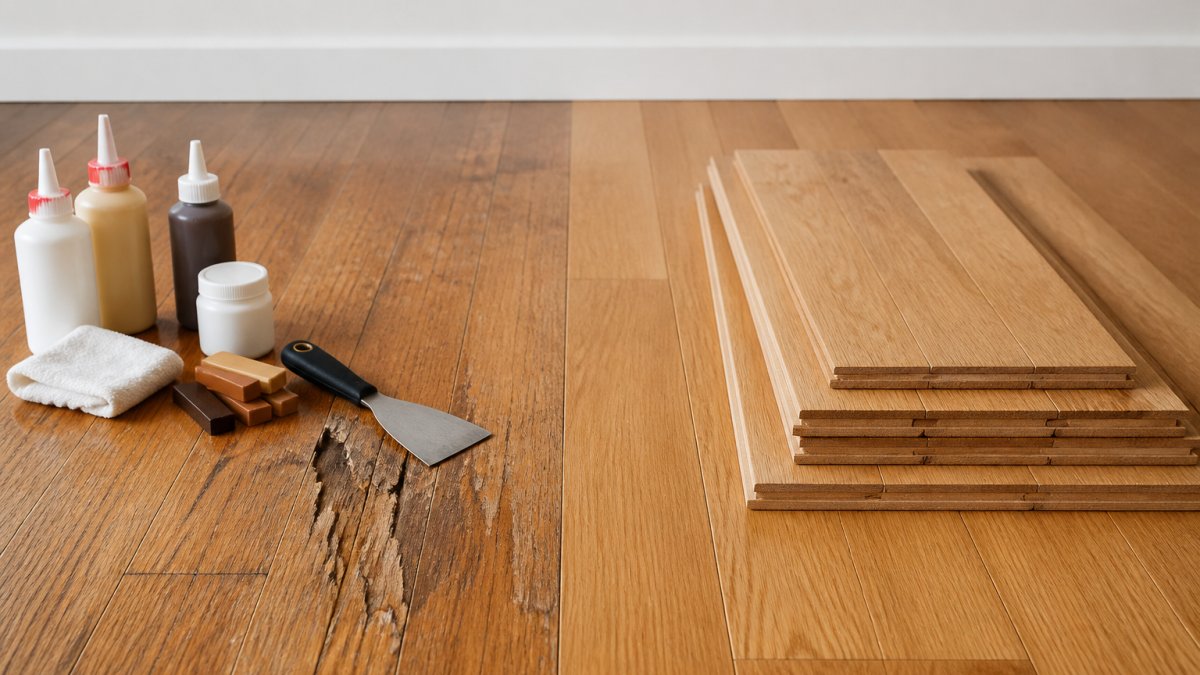
Checking the wear layer is important, because it determines whether a future refinish is possible at all.
Where Engineered Hardwood Works Best: Basements, Slabs and Moisture
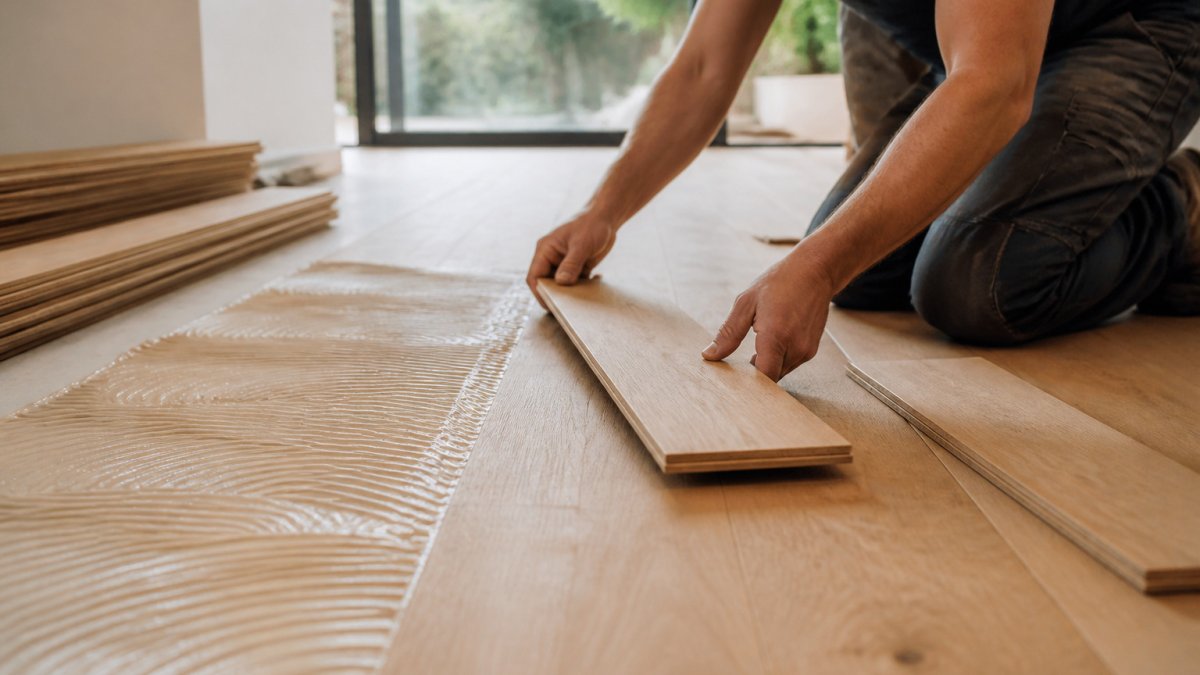
Engineered flooring is often the better choice for basements and slab-on-grade floors, where solid wood can cup or cause problems. It can also be installed as a floating floor or glued down, depending on the subfloor and the manufacturer's instructions.
Moisture is still the biggest risk. Engineered boards are more stable than solid wood, but they are not waterproof. A vapor barrier, proper subfloor moisture testing and a dry environment before installation all matter. If your home has a history of basement moisture, the subfloor should be checked before installation so the floor does not cup after install.
Deciding Whether to Invest and Booking a Free Quote
Engineered hardwood is worth the investment when the room, the budget and the time horizon line up. It suits basements, slabs and humid spaces, and it can deliver the look of real wood for less than solid in many cases. It is less compelling if you need a floor you can sand repeatedly for decades.
If you are weighing engineered against solid for your home, we can walk through the room conditions, the wear layer options and the total cost. Get a free quote from Freddie Sanchez Hardwood Floors to discuss your floor.
Frequently Asked Questions
Is engineered wood more expensive than real wood?
Engineered and solid hardwood can differ in price depending on species, grade and region, so compare written quotes from Freddie Sanchez Hardwood Floors. Installed costs also depend on the subfloor, the installation method and the amount of prep work. Compare written quotes that list material and labor separately so you can see what you are actually paying for.
How long does engineered hardwood flooring last?
Lifespan depends mainly on the wear layer thickness, the construction and how the floor is cared for. Thicker wear layers can be sanded and refinished a limited number of times, and a well-maintained floor in a low-traffic room can last decades. High-traffic areas and pets shorten that time. Check the manufacturer's warranty and wear layer specification before purchase.
Can engineered hardwood be refinished?
Many engineered floors can be refinished, but only if the top veneer is thick enough to sand. Thin veneers, often 1 millimeter or less, may only be recoated rather than sanded. Ask the installer or manufacturer for the wear layer thickness before you plan to refinish, because sanding through the veneer ruins the floor.
Can engineered hardwood be installed in a basement?
It can, when the basement is dry and the subfloor and slab moisture are controlled. Moisture testing before installation is the key step. Engineered products handle humidity fluctuations better than solid wood, but standing water or chronic dampness will still cause cupping and failure. A professional moisture assessment helps decide whether the space is suitable.