 comparison
San Jose Hardwood Floors Alternatives: 2026 Guide
Table of Contents
- Why Homeowners Search for Hardwood Floors Alternatives
- Side-by-Side Comparison of Hardwood Flooring Alternatives
- Engineered Hardwood Flooring: The Closest Match to Solid Wood
- Laminate, Vinyl, and Tile Flooring Options
- Comparing Hardwood Flooring Contractors in San Jose
- What Hardwood Floor Installation Estimates Should Include
- Hardwood Floor Installation Timeline and Project Planning
- Making the Right Choice for Your Home
- Frequently Asked Questions
Last Updated: October 6, 2026
Why Homeowners Search for Hardwood Floors Alternatives
Solid hardwood remains the benchmark for warmth, resale appeal, and repairability, but it is not the only path to a wood-look floor in a Bay Area home.
Engineered wood, laminate, vinyl, tile, bamboo, and cork all solve different problems; none is a universal upgrade over solid oak.
The wrong pick in a bathroom or basement can cup, gap, or peel within a couple of seasons; the right pick in a living room can look indistinguishable from solid wood for years.
Side-by-Side Comparison of Hardwood Flooring Alternatives
The quickest way to sort these options is by moisture tolerance, repairability, and best rooms.
| Option | Moisture Tolerance | Repairability | Best Rooms |
|---|---|---|---|
| Engineered hardwood | Moderate to high | Moderate, top layer refinishable | Living rooms, bedrooms, hallways |
| Laminate | Moderate | Low, planks replaced | Bedrooms, living rooms |
| Luxury vinyl plank | High | Low, planks replaced | Kitchens, baths, basements |
| Tile | Very high | Moderate, tiles replaced | Kitchens, baths, entries |
| Bamboo | Low to moderate | Moderate | Bedrooms, living rooms |
| Cork | Moderate | Low | Kitchens, basements |
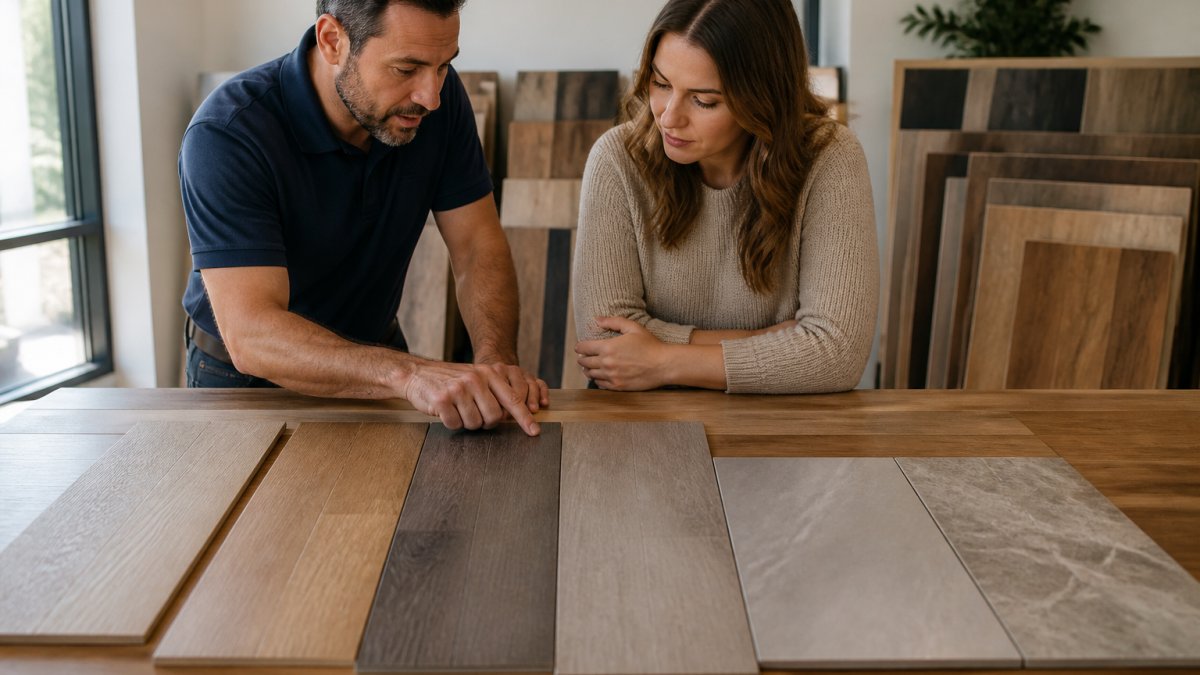
How Each Option Performs in Bay Area Homes
Bay Area homes deal with mild temperatures, high coastal humidity, and older houses with uneven subfloors and occasional moisture intrusion. Solid hardwood handles most living spaces but struggles in basements, bathrooms, and slab-on-grade rooms where moisture moves through concrete.
Engineered and vinyl tolerate that movement better, tile ignores it entirely, and laminate sits in the middle, fine in dry rooms, risky in wet ones. Bamboo and cork are renewable but more humidity-sensitive than their marketing suggests.
Engineered Hardwood Flooring: The Closest Match to Solid Wood
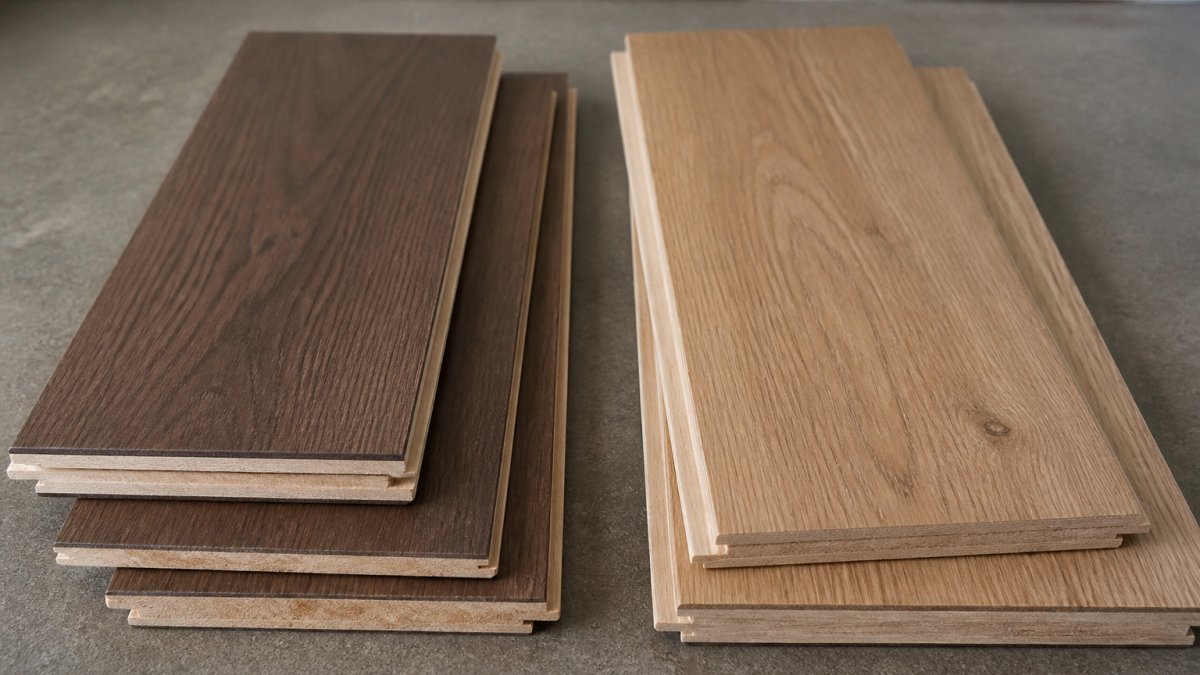
Engineered hardwood is a real wood floor built from a plywood core topped with a veneer of actual hardwood.
For Bay Area homes, that stability is the main draw: it performs well over concrete slabs and in rooms with moderate moisture.
When comparing engineered hardwood flooring to solid, ask about wear layer thickness first, that spec decides whether the floor is a 15-year surface or a 40-year one.
Laminate, Vinyl, and Tile Flooring Options
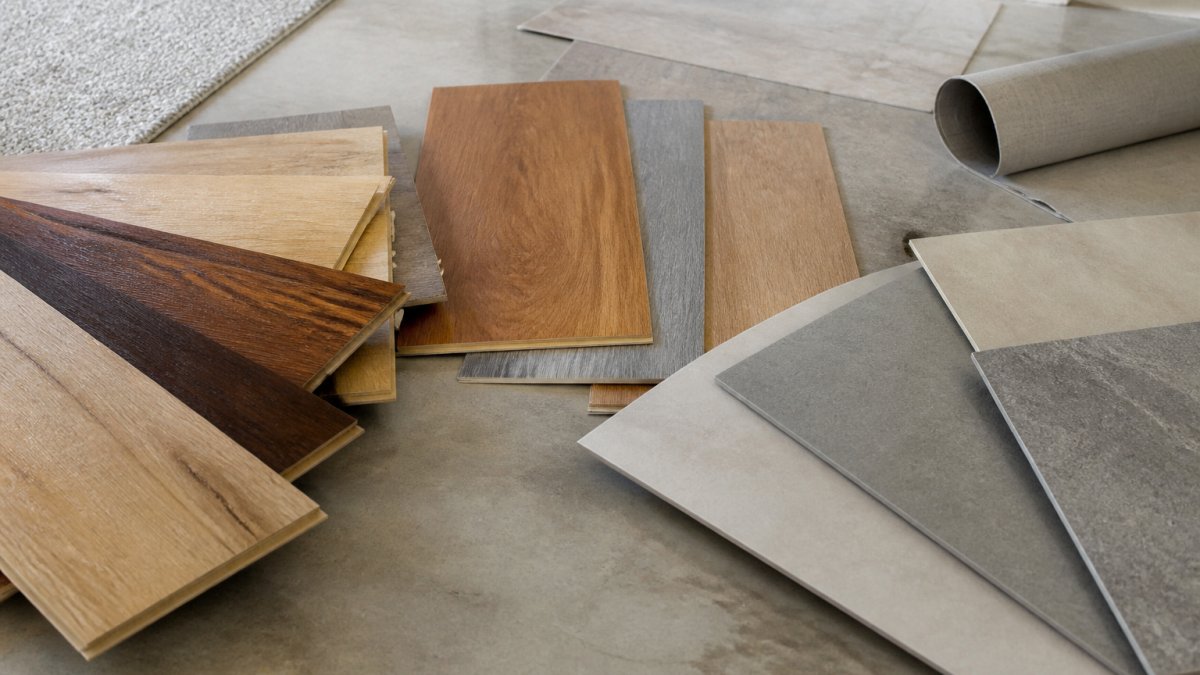
Treating these as interchangeable is where most homeowners get burned: laminate wins on price, vinyl on water resistance, and tile on durability in wet rooms.
Laminate Flooring: Budget-Friendly Wood Look
Laminate is a fiberboard core with a photographic wood image and a clear wear layer on top. It delivers a convincing wood look at the lowest cost of the group, and modern embossed textures read as wood from standing distance.
The weakness is water: spills that sit on seams can swell the core, and a swollen plank cannot be sanded back. Laminate belongs in bedrooms, living rooms, and hallways, not bathrooms or laundry rooms.
Vinyl Flooring: Moisture-Resistant and Durable
Luxury vinyl plank is the most moisture-tolerant wood-look option available. The waterproof core handles kitchens, bathrooms, basements, and pet accidents without swelling, and it is the most forgiving choice over slightly uneven subfloors.
The honest limitation is feel. Vinyl is softer and cooler underfoot than wood and does not add the same resale value. It is a practical floor, not a prestige floor.
Tile Flooring: Best for Kitchens and Bathrooms
Tile is the most durable option in wet areas and the easiest to clean. Wood-look porcelain gives you plank appearance with none of the water concerns, a strong fit for kitchens, bathrooms, and mudrooms.
Where tile falls short is comfort and acoustics: it is hard and cold underfoot, it echoes, and installation is slower and more disruptive than a floating floor.
Comparing Hardwood Flooring Contractors in San Jose
Choosing a material is half the decision; the other half is who installs it. Hardwood flooring contractors in San Jose differ widely in subfloor prep, moisture testing, and communication, and those differences show up years later in how the floor performs.
When you compare bids, look past the headline number. A low bid that skips moisture testing or subfloor leveling is not a bargain, it is a delay.
What to Verify Before You Sign
Most homeowners compare on price alone and skip the checks that protect them. A short verification list closes most of the gap:
- State license. In California, any project over $500 in combined labor and materials requires a contractor license from the Contractors State License Board (CSLB). Look the license number up on the CSLB website and confirm it is active, in the right classification, and not suspended.
- Bond and insurance. Ask for a certificate of general liability insurance and proof of workers' compensation coverage. If a crew member is injured on your property and the contractor is uninsured, the claim can land on your homeowner's policy.
- Deposit limits. Under California law, a home improvement contractor cannot collect more than 10% of the contract price or $1,000, whichever is less, as a down payment before work begins (Learn About Home Improvement Contracts). A request for half up front is a red flag.
Questions That Separate Bidders
A few questions reveal how a contractor works:
- How do you test for moisture, and what do you do if the reading is high? Good answers mention a moisture meter or calcium chloride test and a specific remedy, such as a vapor retarder or a different adhesive.
- Who is on the crew, and are they employees or subcontractors? This affects both accountability and insurance.
- What is your written warranty, and does it cover labor as well as materials? Manufacturer warranties cover the product; they do not cover a bad install.
- How do you handle a floor that fails after installation? The answer should describe a process, not a promise.
- Can you provide three local references from the past year? Recent references in similar homes tell you more than a portfolio of showpieces.
Red Flags in a Flooring Bid
- A price that is dramatically below every other bid, with no explanation of what is excluded.
- No mention of subfloor prep, moisture testing, or disposal.
- Pressure to sign the same day or a cash-only discount.
Freddie Sanchez Hardwood Floors specializes in providing expert, high-quality wood floor installation services. Our experienced team is dedicated to ensuring every project meets the highest standards of craftsmanship and long-lasting durability. We prioritize clear, constant communication with our customers from start to finish to ensure your vision is brought to life with precision.
Verify a contractor license number
What Hardwood Floor Installation Estimates Should Include
A useful estimate lists more than a square-foot price. It should spell out scope of work, materials, prep, and what happens if the subfloor needs repair, letting you compare alternatives on total installed cost rather than the sticker price of the box.
The Cost Stack Behind Every Bid
Every flooring quote is built from the same layers. Understanding them lets you compare bids apples to apples:
| Cost Component | What It Covers | Why It Varies |
|---|---|---|
| Materials | Planks, underlayment, adhesive, trim | Species, wear layer, thickness, brand |
| Removal and disposal | Tearing out the old floor, hauling it away | Existing floor type, square footage, dump fees |
| Subfloor prep | Leveling, patching, moisture barrier | Slab condition, age of home, prior water damage |
| Labor | Installation, cutting, transitions | Layout complexity, room count, stairs |
| Finishing | Sanding, staining, sealing, cure | Only applies to unfinished or site-finished wood |
| Extras | Baseboards, shoe molding, stair noses | Often quoted separately and easy to miss |
A bid that lists only "materials and labor" is hiding the rest of the stack. Ask for each line separately.
Why Alternatives Cost Less Up Front
Solid and engineered hardwood sit at the top of the installed-cost range because the material is real wood and the labor is skilled. Laminate and luxury vinyl plank sit lower because the planks are manufactured and the install is often floating, which is faster.
Those are directional patterns, not fixed prices. Local labor rates, subfloor condition, and room count all move the number; the only reliable figure is a written estimate based on a site visit.
The Lifecycle Math Most Bids Ignore
Initial price is only part of the story. The bigger question is cost per year of service:
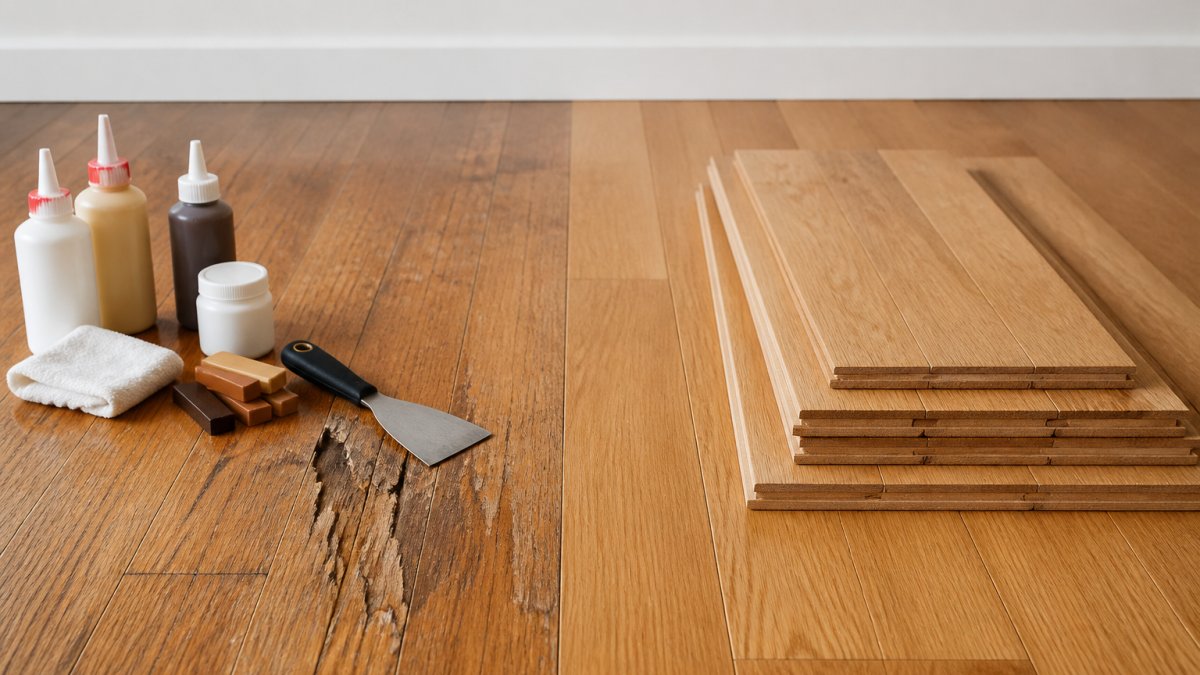
- Solid and thick-veneer engineered hardwood can be sanded and refinished multiple times, which resets the surface and extends the floor's life well beyond the original install.
- Laminate and vinyl cannot be refinished. When the wear layer dulls or a plank is damaged, the fix is replacement, and matching a discontinued pattern years later is often impossible.
- Tile lasts a long time but is unforgiving: a cracked tile means cutting it out, and a discontinued tile means replacing a whole area.
A floor that costs more today but can be refinished twice may cost less per year than a cheaper floor that gets replaced once. Ask each bidder how many times their product can be refinished, and write the answer into the contract.
Line Items to Demand in Writing
Look for these in any quote:
- Moisture testing and subfloor inspection
- Removal and disposal of the existing floor
- Subfloor leveling or repair, if needed
If a bid omits prep and disposal, the final invoice will not match the estimate. Ask for the missing items in writing before you sign.
Hardwood Floor Installation Timeline and Project Planning
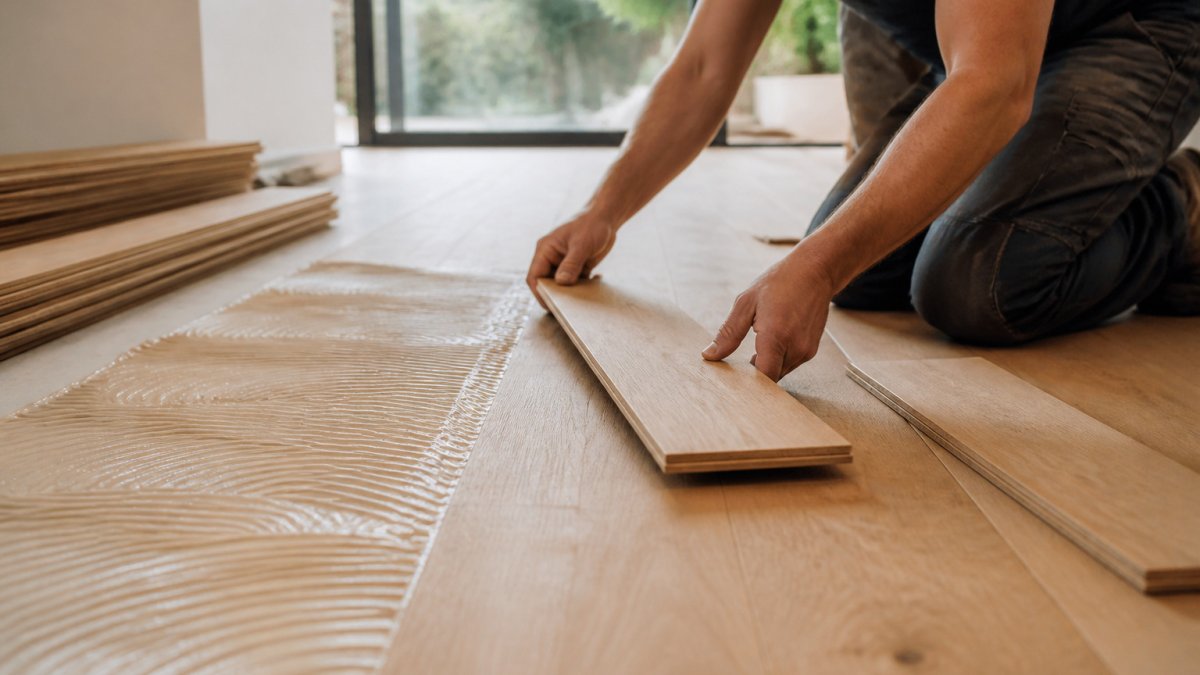
Most residential flooring projects follow a predictable sequence, and knowing it helps you coordinate with other trades during a remodel. A typical hardwood floor installation timeline runs from a few days for a single room to two weeks or more for a whole house, depending on square footage, prep work, and whether the floor is finished on site.
Here is how the phases usually break down:
| Phase | Typical Duration | What Happens |
|---|---|---|
| Consultation and measure | 1-3 days | Site visit, measurements, material selection |
| Material ordering | 1-3 weeks | Lead time varies by product and grade |
| Removal and prep | 1-3 days | Tear-out, subfloor repair, moisture test |
| Installation | 2-5 days | Planks laid, transitions set |
| Finishing and cure | 3-7 days | Sanding, staining, sealing, cure time |
If you are selling a home, build in a buffer. Finishing and cure time cannot be rushed without risking a finish that scuffs during showings. Talk to your contractor about the schedule before listing.
Making the Right Choice for Your Home
There is no single best alternative to hardwood. The right answer depends on the room, the moisture conditions, and how long you plan to stay.
For living rooms and bedrooms where you want real wood character, engineered hardwood is the strongest substitute. For kitchens, baths, and basements, vinyl or tile will outlast anything wood-based.
Whichever direction you take, the installation quality decides how the floor performs.
Frequently Asked Questions
What is the fake wood flooring called?
Fake wood flooring typically refers to laminate, vinyl plank, or engineered wood. Laminate uses a photographic wood image over fiberboard. Vinyl plank (LVP or LVT) is synthetic and often waterproof. Engineered wood has a real wood veneer over plywood. Each delivers a wood look at different price points and durability levels. Engineered hardwood flooring is the closest alternative to solid hardwood because it uses actual wood on top.
What should a hardwood flooring estimate include?
A complete hardwood floor installation estimate should list material type and grade, square footage, removal and disposal of old flooring, subfloor prep, labor, trim and transitions, and finish costs. Ask whether the quote covers moisture testing, leveling, and cleanup. Get the estimate in writing with a clear scope so you can compare contractors fairly. Freddie Sanchez Hardwood Floors provides free estimates with no obligation.
How long does hardwood floor installation take?
Most hardwood floor installation projects take 3 to 7 days for a single room, depending on square footage, material type, and subfloor condition. Engineered hardwood often installs faster than solid wood because it handles moisture changes better. Add 2 to 3 days for acclimation and 3 to 5 days for finishing if the floor is sanded and sealed on site. Your contractor should give you a written timeline before work begins.
Is engineered hardwood worth the investment?
Engineered hardwood flooring costs less than solid hardwood and handles humidity better, which matters in Bay Area homes with moisture swings. It can be refinished once or twice depending on veneer thickness. For basements, kitchens, and rooms with concrete subfloors, engineered wood outperforms solid wood. The investment makes sense when you want a real wood surface without the movement issues of solid planks.
How do I compare hardwood flooring contractors?
Start by checking licensing, insurance, and local reviews. Ask for photos of completed projects similar to yours. Get at least two written estimates with itemized line items. Confirm who handles permits, disposal, and subfloor repair. Ask about warranties and post-installation support. A responsive contractor who communicates clearly before the job is more likely to communicate well during it.