 how-to
How to Choose the Best Hardwood Floor Finish
Last Updated: October 24, 2026
Quick Summary
To choose the best hardwood floor finish, first identify what is already on the floor, then match the finish to your room's traffic and moisture, your household, and your wood species. Water-based polyurethane dries fast and stays clear, oil-based polyurethane gives amber warmth but cures slowly, and penetrating oils are easier to spot-repair.
- Wipe a hidden spot with mineral spirits: softening means a surface film, soaking in means oil or wax.
- Never apply water-based polyurethane over a waxed floor, because the new coat will peel within months.
- Matte and satin sheens hide dust and scratches best, while gloss shows every scuff and speck.
- Most film finishes need two to three coats for a serviceable film.
- A floor that is dry enough to walk on is not fully cured, so follow the label's full cure window.
Table of Contents
- Start With Your Floor: How to Identify Hardwood Floor Finish
- Water-Based Polyurethane for Wood Floors: Fast Drying and Clear Color
- Oil-Based Polyurethane for Hardwood Floors: Amber Warmth and Long Curing
- Surface vs Penetrating Finishes: Durability, Scratch Resistance, and Repairability
- Hardwood Floor Sheen Options: Matte, Satin, Semi-Gloss, and Gloss
- Match the Finish to Your Household, Room, and Wood Species
- Safety, VOCs, and What to Expect During Application
- Frequently Asked Questions
Start With Your Floor: How to Identify Hardwood Floor Finish
Before you pick a new hardwood floor finish, find out what is already on the floor.
To identify an existing hardwood floor finish, wipe a hidden spot with a cloth dampened with mineral spirits.
Two more checks help:
- Water test: A drop of water beads up on polyurethane but darkens bare or oiled wood.
- Scratch test: A coin scratch lifts a thin plastic film on surface finishes.
Still unsure? Test a small area before a full recoat. Some finishes do not bond, and a bad match means sanding the whole floor back down.
Water-Based Polyurethane for Wood Floors: Fast Drying and Clear Color
Water-based polyurethane for wood floors is the practical pick when time and color matter.
That clarity matters. If you love the pale, cool look of maple, white oak, or ash, a water-based finish protects it without the warming of an oil-based product.
The trade-offs are real:
- Lower solvent smell, which helps in occupied homes.
- Faster recoat windows, often the same day.
- Slightly less amber warmth for people who want that aged look.
Modern water-based formulas hold up well in normal family homes and suit a living room, hallway, or bedroom where you want the floor back in service quickly.
Oil-Based Polyurethane for Hardwood Floors: Amber Warmth and Long Curing
Oil-based polyurethane for hardwood floors delivers the classic warm, honey-toned look many homeowners picture.
The catch is time and smell. Oil-based products give off strong fumes and need much longer to cure. Furniture goes back late, and the house needs real ventilation for days.
Here is what to weigh:
- Rich amber color that deepens the wood over time.
- Longer drying and curing windows, so plan around your schedule.
- Strong odor during application and cure.
This finish suits a homeowner who is not living on the floor the same week and wants that warm, traditional glow.
Surface vs Penetrating Finishes: Durability, Scratch Resistance, and Repairability
Surface and penetrating finishes protect wood in two different ways, which decides how you repair them. A surface finish is a film on top of the wood, like polyurethane or aluminum oxide factory coatings. A penetrating finish soaks into the fibers and hardens from within, like oil or hardwax oil.
The contrast matters when something goes wrong. A deep scratch in a surface finish cuts through the film and often needs a spot recoat or full sand.
| Finish Type | Durability | Scratch Resistance | Repairability |
|---|---|---|---|
| Water-based polyurethane | Good | Good | Spot recoat, harder to blend |
| Oil-based polyurethane | High | Good | Spot recoat, visible patches |
| Penetrating oil / hardwax | Moderate | Moderate | Easy local touch-up |
| Aluminum oxide (factory) | Very high | Very high | Hard to recoat, often full sand |
Aluminum oxide and acrylic-infused factory coatings are tough but the hardest to refinish. Many cannot be recoated at all and must be sanded to bare wood, a cost to know before you buy.
Hardwood Floor Sheen Options: Matte, Satin, Semi-Gloss, and Gloss
Hardwood floor sheen options run from flat matte to high gloss, and the choice changes how a room feels more than most expect.
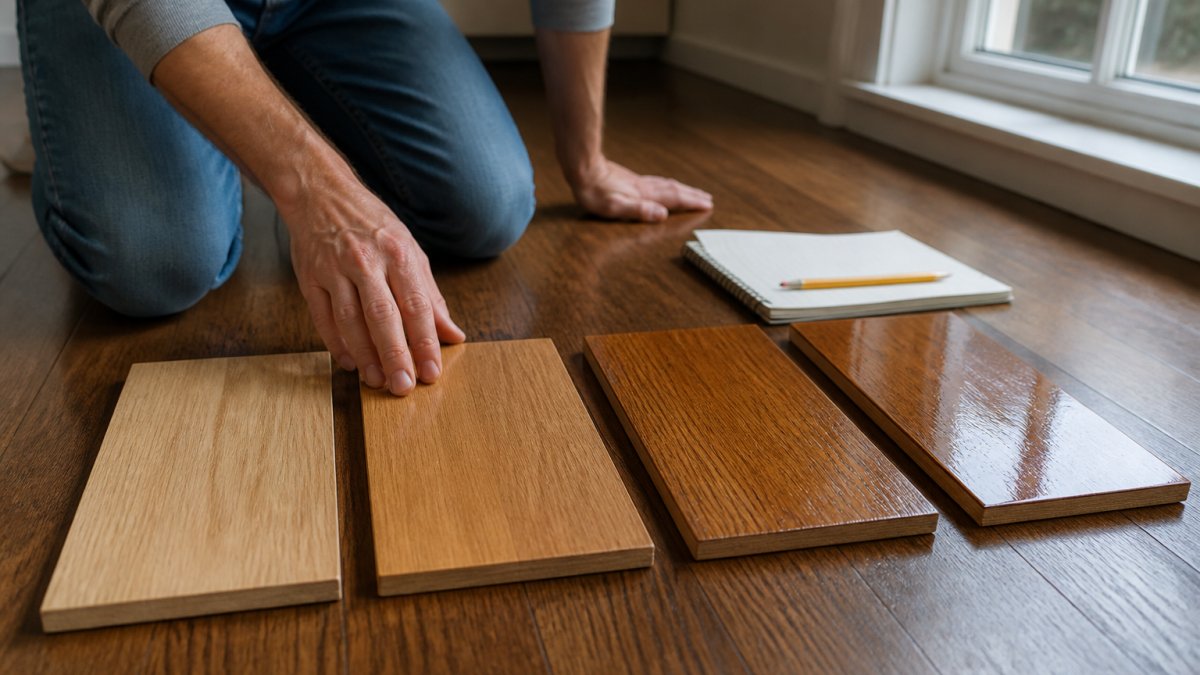
Here is how each level behaves:
- Matte: Hides dust, scratches, and imperfections best. A modern, understated look.
- Satin: The most popular all-rounder. Soft glow, forgives small marks.
- Semi-gloss: Brighter reflection, easy to clean, shows dust sooner.
Consider the lighting. A high-gloss floor in a bright, sunlit room shows every scuff and speck of dust, while a matte floor in the same room looks calm and clean. Match the sheen to the light, not just a photo you liked online.
Match the Finish to Your Household, Room, and Wood Species
The best hardwood floor finish fits your household, room, and wood species. There is no single winner: a finish that shines in a quiet study can fail in a kitchen with two dogs and three kids. Use this framework to resolve the trade-offs in order.
Step 1: Score the room on traffic and moisture
Rank each room on two axes before you look at a sample board.
- Traffic: low (bedroom, formal dining), medium (living room, home office), high (kitchen, hallway, mudroom, stairs).
- Moisture and spill risk: dry (bedroom, dining), occasional (living room, office), wet (kitchen, bath-adjacent, entry).
High traffic plus wet risk is the hardest combination: give that room the toughest film-forming finish you can tolerate on color, plus a satin or matte sheen to hide wear. Low traffic plus dry conditions lets you choose for appearance first.
Step 2: Weight the household factors
- Pets: claws scratch film finishes and dull gloss fast. A penetrating oil or hardwax oil blends localized scratches better than polyurethane, which tends to show a scuffed patch until the whole area is recoated. If you want a film finish anyway, choose satin or matte and plan on more frequent screen-and-recoat cycles.
- Children: dropped toys and spilled drinks favor a finish that tolerates spot repair. Penetrating oils win on repairability; water-based polyurethane wins on fast return to service after a spill.
- Sunlight: strong direct sun accelerates ambering in oil-based finishes and can fade some wood species unevenly. If a room gets hours of direct afternoon sun, a clear water-based finish preserves the color you picked, and window film or UV-blocking glazing is worth discussing with your installer.
Step 3: Match the species and its color drift
Wood species behave differently under the same finish, which either preserves or accelerates that drift.
- Maple, white oak, ash, birch: these pale, cool-toned species turn yellow-orange under oil-based polyurethane. A clear water-based finish keeps the tone you selected. If you want warmth without the orange shift, ask about a water-based product with a slight amber tint.
- Red oak: already warm and porous. Oil-based finishes deepen the red; water-based keeps it closer to neutral. Either works, but sample both on an offcut from your actual floor.
- Cherry and walnut: both darken with age and light exposure. Oil-based finishes add amber on top of that natural darkening, which some homeowners love and others find too heavy. A clear water-based finish lets the species' own color change lead.
Step 4: Resolve the conflicts
When two priorities conflict, use these tie-breakers:
- Durability vs. repairability: film finishes (polyurethane, factory aluminum oxide) are more durable but harder to spot-repair. Penetrating oils are less durable but easier to touch up. In a high-traffic room with pets, many practitioners favor a satin water-based film finish plus a planned recoat schedule over a penetrating oil that needs frequent refreshing.
- Speed vs. color: if you need the floor back fast and want the amber look, a tinted water-based finish is the compromise. It will not match a true oil-based amber exactly, so sample it first.
- Sheen vs. light: a high-gloss floor in a bright, sunlit room shows every scuff and speck of dust. A matte floor in the same room looks calm and clean. Match the sheen to the light, not just to a photo you liked online.
Step 5: Confirm with a sample on your own wood
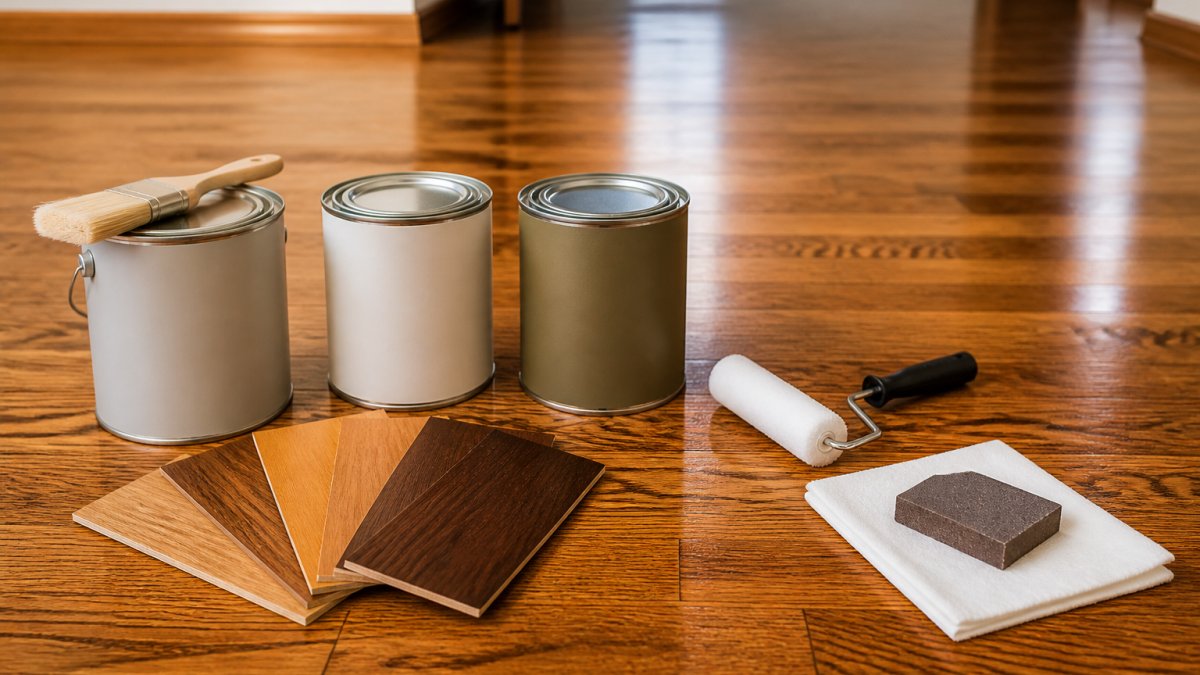
No framework replaces a physical sample. Ask your installer to apply two or three candidate finishes to an offcut or hidden area of the actual floor, let them cure fully, and view them under the room's real lighting at different times of day. Color shift, sheen, and grain pop read differently on a sample board than on a finished floor.
Safety, VOCs, and What to Expect During Application
VOCs, or volatile organic compounds, give many finishes their strong smell and are the main safety concern during application. Oil-based polyurethane carries higher VOCs and stronger fumes; water-based products generally carry lower VOCs, though none are truly zero. Safety and success depend as much on conditions and schedule as on the product.
Compare VOCs by product category
VOC content is listed on the product label and safety data sheet, and it varies widely within each category. As a general pattern:
- Oil-based polyurethane: highest VOC content and strongest odor. Fumes persist through the full cure, which can run for days to weeks depending on humidity and coat count.
- Water-based polyurethane: lower VOC content and much milder odor. Most of the off-gassing happens in the first hours, which is why these products are common in occupied homes.
- Penetrating oils and hardwax oils: VOC content ranges from low to moderate depending on the product. Some plant-based formulations are marketed as low-VOC, but "natural" does not automatically mean low emissions, so read the label.
If anyone in the home has asthma, chemical sensitivity, or is pregnant, ask for the safety data sheet for every product before work begins and discuss low-VOC options. A reputable installer will tell you the trade-offs honestly rather than promise a fume-free job.
Plan the application conditions, not just the product
Temperature, humidity, preparation, coat count, and cure time affect the result as much as the finish you pick. Blushing (a milky haze), poor adhesion, and slow cure usually trace back to conditions, not the can.
- Temperature: most manufacturers specify a safe application range, commonly around 65 to 80 degrees Fahrenheit for the floor and the room. Cold floors slow cure and weaken adhesion; hot rooms shorten pot life and open time.
- Humidity: high humidity slows solvent and water evaporation, which can trap moisture in the film and cause blushing or a soft cure. Low humidity can cause fast drying and lap marks. Aim for the middle of the label's range and monitor it through the job.
- Preparation: sanding grit sequence, dust removal, and gap filling all affect how the finish bonds. Skipping dust extraction is one of the most common causes of a rough, poorly bonded coat.
Ventilate and protect the household
- Ventilate the space with open windows and fans during and after application, and keep HVAC returns covered or filtered if the system serves the work area.
- Stay off the floor until the finish is fully dry, and keep pets and kids away.
- Plan to vacate for oil-based work, since the smell lingers for days.
Weigh total cost of ownership, not just upfront price
A cheaper finish that needs redoing sooner can cost more over the years than a durable one applied right. Compare total cost of ownership, not the per-square-foot estimate:
- Material and application cost: professional application pricing varies by region, product, and floor condition, so get itemized quotes rather than a single lump sum.
- Expected service life: a well-applied film finish in a normal household typically lasts years before a recoat, while a penetrating oil may need refreshing more often. Ask each installer for their realistic recoat interval for your household.
- Recoating and refinishing needs: screen-and-recoat cycles are cheaper than a full sand, and some factory finishes cannot be recoated at all. Know which category your floor falls into before you commit.
For current pricing on your project, get a free quote from Freddie Sanchez Hardwood Floors.
Frequently Asked Questions
How can I tell what kind of finish is already on my wood floor?
Apply a few drops of water to an inconspicuous spot and let them sit for a minute. If the water beads on the surface, the floor has a surface finish such as polyurethane. If it soaks in and darkens the wood, you likely have a penetrating finish like oil or wax. You can also check for a visible film near edges or vents; a clear plastic-like layer points to a surface coating. Test in a closet or corner first so you do not leave a mark on a visible area.
Which hardwood floor finish is best for high-traffic areas?
For busy hallways, kitchens, and homes with pets or kids, a water-based polyurethane with aluminum oxide or an acrylic-infused coating offers strong abrasion resistance and dries clear. Oil-based polyurethane also holds up well and adds warmth, but it takes longer to cure and may amber over time. Surface finishes handle heavy traffic better than penetrating oils because the protective layer sits on top of the wood. Ask your installer which product fits your specific wood species and traffic level.
What sheen should you choose for hardwood floors?
Matte and satin sheens hide scratches, dust, and imperfections best, which makes them practical for high-traffic rooms and older floors. Semi-gloss and gloss reflect more light and show dust and wear more readily, but they can make a formal space feel brighter. Many homeowners now pick matte or satin for living areas and reserve gloss for trim or low-traffic rooms. Bring sample boards home and view them under your actual lighting before deciding.
How long does hardwood floor finish take to dry and cure?
Water-based polyurethane typically dries to the touch in a few hours and accepts foot traffic within 24 hours, with full cure in about a week. Oil-based polyurethane needs 8 to 24 hours between coats and can take several days before furniture goes back, with full cure taking up to 30 days. Humidity and temperature affect both. Plan your project timeline around the cure window, especially if you are preparing a home for showings or moving furniture back in.