 how-to
Preventing Hardwood Floor Cupping: A Moisture Control Guide
Table of Contents
- What Causes Hardwood Floor Cupping and Why Moisture Matters
- Ideal Indoor Humidity for Wood Floors
- How to Use a Moisture Meter on Hardwood
- Controlling Moisture: Subfloor, Vapor Barriers, and Dehumidifiers
- Hardwood Floor Restoration After Water Damage
- Acclimation and Proper Installation Practices
- Cleaning and Maintenance to Prevent Moisture Damage
- Frequently Asked Questions
Last Updated: September 30, 2026
What Causes Hardwood Floor Cupping and Why Moisture Matters
Hardwood floor cupping moisture is one of the most common problems homeowners face, and it starts with understanding how wood responds to moisture in the air. Wood is a natural material that expands and contracts based on humidity levels. When moisture content changes, the wood fibers absorb or release water, causing dimensional shifts that can warp your floors.
The problem isn't always visible at first. It builds gradually until your beautiful floors start showing signs of trouble.
How moisture affects wood fibers
Wood fibers are like tiny sponges. They pull moisture from humid air and swell. When humidity drops, they release that moisture and shrink. This constant movement is natural, but excessive movement causes damage.
The issue gets worse when moisture penetrates from below. Concrete slabs, crawl spaces, and subfloors can wick moisture upward. This moisture hits the hardwood from underneath while the top surface stays dry. The result is uneven expansion, the bottom swells while the top stays put. This creates the cupped appearance.
Cupping vs. buckling vs. crowning
These three problems look similar but have different causes. Understanding the difference helps you identify what's happening to your floors.
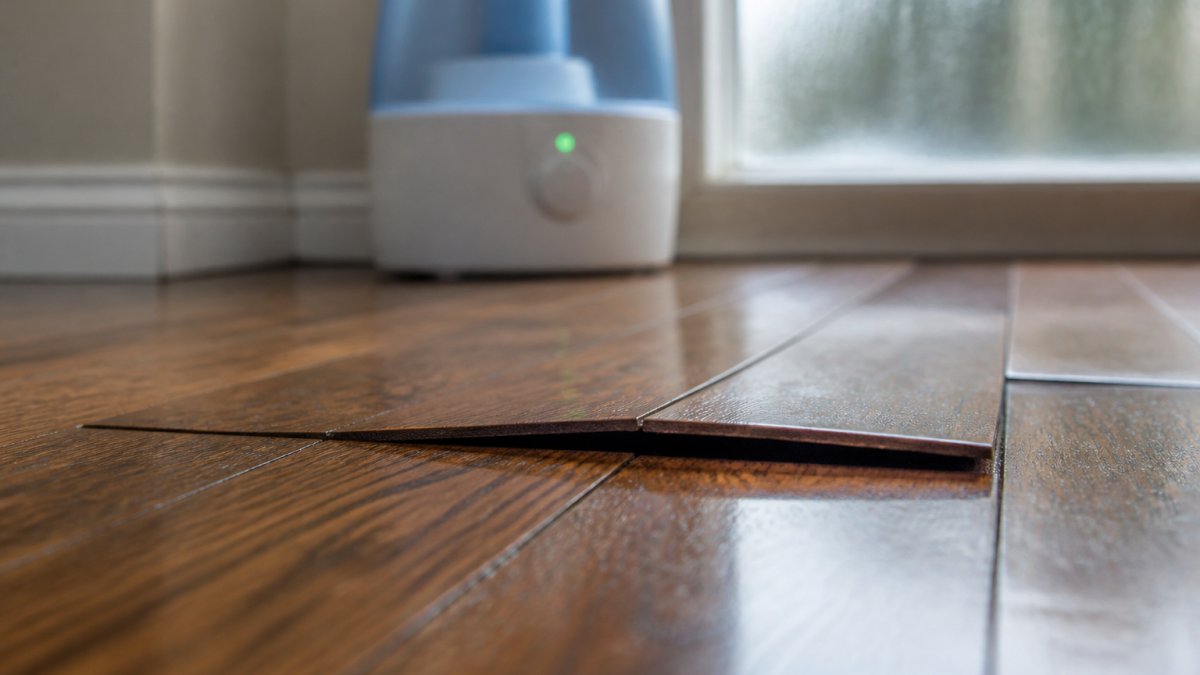
Cupping is when the edges of boards are higher than the center. The board looks like a shallow cup. This happens when the bottom of the board absorbs more moisture than the top.
Buckling is when boards actually lift off the subfloor. This is more severe than cupping and usually means moisture levels have been very high for an extended period.
Crowning is the opposite of cupping. The center of the board is higher than the edges. This typically happens after cupped floors dry out, sometimes the wood doesn't fully return to flat.
Ideal Indoor Humidity for Wood Floors
The sweet spot for hardwood floors is between 30% and 50% relative humidity. This range keeps wood at its equilibrium moisture content, where it stays stable and flat. Maintaining this humidity level is the single most important step in preventing hardwood floor cupping moisture.
Most homeowners don't realize how much humidity fluctuates throughout the year. Winter heating dries out indoor air. Summer cooling can trap moisture. These seasonal swings stress your floors.
Equilibrium moisture content and seasonal changes
Equilibrium moisture content is the point where wood stops exchanging moisture with the air around it. At this point, the wood is stable. For most hardwood species, this happens in that 30-50% humidity range.
The problem is seasonal. Winter in many areas drops humidity to 20% or below. Summer can push it to 60% or higher. These swings force your wood to constantly expand and contract. Over time, this movement causes stress that leads to cupping, buckling, and crowning.
Different wood species react differently to moisture. Some are more sensitive than others.
Using HVAC and air conditioning to maintain stable humidity
Your HVAC system is your first defense against humidity problems. A properly functioning system maintains consistent temperature and humidity year-round.
Here's what works:
- Run your air conditioning during humid months to remove excess moisture
- Use a humidifier in winter when heating dries out the air
- Keep your HVAC system well-maintained with clean filters
- Set your thermostat to maintain steady temperatures
- Avoid opening windows during peak humidity hours
The key is consistency. Stable conditions beat perfect conditions. A home that stays at 45% humidity all year is better than one that swings between 25% and 65%.
How to Use a Moisture Meter on Hardwood
A moisture meter is your diagnostic tool. It tells you exactly how much moisture is in your wood. This reading guides every decision about prevention and repair.
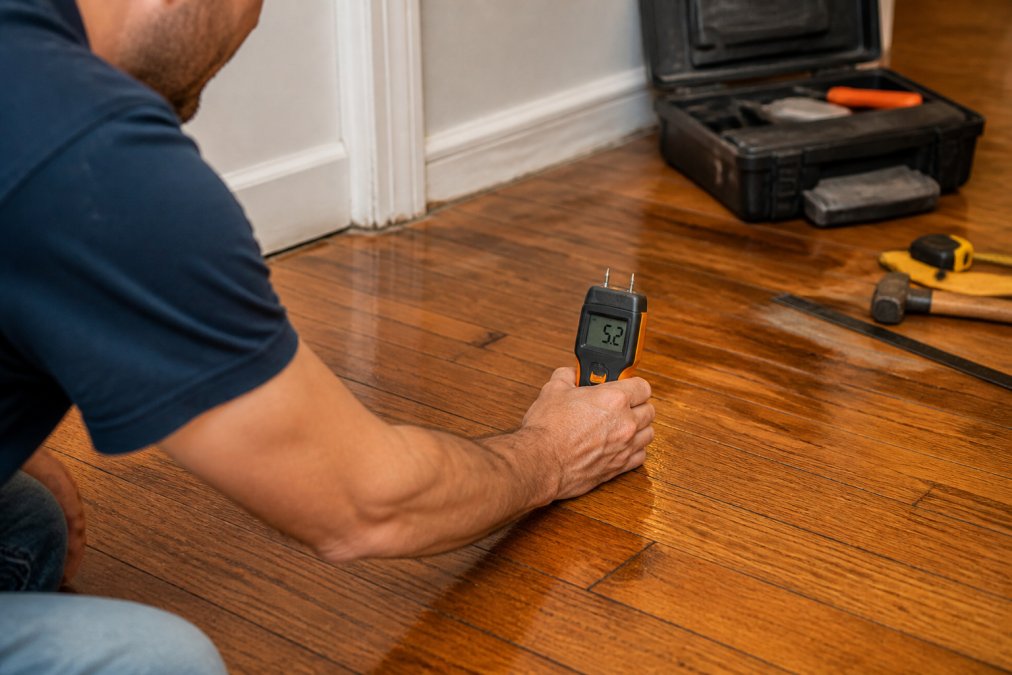
There are two types of moisture meters: pin meters and pinless meters. Pin meters push small electrodes into the wood. Pinless meters use electromagnetic waves to read moisture without damaging the surface. For checking existing floors, pinless is better.
Testing subfloor and concrete slab moisture
The subfloor and concrete slab beneath your hardwood are where most moisture problems start. Testing these areas is critical.
For concrete slabs, take readings in multiple spots across the floor. Check near walls, in corners, and in the center. Concrete can have moisture in one area and stay dry in another.
For subfloors, test the wood itself. Anything higher indicates moisture is moving up from below. This is the time to investigate, check for plumbing leaks, poor drainage outside, or inadequate crawl space ventilation.
Take multiple readings. One high reading could be a fluke. Three high readings in different spots means you have a real problem.
Controlling Moisture: Subfloor, Vapor Barriers, and Dehumidifiers
Prevention requires a layered approach. You can't rely on just one method. Instead, combine subfloor preparation, vapor barriers, and dehumidifiers for complete protection.
Vapor retarders and moisture barriers during installation
A vapor barrier or vapor retarder is your insurance policy against moisture rising from below. These materials slow moisture movement but don't stop it completely. That's actually the right approach, wood needs some moisture exchange to stay stable.
Install a vapor retarder over concrete slabs before laying hardwood. It should cover the entire surface with seams overlapped by at least 6 inches. Tape the seams. This single step prevents most moisture problems from concrete.
Solid hardwood needs more protection because it's more vulnerable to moisture movement.
Crawl space ventilation and hydrostatic pressure
Crawl spaces are moisture factories. Damp soil releases water vapor that rises into your home. Proper ventilation removes this moisture before it reaches your floors.
Open vents during dry months. Close them during humid months to prevent outside humidity from entering.
Hydrostatic pressure is moisture being pushed upward from groundwater. This is serious. If you have standing water or very damp soil, you need a dehumidifier in the crawl space. Some homes need a sump pump or French drain to handle groundwater properly.
Hardwood Floor Restoration After Water Damage
Water damage doesn't always mean replacement. Sometimes you can reverse the damage. Sometimes you can't. Understanding the difference saves you money and time.
Reversibility vs. replacement decisions
If hardwood floor cupping moisture damage is caught early, cupping can sometimes reverse itself. The key is drying the wood quickly and completely.
When cupping is caught within days of water exposure, remove the source of moisture immediately. Increase ventilation. Run dehumidifiers. Check moisture levels daily. As the wood dries, cupping often reduces or disappears.
If cupping has been present for weeks or months, the wood may have set in that curved position. The fibers have adapted. Drying won't reverse it. At this point, you're looking at sanding and refinishing or replacing affected boards.
Buckling is almost always a replacement situation.
Wood species sensitivity to moisture
Not all hardwoods are equal. Some species are naturally more stable in humid environments.
Acclimation and Proper Installation Practices
Before installation, hardwood must acclimate to your home's humidity. This process is non-negotiable.
Expansion gaps and seasonal movement
Leave a gap between hardwood and walls. This expansion gap gives the wood room to move as humidity changes. A typical gap is 1/2 inch, but it varies by room size and wood species.
Cleaning and Maintenance to Prevent Moisture Damage
Daily maintenance prevents moisture problems. Water is hardwood's enemy. Spills, wet mops, and humid cleaning methods cause damage.
| Prevention Method | Best For | Frequency |
|---|---|---|
| HVAC maintenance | Year-round humidity control | Monthly filter checks |
| Moisture meter testing | Identifying problems early | Before installation, annually |
| Vapor barriers | Concrete slab protection | One-time installation |
| Dehumidifiers | Humid seasons | Run as needed |
| Proper acclimation | New installations | 7-14 days before install |
| Maintenance cleaning | Daily protection | Weekly or as needed |
Additional Resources:
Frequently Asked Questions
Why are my hardwood floors cupping?
Hardwood floor cupping occurs when the bottom of the wood absorbs more moisture than the top surface, causing the edges to rise and create a cup-like shape. This happens due to excess humidity, moisture from a concrete slab below, or water exposure. Relative humidity levels above 60% and moisture content in wood above its equilibrium level are primary culprits. Addressing the moisture source immediately stops progression and may allow the floor to recover.
Can cupped hardwood floors be fixed?
Yes, cupped hardwood floors can often be fixed if caught early. If the wood hasn't warped permanently, reducing indoor humidity and moisture levels may allow the floor to return to its original shape. Use a dehumidifier to lower humidity below 55%, ensure proper ventilation, and check subfloor moisture with a moisture meter. If cupping is severe or wood has dried unevenly, sanding and refinishing may be necessary. Professional hardwood floor restoration can assess whether reversal is possible or replacement is needed.
What is the ideal indoor humidity level for hardwood flooring?
The ideal indoor humidity for hardwood floors is between 35% and 55%, with 45% being optimal. This range keeps wood at its equilibrium moisture content, preventing excessive expansion and contraction. Humidity below 30% causes wood to shrink and crack; above 60% promotes cupping and mold growth. Use a hygrometer to monitor relative humidity year-round. HVAC systems and air conditioning help maintain stable humidity during seasonal moisture fluctuations, protecting your hardwood investment.
How do I use a moisture meter to check my hardwood floors?
A moisture meter measures wood moisture content in percentage. Press the meter's pins into the wood surface at multiple locations, including near walls and in the center of rooms, to get an average reading. Test the subfloor and concrete slab separately if you suspect moisture issues there. Take readings in different seasons to understand seasonal moisture patterns. Address the moisture source before installing or refinishing hardwood floors.