 how-to
How to Decide When to Replace Hardwood Floors With Gaps
Last Updated: November 5, 2026
Quick Summary
Only replace hardwood floors when gaps are widespread, stay open year-round, and come with companion damage like cupping, rocking boards, or subfloor moisture. Gaps that shrink by roughly half between dry and humid seasons are normal seasonal movement and do not justify replacement.
- Small hairline seams that open in dry months and close in humid months are normal, not damage.
- Measure the same gaps in the driest and most humid months before deciding anything.
- Gaps wide enough to catch a fingernail and open year-round in one zone point to a localized cause.
- Fix active moisture first, or a new floor will reproduce the same gaps.
- Filling stable gaps and replacing a few failed boards come before a full tear-out.
Table of Contents
- What Causes Gaps Between Hardwood Floorboards
- Are Gaps in Hardwood Floors Normal?
- Gaps in Hardwood Floor After Installation: What They Mean
- How to Inspect Gap Size, Pattern, and Location
- When Gaps Signal That You Need to Replace Hardwood Floors
- How to Fill Gaps in Floorboards Without Sanding
- Hardwood Floor Rope Filler: A Traditional Fix for Wide Gaps
- Repair, Board Replacement, Refinishing, or Full Replacement Compared
- Frequently Asked Questions
What Causes Gaps Between Hardwood Floorboards
Gaps between hardwood floorboards are openings that form when individual boards shrink, shift, or separate from their neighbors, and they are one of the most common reasons homeowners replace hardwood floors.
Wood is hygroscopic (Moisture relations and physical properties of wood). It absorbs and releases moisture from the air, and its dimensions change as it does. When indoor air dries out, boards lose moisture and shrink across their width. When humidity climbs, they swell back.
Seasonal Expansion and Contraction
Seasonal gaps are the most common type. Indoor air gets dry in heating season, so boards shrink and seams open. When humidity returns, most of those gaps close on their own. This is wood behaving like wood.
Moisture, Humidity, and Installation Conditions
Three conditions drive most gap problems:
- Dry indoor air: relative humidity dropping well below the range wood was milled at
- Excess moisture: leaks, damp subfloors, or flooding that swells boards
- Installation conditions: boards installed before they adjusted to the room, or without a proper expansion gap at the perimeter
The U.S. Department of Energy guide to home moisture and humidity control explains how indoor humidity swings affect wood products throughout the year, which is why whole-home humidity matters more than most owners expect.
Are Gaps in Hardwood Floors Normal?
Yes, small seasonal gaps are normal in solid hardwood floors. Hairline seams that open in dry months and close in humid months are expected movement, not damage. They do not need repair.
Abnormal gaps behave differently. They stay open year-round, keep widening, or appear alongside cupping, rocking boards, or visible moisture damage. Those patterns point to a cause that will not fix itself with the seasons.
Gaps in Hardwood Floor After Installation: What They Mean
New gaps in a recently installed floor usually mean one of two things: the boards were installed at the wrong moisture content, or the indoor conditions since installation have been far drier than the boards were acclimated to. A floor that gaps within the first heating season is a warning sign worth documenting.
Sometimes the fix is patience and better humidity control, not replacement. Our guide to preventing gaps in new hardwood floors covers the acclimation and humidity steps that keep a new floor tight.
How to Inspect Gap Size, Pattern, and Location
Start with a tape measure and a notepad. Measure the widest gap in several rooms, note where gaps cluster, and check whether they sit near heat sources, exterior doors, or over a crawl space.
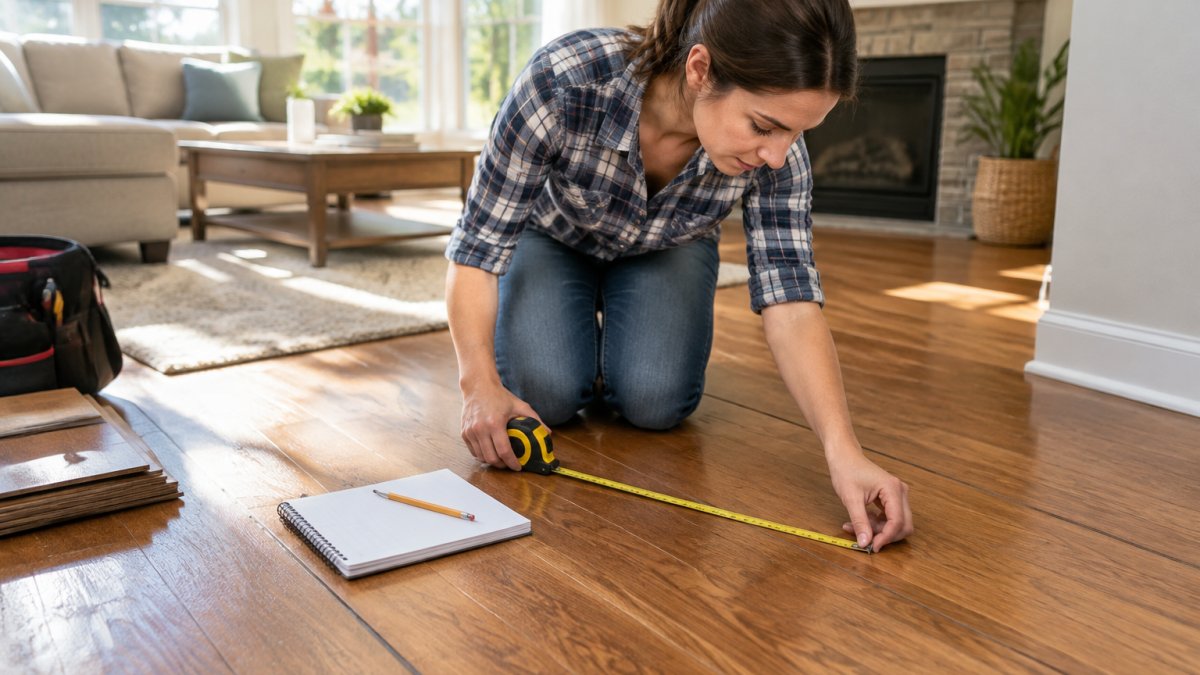
What you are looking for:
- Width: hairline seams versus gaps wide enough to catch a fingernail or a coin
- Pattern: even seasonal seams versus gaps concentrated in one zone
- Location: near moisture sources, over joists, or along the perimeter
- Companion signs: cupping, crowning, squeaks, loose boards, or dark staining
If gaps sit over a damp crawl space or near a known leak, treat moisture as the first suspect. The EPA guidance on moisture control in homes is a useful starting point for tracking down damp sources before you spend money on floor repairs.
When Gaps Signal That You Need to Replace Hardwood Floors
Replacement is the right call only when the gaps are a symptom of a problem that filling, board swaps, or refinishing cannot solve. The keyword asks when to replace, so treat this as a diagnosis first and a decision second. Work through the sequence below before you price a tear-out.
Step 1: Rule Out Seasonal Movement
Measure the same gaps twice, once in the driest part of heating season and once when indoor humidity is highest. If the widest gap shrinks by roughly half or more between the two readings, you are looking at seasonal movement, not failure. Solid hardwood moves measurably across a normal annual humidity swing, and that movement is expected. Gaps that close on their own do not justify replacement.
Step 2: Measure Width, Extent, and Pattern
Use a tape measure or a set of feeler gauges and record three things for each room: the widest gap, how many boards are separated, and whether the gaps run in one direction or fan out from a single point.
- Hairline to about the thickness of a credit card, closing seasonally: normal movement. Monitor and control humidity.
- Wide enough to catch a fingernail or a coin, staying open year-round in one zone: localized cause, a leak, a damp crawl space, or boards installed at the wrong moisture content. Diagnose before deciding.
- Wide gaps across most of the floor, widening year over year: widespread shrinkage or board failure. This is the pattern that most often points toward replacement.
Watch out: there is no universal gap width that triggers replacement. The threshold depends on flooring type (solid versus engineered), board width, climate, and how the floor was installed, so use these ranges as a screen and confirm with a moisture reading.
Step 3: Check for Companion Damage
Gaps alone rarely justify a full tear-out. Gaps paired with any of the following push the decision toward replacement:
- Boards that flex, rock, or squeak underfoot
- Cupping or crowning across multiple rooms
- Dark staining, soft spots, or a musty smell
- Repeated board failures after previous repairs
- Subfloor damage or delamination found beneath the boards
- Gaps that align with subfloor joints, suggesting movement in the structure below
Step 4: Diagnose the Cause Before You Act
Run a short inspection sequence: check the seasonal timing, take moisture readings of the boards and the subfloor, log indoor relative humidity over a few weeks, review any leak or flood history, and note whether gaps line up with subfloor seams or joists. If the cause is active moisture, replacing the floor without fixing it will reproduce the same gaps in the new installation.
Step 5: Match the Intervention to the Diagnosis
- Seasonal, stable gaps: humidity control and monitoring; no replacement.
- A few isolated failed boards: replace those boards only.
- Worn finish on sound, tight boards: refinish.
- Widespread, persistent gaps with moisture or structural damage: plan a full replacement, and address the subfloor and moisture source as part of the scope.
If you are unsure whether your floor needs sanding or a full tear-out, our guide on how to tell if hardwood floors need sanding or replacement walks through the decision.
How to Fill Gaps in Floorboards Without Sanding
Small, stable gaps can often be filled without a full sand-and-refinish job. The key is choosing a filler that moves with the floor. Rigid filler in a floor that still moves will crack and pop out within a season.
A common approach:
- Confirm the gap is stable and dry, not a sign of active moisture.
- Clean the gap of dust and debris.
- Use a flexible wood filler or tinted caulk matched to the floor color.
- Press the filler in flush, wipe the excess, and let it cure fully.
- Re-check after a full season to see whether the gap reopened.
For a fuller walkthrough, see our step-by-step guide on how to fix gaps in existing hardwood floors.
Hardwood Floor Rope Filler: A Traditional Fix for Wide Gaps
Rope filler is an old technique for wide, stable gaps. Thin rope or backer rod is pressed into the gap, then topped with wood filler or a flexible compound.
It works best on wide, even gaps in floors that are otherwise sound. It is not a fix for gaps caused by moisture damage, cupping, or a failing subfloor. Those need the cause addressed first.
Repair, Board Replacement, Refinishing, or Full Replacement Compared
Match the fix to the problem, and choose the least extensive intervention that actually solves it. Filling hides a gap. Board replacement fixes a localized failure. Refinishing restores the surface. Full replacement solves widespread structural or moisture damage. The table below compares them on scope, disruption, and what each one can and cannot fix.
| Option | Best For | Limits | Disruption and Timing |
|---|---|---|---|
| Filling | Small, stable seasonal gaps | Cracks if the floor still moves | Hours to a day per room; light cleanup |
| Board replacement | A few damaged or failed boards | Won't fix widespread movement | One to a few days; finish blending may be visible |
| Refinishing | Worn finish, sound boards | Doesn't fix structural gaps | Several days including cure time; dust and odor |
| Full replacement | Widespread damage or moisture failure | Highest cost and disruption | Weeks depending on size, subfloor work, and finish cure |
What Drives the Cost of Each Option
Pricing depends on floor size, species, board width, subfloor condition, and finish. For current prices or a quote, contact Freddie Sanchez Hardwood Floors. The factors that most affect the scope of work are:
- Square footage and layout: more rooms and more cuts mean more labor.
- Removal and disposal: tear-out, hauling, and nail removal add labor that repair does not.
- Subfloor work: leveling, patching, or replacing subfloor panels can rival the cost of the visible floor.
- Moisture remediation: fixing a leak or damp crawl space must happen before or alongside replacement.
- Finish and cure time: site-finished floors add days of drying and limit foot traffic; factory-finished boards shorten the schedule.
- Matching and blending: replacing boards in an older floor rarely matches perfectly, which sometimes pushes owners toward refinishing the whole room.
How the Options Sequence
Start with the least invasive step that addresses the diagnosis. Fill stable gaps first and re-check after a full season. If a handful of boards fail, replace those boards before considering a full tear-out.
Watch out: replacing boards or a section in an older floor can leave a visible color and sheen mismatch, and a partial refinish may not blend.
Our breakdown of hardwood floor repair versus replacement cost compares the options before you commit.
Frequently Asked Questions
Is it normal for new wood floors to have gaps?
Small gaps can appear in new floors as the wood adjusts to indoor humidity, especially during dry seasons. Normal seasonal gaps are usually hairline and close on their own when moisture returns. If gaps are wider than a credit card, run in straight lines, or show up within weeks of installation, the cause is often improper acclimation or installation conditions. In that case, document the gaps and ask the installer to inspect before assuming you need to replace hardwood floors.
When are gaps in hardwood floors a sign that the floor needs replacing?
Gaps alone rarely mean full replacement. Replacement becomes the better option when gaps are wide and widespread, boards are also cupped, buckled, loose, or split, or the subfloor has water damage. If the gaps keep returning after filling and the boards are thin from repeated sanding, replacing affected sections or the whole floor usually costs less over time than repeated patching.
Should I fill gaps between hardwood floorboards?
Fill hairline and moderate gaps only after you confirm the cause. Filling during the humid season can cause filler to crack or push boards when the wood expands. For narrow gaps, use a flexible wood filler matched to the floor color. For wider, consistent gaps, hardwood floor rope filler is a traditional option. If gaps are wide and the floor moves, a professional assessment is worth the visit before you spend on filler.
Can gaps in hardwood floors be repaired without replacing the floor?
Yes, in many cases. Repair options include filling gaps, replacing individual boards, tightening loose boards, and controlling indoor humidity. How to fill gaps in floorboards without sanding depends on gap width and location. If the damage is limited to a few boards, board replacement and refinishing can restore the look without a full tear-out. A professional inspection helps confirm whether repair will hold up or whether replacement is the smarter long-term choice.