 how-to
Why Hardwood Floor Gaps Appear in Winter and What to Do
Last Updated: November 8, 2026
Quick Summary
Hardwood floor gaps in winter are usually normal seasonal movement, not a sign of failure. Wood is hygroscopic, so dry heated indoor air pulls moisture from the boards and they shrink across their width. Keep indoor relative humidity between 40 and 60 percent year-round to keep gaps small.
- Wood moves across its width, not its length, so wide planks show bigger gaps than narrow strips.
- Below roughly 40 percent humidity wood shrinks; above 60 percent you risk swelling and cupping.
- Check a hygrometer twice a week during heating season and run a humidifier below 40 percent.
- Seasonal gaps close again in humid summer air; permanent gaps do not shrink in July.
- Do not fill seasonal gaps in winter, because summer expansion can push the filler out or buckle the floor.
Table of Contents
- Why Hardwood Floor Gaps Show Up Every Winter
- Hardwood Floor Humidity Levels That Keep Boards Stable
- Normal Seasonal Gaps vs. Installation or Moisture Problems
- Gaps in Hardwood Floors After Installation: What They Mean
- Using a Hardwood Floor Moisture Meter to Read Your Floor
- How to Fill Gaps Between Hardwood Floors (and When Not To)
- Get a Professional Assessment Before You Fill Anything
- Frequently Asked Questions
Why Hardwood Floor Gaps Show Up Every Winter
If your hardwood floor gaps in winter have you worried, take a breath. Wood is hygroscopic, meaning it absorbs and releases moisture from the air around it (Moisture relations and physical properties of wood).
Here is the key point most people miss. Wood moves across its width, not its length. A wide plank can shrink noticeably when the air dries, while a narrow strip barely budges.
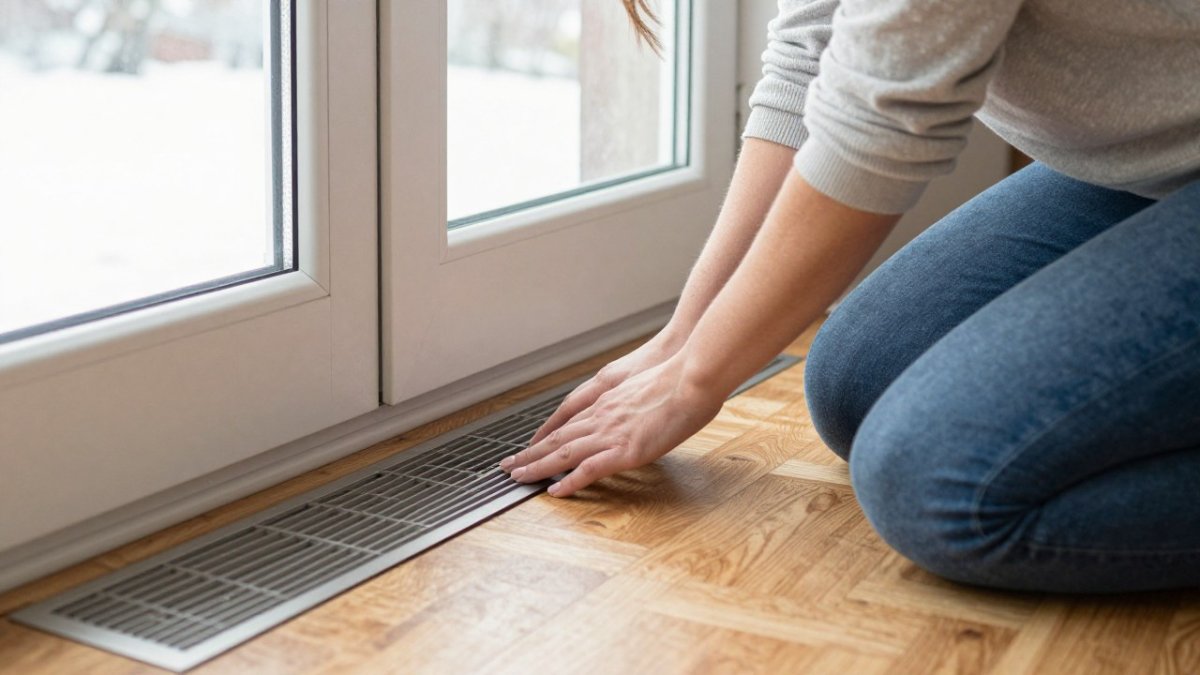
How Heating Systems Dry Out Indoor Air
Cold outdoor air holds little moisture. When your furnace heats that air, it warms up but does not gain humidity. The result is indoor air with very low relative humidity, and it pulls moisture from everything in the room, wood included.
- Furnaces, heat pumps, and wood stoves all dry the air the same way
- The drier the outdoor air, the lower your indoor humidity drops
- Rooms with lots of heating vents dry out fastest
- The U.S. Environmental Protection Agency's indoor air quality guidance notes that indoor humidity affects comfort and building materials year-round
Seasonal Expansion and Contraction Explained
Seasonal movement is normal. In summer, humid air plumps the boards and the gaps close up. In winter, dry air shrinks them and the gaps return. This cycle repeats every year, and it is built into how wood behaves.
Some floors show this more than others:
- Solid hardwood moves the most because it is one piece of wood
- Engineered wood flooring moves less because of its layered construction
- Wide boards show bigger gaps than narrow strips
- Species like oak and maple move moderately; some exotics move more
Hardwood Floor Humidity Levels That Keep Boards Stable
Hardwood floor humidity levels are the single most useful number to track. Aim to keep indoor relative humidity between 40 and 60 percent year-round. In that range, boards stay stable and seasonal gaps stay small.
Below roughly 40 percent, wood starts losing moisture and shrinking. Above 60 percent, you risk swelling and cupping. Both extremes cause problems, so the goal is the middle.
A Simple Humidity-Monitoring Plan for Winter
You do not need fancy equipment. A basic hygrometer is an affordable tool that tells you what the air is doing. Here is a practical plan for monitoring it through the heating season:
- Place a hygrometer in the main living area, away from vents and sunlight
- Check it twice a week during heating season
- Note readings in the morning and evening for a week to spot patterns
- Run a humidifier when readings fall below 40 percent
- Use exhaust fans when cooking or showering to avoid spikes above 60 percent
- Recheck after any change to your heating routine
Whole-home humidifiers tied to an HVAC system and portable units for single rooms are two common ways to add humidity. The U.S. Department of Energy's home humidity guidance covers how humidity ties to home comfort and energy use.
Normal Seasonal Gaps vs. Installation or Moisture Problems
Most homeowners cannot tell a seasonal gap from a real problem by looking, because both show up as dark lines between boards. If you are unsure whether your gaps are normal or serious, see how to decide when to replace hardwood floors with gaps. The difference is in the pattern, the timing, and what happens when humidity changes. Use the checklist below to sort your floor into one of three buckets before you spend money on a fix.
The three-bucket diagnostic
Start by answering four questions about your floor:
- When did the gaps appear? Seasonal gaps open in late fall or early winter as the heating season begins and close in spring or summer. Gaps that appeared in midsummer, or right after a plumbing event, are not seasonal.
- Where are they? Seasonal gaps are usually spread across the whole floor and are widest near heating vents, exterior walls, and south- or west-facing windows where the air is driest. Gaps concentrated in one room, one corner, or around a bathroom or kitchen are a warning sign.
- Do they change? Measure the widest gap in a few spots with a feeler gauge or a business card in January and again in July. Seasonal gaps will shrink noticeably; permanent gaps will not.
- What else is happening? Cupping (edges higher than the center), crowning (center higher than the edges), squeaks, or a spongy feel underfoot point to moisture or installation problems, not seasonal movement.
Observable warning signs that are not seasonal
A gap is worth a professional look if any of these are true:
- The gap is wider than about the thickness of a quarter (roughly 1/16 inch) and does not close in humid weather.
- Gaps run in one direction only, or cluster along a single wall or near a water source.
- Boards are cupped, crowned, or visibly uneven across their width.
- The floor squeaks, feels soft, or shows dark staining or musty odor near the gaps.
- Gaps appeared within weeks of a new installation, before any heating season.
- The floor is over a crawl space or slab and the gaps are paired with high moisture readings.
Room-by-room and climate variables
Two floors in the same house can behave differently. A room over a vented crawl space, a room with large west-facing windows, and a room above a heated garage all see different humidity. Sunlight through glass can raise surface temperature and drive local drying, while a poorly insulated exterior wall stays colder and holds more moisture. If gaps are worse in one room, check that room's humidity separately before assuming the whole floor is failing.
What to do with each bucket
- Seasonal: leave it alone, monitor humidity, and revisit in late spring.
- Installation-related: document the timing and pattern, then contact the installer while any workmanship warranty is active.
- Moisture-related: stop adding humidity, find the source (leak, crawl space, slab), and get a moisture assessment before any repair.
Watch out: filling a gap that is actually a moisture symptom traps the problem under filler and can lead to cupping or board replacement later.
Gaps in Hardwood Floors After Installation: What They Mean
Gaps in hardwood floors after installation are common in the first heating season. New wood acclimates to your home before installation, but it still moves once the furnace runs. Small gaps that open in the first winter and close in summer are usually normal.
What is not normal is gapping within weeks of installation, before any seasonal change. That points to installation problems:
- Wood installed before it acclimated to the room
- Moisture content too high or too low at install time
- Subfloor moisture not tested or controlled
- Boards fitted too tightly with no room for movement
If your gaps showed up right after the job, our article on why new hardwood floors gap walks through the causes and fixes.
Using a Hardwood Floor Moisture Meter to Read Your Floor
A hardwood floor moisture meter tells you how much water is inside the wood. Pin meters measure at the surface; pinless meters read deeper. Both give you a moisture content reading you can compare against the expected range for your species and your home's humidity.
Here is how to read one:
- Test several spots, not just one, and note each reading
- Compare readings near vents against readings in the middle of the room
- Test the same spots in summer and winter to see the swing
- A reading that changes with the seasons confirms seasonal movement
- A reading that stays high in one spot points to a moisture source
For a deeper look at testing methods, read our hardwood floor moisture testing guide. If readings stay high in one area, call a professional before you fill anything.
How to Fill Gaps Between Hardwood Floors (and When Not To)
A general rule of thumb is not to fill seasonal gaps in winter. If you fill them while the boards are shrunk, the wood will expand in summer and push the filler out or buckle the floor. Wait until humidity is stable and gaps are at their smallest.
When gaps are permanent and you want them closed, the process looks like this:
| Gap Type | Best Timing | Method | Watch For |
|---|---|---|---|
| Seasonal, narrow | Leave alone | None | Filler pushed out in summer |
| Seasonal, wide | Late spring | Flexible filler | Cracking as boards move |
| Permanent, small | Any season | Wood filler matched to stain | Color mismatch |
| Permanent, large | Any season | Sliver or spline repair | Needs pro assessment first |
For step-by-step instructions, see our guide on how to fix gaps in existing hardwood floors. Watch out: filling a floor that is still moving is a common mistake, and it can mean sanding the whole floor again to fix it.
Get a Professional Assessment Before You Fill Anything
Some floors need eyes on them before anyone touches a tube of filler. If your gaps are wide, uneven, or paired with cupping or squeaks, the cause matters more than the gap itself. Filling the wrong problem wastes money and can damage the floor.
Freddie Sanchez Hardwood Floors specializes in expert wood floor installation, with high standards of craftsmanship and durability, and prioritizes clear, constant communication with customers until the job is done. If dry winter air is also putting your floor at risk of cupping, our guide on preventing hardwood floor cupping covers the moisture control steps that protect it.
Winter gaps are usually a humidity story, not a floor failure. Track your indoor humidity, watch for the warning signs, and hold off on filling until the seasons settle.
Frequently Asked Questions
Why are my wood floors getting gaps in the winter?
Winter heating drops indoor relative humidity, often well below the 40-60% range wood flooring needs. As the air dries, boards lose moisture content and shrink slightly across their width. Because each board shrinks a little, the cumulative effect shows up as thin gaps between boards. When humidity rises again in spring and summer, the wood takes moisture back in and most of those gaps close on their own. This is seasonal movement, not a sign your floor is failing.
Is it normal to have gaps in hardwood floors?
Yes, small gaps that appear during the heating season and close in warmer months are normal seasonal behavior. Wide boards, solid hardwood, and floors in dry climates tend to show more movement. What is not normal: gaps that stay open year-round, gaps wider than a few millimeters that appear suddenly, or gaps paired with cupping, crowning, or squeaking in one concentrated area. Those patterns point to a moisture or installation issue worth having inspected.
How can I fill gaps between my hardwood floors?
First confirm the gaps are stable, meaning they have stopped widening. Clean out dust and debris, then choose a filler matched to your floor: color-matched wood filler for small gaps, rope or backer rod plus filler for deeper ones, or slivers of matching wood for wider openings. Apply in thin layers, let each dry fully, then sand flush and finish. Avoid rigid epoxy fillers on floors that still move seasonally, since the filler can crack or push boards apart.
When should I worry about gaps in hardwood flooring?
Worry when gaps do not close after humidity returns to normal, when they exceed roughly the thickness of a quarter, or when they appear alongside cupped or lifted boards. Gaps near a water source, a bathroom, or an exterior door deserve a moisture check with a meter. If readings differ sharply between one area and another, call a flooring professional. A hardwood floor moisture meter takes the guesswork out of whether you are looking at seasonal movement or a real problem.