 how-to
Soundproof Flooring for Multi Story Homes That Works
Last Updated: November 8, 2026
Quick Summary
Soundproof flooring for multi story homes works only when you treat the whole floor assembly, not just the surface, so find the noise path before picking materials. Carpet with thick padding generally gives the most impact-noise reduction upstairs, followed by cork and resilient vinyl with acoustic backing. Ask for assembly test data, not just a product label, and check whether the IIC or STC number is lab or field.
- Impact noise travels through the floor structure, while airborne noise leaks through gaps, outlets, ductwork, and shared walls.
- IIC measures impact sound blocking and STC measures airborne sound resistance, with field numbers usually lower than lab numbers.
- Rubber underlayment is dense and durable, cork absorbs some sound, and foam compresses and loses performance over time.
- Skipping subfloor prep is the most common failure point, since gaps, loose boards, and squeaks let sound pass straight through.
- Adding underlayment and a floating floor can raise the finished floor enough to bind doors and require trimming.
Table of Contents
- Why Soundproof Flooring for Multi Story Homes Starts With the Noise Path
- The Best Flooring for Noise Reduction Upstairs, Compared
- Impact Noise Reduction Flooring: What Actually Cushions Footsteps
- Floor Underlayment for Soundproofing: Rubber, Cork, and Foam
- Cork Flooring Soundproofing: Where It Helps and Where It Falls Short
- Subfloor, Floor Assembly, and Installation Details That Decide the Result
- Retrofit Trade-Offs: Cost, Floor Height, and Disruption in Existing Homes
- Planning Your Soundproof Floor With Freddie Sanchez Hardwood Floors
- Frequently Asked Questions
Why Soundproof Flooring for Multi Story Homes Starts With the Noise Path
Soundproof flooring for multi story homes only works when you treat the whole floor assembly, not just the surface. The most useful first step is to find the noise path before picking materials.
Noise between floors travels two ways. It comes from impact, like footsteps and dropped objects. It also comes from airborne sound, like voices and televisions. Each one needs a different fix.
Diagnosing the Source and the Path
Start by separating the noise you hear into three buckets, because each points to a different fix.
- Footsteps, chair scrapes, dropped items, and stomping: impact noise. The energy enters the floor surface and travels through the floor structure into the ceiling below. The fix lives in the floor assembly: carpet, resilient underlayment, or a floating assembly that decouples the finish from the structure.
- Voices, television, music, and barking: airborne noise. It moves through the air and leaks through gaps, outlets, ductwork, and shared walls. A floor pad does little here; sealing and mass in walls and ceilings do more.
- Mechanical noise such as HVAC vibration, plumbing, or appliances: structure-borne vibration that often enters through framing and pipes rather than the floor surface. Isolating the equipment and the penetrations matters more than the flooring.
Next, find the path. A simple way to check is to have someone walk, talk, or run water upstairs while you listen below, moving room to room.
Watch out: treating only the floor surface when the noise is flanking through walls or gaps will leave the problem largely unchanged, and the homeowner will blame the new floor.
Impact Noise Versus Airborne Noise
Impact noise is sound created when something strikes the floor. Footsteps, chairs scraping, a toddler's toys hitting the boards.
Airborne noise moves through the air and passes through gaps, walls, and openings. Talking, music, and TV sound fall here.
Impact noise is the harder problem in multi-story homes because the structure itself carries it. A thick carpet helps with footsteps.
Reading IIC and STC Ratings
Two ratings tell you how well a floor assembly performs.
- IIC (Impact Insulation Class) measures how well a floor/ceiling assembly blocks impact sound. Higher is better. Lab-tested assemblies are reported as IIC; field-tested assemblies are reported as FIIC (Field Impact Insulation Class), and field numbers are usually lower because real construction has flanking paths and imperfect seals.
- STC (Sound Transmission Class) measures resistance to airborne sound. Higher is better, and again field testing (FSTC) typically comes in below lab numbers.
The catch: these ratings apply to the whole assembly, not one product. A pad rated well on its own can fail once it sits under a stiff floor on a thin subfloor. The ASTM standard for impact sound insulation testing sets out how those tests are run.
Treat any single-product claim as a starting point, not a guarantee, and specify the assembly that was actually tested.
The Best Flooring for Noise Reduction Upstairs, Compared
Carpet with thick padding generally gives the most impact-noise reduction upstairs, followed by cork and resilient vinyl with acoustic backing. Hardwood and laminate typically sit lower unless a proper underlayment is added.
Here is how the common options stack up:
| Flooring | Impact Noise | Airborne Noise | Best For |
|---|---|---|---|
| Carpet + padding | High reduction | Moderate | Bedrooms, upper floors |
| Cork | Good | Moderate | Quiet, soft feel |
| Luxury vinyl with backing | Moderate to good | Low | Kitchens, baths |
| Laminate | Low to moderate | Low | Budget rooms |
| Engineered wood | Low | Low | Looks, not quiet |
| Solid hardwood | Low | Low | Long-term value |
Pros and Cons of Each Flooring Option
Carpet and padding
- Pros: Best at cushioning footsteps, cheap to add padding, soft underfoot.
- Cons: Holds dust and allergens, wears in high-traffic spots, harder to clean.
Cork
- Pros: Naturally resilient, absorbs some impact sound, warm underfoot.
- Cons: Needs sealing against moisture, dents under heavy furniture.
Luxury vinyl and vinyl plank
- Pros: Water resistant, easy to clean, some lines come with attached acoustic backing.
- Cons: Hard surface reflects sound unless the backing is real and the subfloor is solid.
Laminate
- Pros: Affordable, tough surface.
- Cons: Clicky underfoot, hollow sound without a quality pad.
Engineered wood and solid hardwood
- Pros: Real wood look, adds home value, can be refinished.
- Cons: Hard surface, needs an acoustic underlayment to cut impact noise.
Impact Noise Reduction Flooring: What Actually Cushions Footsteps
Impact noise reduction flooring works by adding a soft, resilient layer under a hard surface. That layer absorbs the energy of a footstep before it reaches the floor structure.
Soft surfaces do this best. Carpet and cork cushion footsteps directly. With hard floors, the job falls to the underlayment.
Floor Underlayment for Soundproofing: Rubber, Cork, and Foam
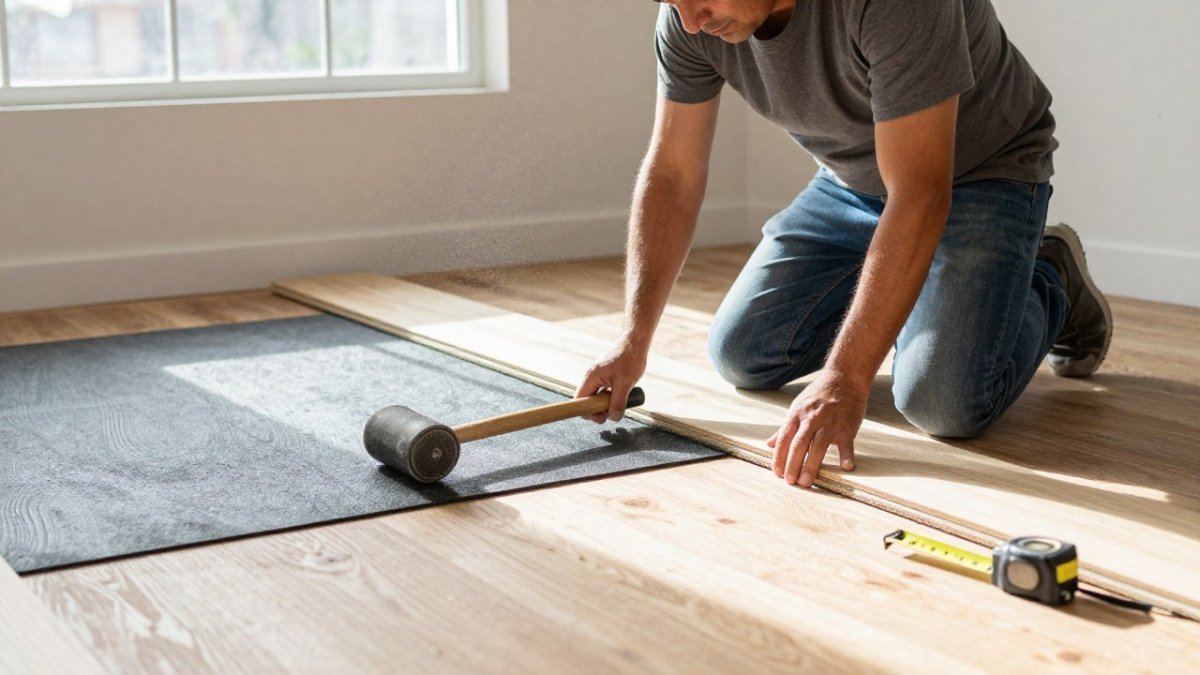
Floor underlayment for soundproofing comes in three main types, and each behaves differently under a hard floor.
- Rubber underlayment: Dense and durable, good at blocking impact sound, holds up under heavy furniture.
- Cork underlayment: Natural, absorbs some sound, adds a soft feel, needs moisture protection.
- Foam underlayment: Cheap and easy to install, but compresses and loses performance over time.
For a deeper look at which material suits a solid wood floor, see our guide on the best underlayment for solid hardwood floors.
Matching Underlayment to Your Flooring Material
Not every pad works under every floor. Always check the flooring manufacturer requirements first. Some floating floors void the warranty if you use the wrong pad.
- Engineered and solid hardwood: Use a dense rubber or cork layer rated for nail-down or floating installs.
- Laminate and vinyl plank: Use the pad the maker approves, often a thin foam or cork with an attached backing.
- Carpet: Use a thick, dense carpet padding for the best impact results.
Cork Flooring Soundproofing: Where It Helps and Where It Falls Short
Cork flooring soundproofing helps most with impact noise in the room itself. It softens footsteps and absorbs some sound before it reaches the structure below.
Where it falls short: cork does little for airborne noise, and it needs sealing in wet areas. It also dents under heavy, pointed furniture legs. Use felt pads and keep heavy pieces on rugs.
Subfloor, Floor Assembly, and Installation Details That Decide the Result
The subfloor and floor assembly decide the final result more than the surface product does.
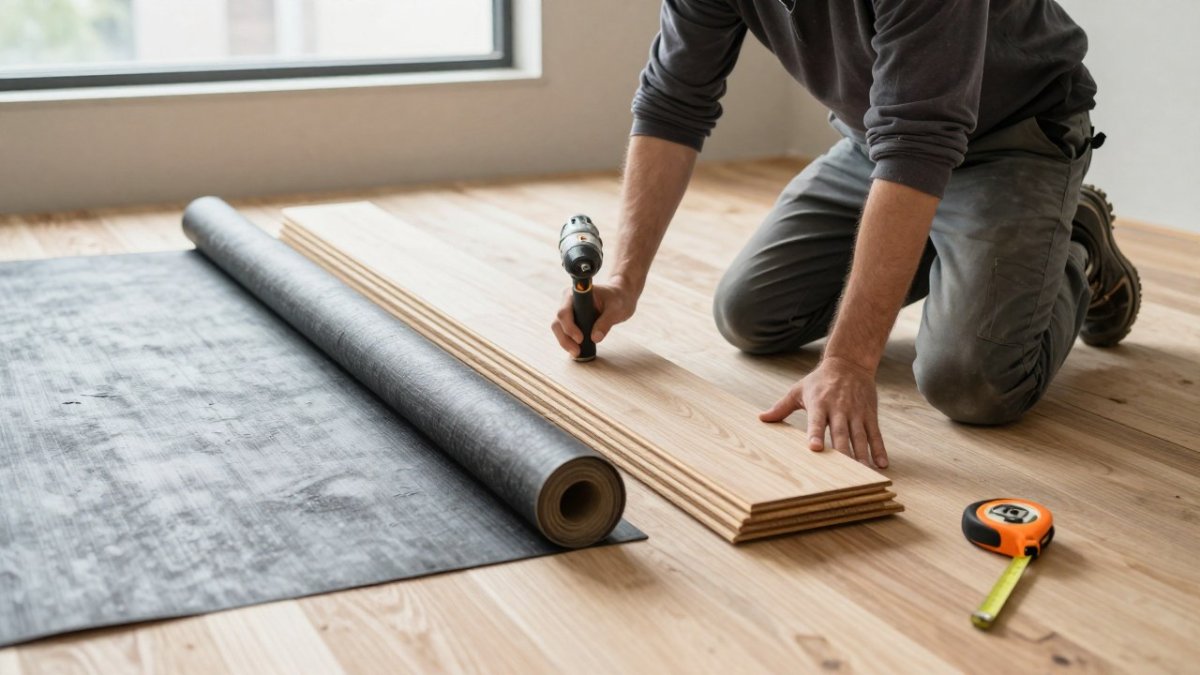
Watch out: skipping subfloor prep is the most common failure point. Our team covers this in detail in our subfloor preparation guide.
If your project spans more than one level, plan the transitions between different floor levels early so sound and height changes stay under control.
Retrofit Trade-Offs: Cost, Floor Height, and Disruption in Existing Homes
Retrofitting sound control into an existing home means trade-offs. You can usually work from the top (change the flooring and underlayment) or from the bottom (treat the ceiling below). Each has a different cost profile, a different disruption level, and different constraints.
Top-Side Versus Below-Ceiling Solutions
Top-side changes are usually the least disruptive because they do not require opening the ceiling below.
Below-ceiling work targets airborne and impact noise from underneath. Typical measures include adding insulation in the joist bays, installing resilient channels to decouple the drywall, and adding a second layer of drywall for mass.
A common pattern is to combine both: a resilient underlayment upstairs plus insulation and resilient channels below gives the best result, but the budget and disruption add up quickly.
Cost and Disruption, Relatively Speaking
Pricing depends on your specific rooms, materials, and whether the subfloor needs repair, so ask for a current quote. Relative cost and disruption can still be compared:
Constraints That Decide What Is Possible
Before choosing a retrofit, check these constraints, because any one of them can rule out an otherwise good option:
- Floor height and door clearance: adding underlayment and a floating floor can raise the finished floor enough to bind doors and require trimming or replacement. Measure door clearance and stair riser heights before committing.
- Transitions: height changes at doorways, hallways, and stair nosings need transition strips or reducers, and poorly planned transitions become both a trip hazard and a sound leak.
- Moisture: slab-on-grade and below-grade rooms, bathrooms, and kitchens need moisture-compatible underlayments. Cork and some foam products need protection; rubber is generally more forgiving but still needs a dry substrate.
- Radiant heat: some underlayments and floating assemblies are not approved over radiant heat, and thick pads can reduce heat transfer. Check the flooring and underlayment manufacturer's instructions.
- Warranties: many floating floor warranties are voided by unapproved underlayments or by installation over an uneven or damp subfloor. Get the approved assembly in writing.
Watch out: skipping the constraint check and installing a thick underlayment that raises the floor into the door swing or voids the flooring warranty is one of the most common retrofit mistakes.
Weighing DIY against hiring a pro? See our guide on DIY vs professional hardwood flooring. For budgeting, our hardwood floor installation cost breakdown walks through what drives the numbers. For how these ratings are applied in multi-unit buildings, the International Code Council on building sound requirements is a useful reference.
Planning Your Soundproof Floor With Freddie Sanchez Hardwood Floors
Getting a quiet upper floor right takes planning, not guesswork.
Freddie Sanchez Hardwood Floors provides expert wood floor installation with high standards of craftsmanship and durability, and keeps constant communication with customers until the job is done.
Get a Free Quote!
A quiet multi-story home starts with the right plan. Freddie Sanchez Hardwood Floors offers expert wood floor installation, careful subfloor work, and steady communication until the job is done.
Frequently Asked Questions
How can I prevent sound from traveling between floors in my house?
Treat the floor as a system rather than a single product. Add a resilient layer such as rubber or cork underlayment beneath the finished floor, seal gaps around penetrations and perimeter edges, and choose a surface that cushions contact. If you are remodeling, adding mass in the ceiling cavity below helps too. No single material stops all noise, so combining a soft or resilient surface with proper installation details reduces both impact noise and airborne sound more reliably than swapping flooring alone.
Does underlayment reduce impact noise between floors?
Yes, when it is the right underlayment for the flooring above it. Rubber and cork underlayments absorb the energy of footsteps before it reaches the subfloor, which reduces impact noise. Foam products vary widely in density and thickness, so performance differs. Check the flooring manufacturer's requirements first, because some vinyl plank and laminate products only accept approved underlayment and void the warranty otherwise. Installing the wrong backing can also create soft spots or joint stress.
Is cork flooring effective for reducing noise between floors?
Cork flooring soundproofing works best against impact noise. Its cellular structure absorbs footstep energy and gives a quieter, softer feel underfoot than tile or engineered wood. It does less for airborne noise such as voices or television sound, which needs mass and sealing rather than cushioning. Cork also needs protection from moisture and heavy point loads. For an upstairs bedroom or hallway where footsteps are the main complaint, cork is a reasonable choice when installed over a suitable subfloor.
Can luxury vinyl flooring help reduce sound between levels?
Luxury vinyl plank can help, but the assembly matters more than the plank itself. Rigid-core vinyl is hard, so it transmits impact noise unless you pair it with an acoustic underlayment approved by the manufacturer. Some vinyl products ship with attached backing that provides modest sound reduction. For noticeable improvement, use a dedicated acoustic underlayment and make sure the subfloor is flat and fastened tight, since squeaks and gaps let noise pass through.