 how-to
How Long Does Hardwood Flooring Need to Acclimate?
Last Updated: November 11, 2026
Quick Summary
Most hardwood needs several days to a couple of weeks to acclimate hardwood floors before installation, depending on species, board width and room conditions. Stop when moisture readings stop changing, not when a calendar date arrives. Always follow the manufacturer's instructions for the specific product first.
- Keep heating or AC at the same settings you will use after move-in.
- Keep relative humidity within the manufacturer's recommended range.
- Open sealed cartons and let boards sit in the room where they will be installed.
- Stack planks flat with spacers so air circulates, off the subfloor.
- Test the subfloor with a moisture meter and fix any moisture source first.
Table of Contents
- Why Hardwood Floors Need to Acclimate Before Installation
- How Long Does Hardwood Flooring Need to Acclimate Before Installing?
- Can Hardwood Flooring Acclimate in the Box?
- Preparing the Room: Temperature, Humidity and Airflow
- How to Acclimate Hardwood Floors Properly in Winter
- How to Acclimate Engineered Hardwood Flooring
- Scheduling Your Installation After Acclimation
- Frequently Asked Questions
Why Hardwood Floors Need to Acclimate Before Installation
Hardwood reacts to moisture in the air. When wood takes on or gives up moisture, it swells or shrinks. Hardwood that is not acclimated to the room is a common reason new boards can cup, gap or buckle after installation. Acclimation is the process of letting the boards adjust to the room before they are fastened down.
Acclimation is simply a rest period. The boards sit in the space where they will live, so their moisture content can match the room's conditions. Acclimating hardwood floors before installation reduces the risk of expensive problems later.
Here is what the process protects against:
- Gaps that open when boards shrink in a dry room
- Cupping when boards absorb moisture from below
- Buckling when boards swell and have no room to move
- Squeaks and movement from boards that shift after the floor is down
How Long Does Hardwood Flooring Need to Acclimate Before Installing?
Most hardwood needs several days to a couple of weeks to adjust, depending on the species, board width and the room's conditions. The number of days is a rough guide. The better test is the moisture reading. Manufacturer instructions for the specific product should always be followed first.
Use this simple decision process:
- Check the room first. Keep indoor temperature and relative humidity steady before the boards arrive.
- Measure the boards. Compare the moisture content of the wood with the moisture content of the subfloor. You can compare the available moisture testing methods to choose the right one.
- Keep acclimating until the readings settle. Stop when the readings stop changing, not when a calendar date arrives.
Wider boards and some species often take longer to settle. Always confirm the expected timeline in the product documentation.
Can Hardwood Flooring Acclimate in the Box?
Boxed flooring can start adjusting in the carton, but the carton alone is rarely enough. Many cartons are sealed in plastic, which slows moisture exchange with the room. Opening the cartons and removing the plastic lets the boards reach the room's conditions.
A common mistake is leaving sealed cartons in a garage or truck until installation day. Move the boxes indoors, open them, and let the planks sit in the space where they will be installed.
Preparing the Room: Temperature, Humidity and Airflow
A stable room is the foundation of good acclimation, and most of the work happens before the boards ever arrive. The goal is to bring the space to the conditions it will hold after the floor is finished: normal living temperature and the relative humidity the home will maintain year-round.
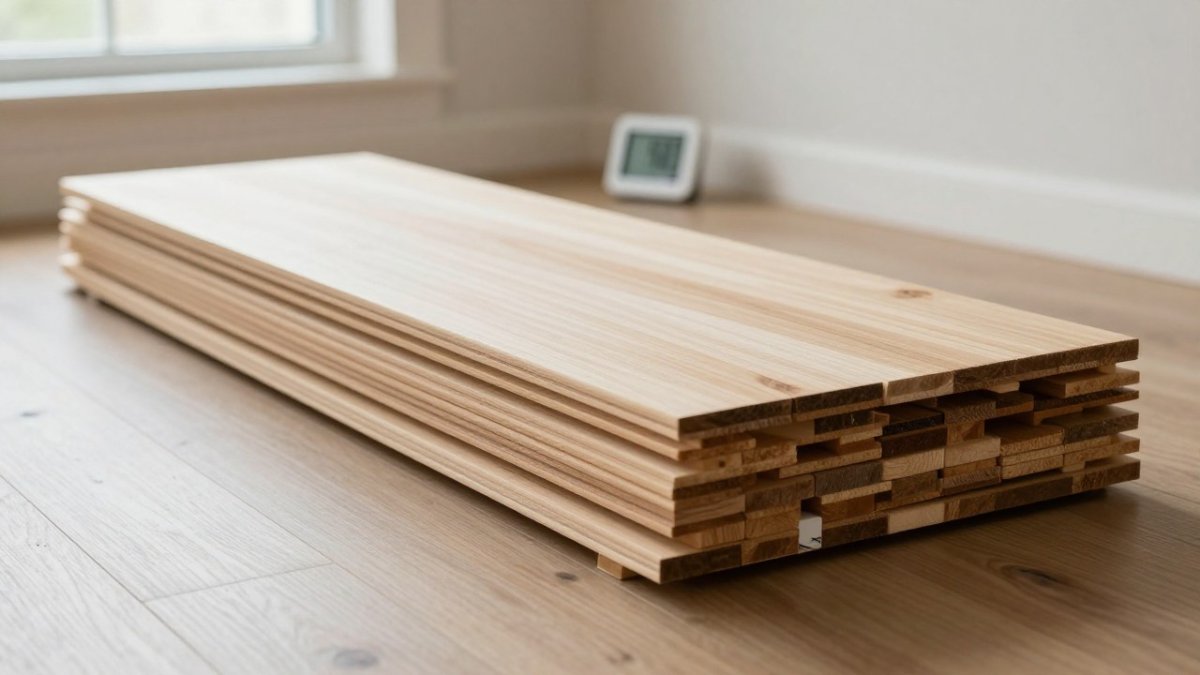
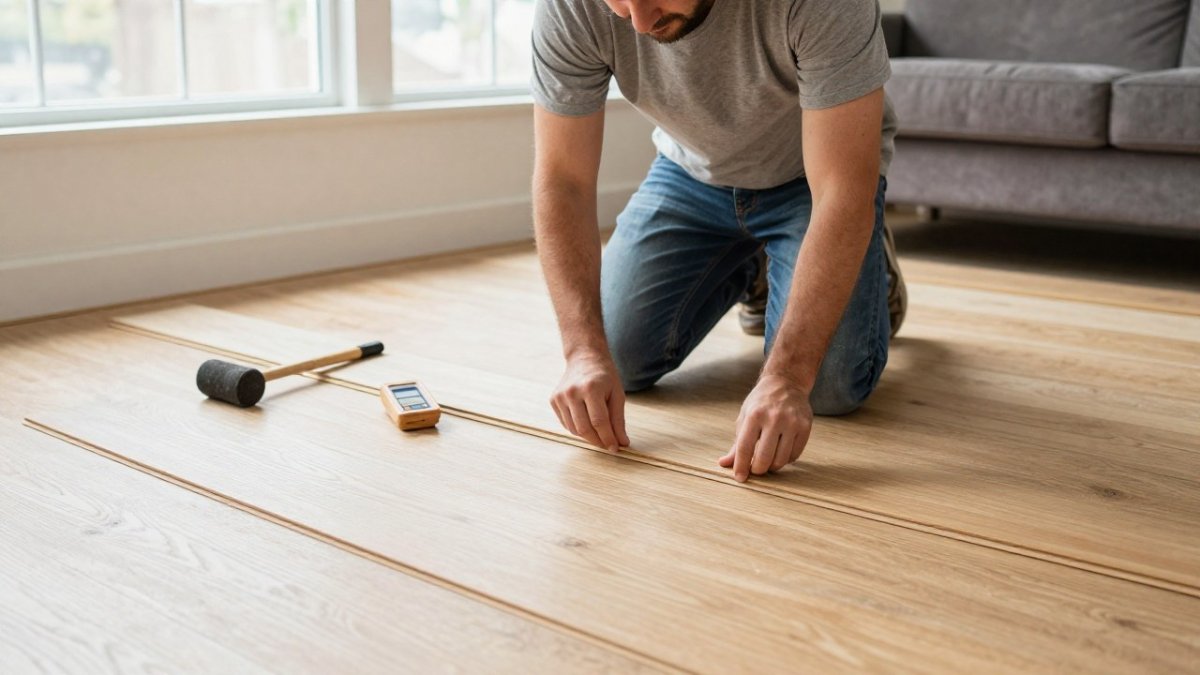
Run the heating or air conditioning at the same settings you plan to use after move-in. Turning the heat off to save money during the wait is one of the most common reasons boards gap or cup later, because the wood shrinks in dry winter air or swells in damp summer air. Use a thermo-hygrometer placed in the room, away from exterior doors and direct sun, to log readings for several days before delivery. If relative humidity runs well outside the range in the flooring manufacturer's instructions, correct the room first, using a humidifier or dehumidifier, before the boards come in.
Airflow matters as much as the air itself. Stack the planks flat in the room with small spacers, often called stickers, between layers so air can circulate across the top and bottom faces. Keep the stack elevated off the subfloor rather than resting it directly on concrete or plywood, and keep it level so boards do not bow.
Check the subfloor before any boards come in. Concrete slabs and plywood subfloors can release moisture upward into new flooring, and a damp subfloor is one of the most common causes of cupping that appears months after installation. Test the subfloor with a moisture meter at several points, and resolve any moisture source, such as a leak, slab moisture or a wet crawl space, before proceeding. You can follow a step-by-step way to find moisture in the subfloor.
Watch out: boards stored in a garage, unheated basement or near an HVAC supply vent can acclimate unevenly, so keep the stack in the finished room where it will be installed.
Before the boards arrive, the room itself needs to be set up so the wood can settle properly.
| Factor | Target | Why it matters |
|---|---|---|
| Heating or AC | Same settings as after move-in | Turning heat off causes gaps or cupping |
| Relative humidity | Within manufacturer's range | Wood shrinks or swells outside it |
| Monitoring | Thermo-hygrometer, several days | Confirms room is stable before delivery |
| Placement | Away from doors and direct sun | Avoids misleading readings |
| Stacking | Flat, with spacers, off the subfloor | Lets air circulate across all faces |
| Subfloor | Tested with moisture meter | Damp subfloors cause later cupping |
How to Acclimate Hardwood Floors Properly in Winter
Winter heating dries indoor air, which can pull moisture out of hardwood. Keep the home at normal living temperature and monitor humidity with a thermo-hygrometer. Running a humidifier can help if indoor air becomes very dry.
Avoid placing boards near heat vents, fireplaces or space heaters, since direct heat can dry wood unevenly. Keep the planks stacked with airflow around them, and recheck readings a few times before installation.
How to Acclimate Engineered Hardwood Flooring
Engineered hardwood has a plywood or composite core, so it responds to moisture differently from solid hardwood. It often needs less time, but it still needs the same stable room conditions. Some manufacturers give specific instructions that differ from solid-wood guidance. Always follow the product's own requirements.
Engineered boards also need a level, dry subfloor. Check the manufacturer's warranty terms, since improper acclimation can affect coverage.
Scheduling Your Installation After Acclimation
Plan installation for after the readings have settled. Rushing the job is a common reason acclimation fails. Learn how the subfloor must be prepared before the boards are laid.
Schedule the work around the moisture checks, and confirm the room will stay at normal conditions through installation day. See the factors that set how long installation takes. If the home is still under construction, finish drywall, paint and any wet work first. Those trades add moisture that can throw off your readings.
When you are ready, Get a Free Quote from our team.
Frequently Asked Questions
How long does hardwood flooring have to acclimate?
Most hardwood flooring needs several days to a week or more in the installation space, but the right answer depends on the product and the room. Manufacturers often publish their own acclimation windows, and those instructions take priority. Rather than relying on a fixed number of days, check moisture content in the boards and the subfloor and confirm that room temperature and relative humidity fall within the manufacturer's stated range. Flooring is ready when readings have stabilized, not simply when a set time has passed.
Can hardwood flooring acclimate in the box?
Cartons help protect boards during shipping, but they limit airflow, so leaving flooring sealed usually does not let it reach the moisture level of the room. Most guidance recommends opening cartons, removing plastic packaging and stacking boards with spacers so air can circulate around them. Stacking boards flat in the room where they will be installed gives them the best chance to adjust to local conditions.
How do you acclimate engineered hardwood flooring?
Engineered hardwood is usually more dimensionally stable than solid hardwood, but it still needs to adjust to the room. Open the cartons, stack the planks with spacers in the installation area, and keep the temperature and relative humidity within the manufacturer's range. Always follow the manufacturer's acclimation instructions, because some engineered products have specific requirements that differ from solid wood.
What happens if you don't let hardwood floors acclimate?
Skipping acclimation can lead to gaps between boards as wood shrinks, or to cupping, buckling and warping as it expands. These problems often appear after installation when the flooring responds to seasonal humidity changes. Properly acclimated flooring installed in a stable indoor environment is less likely to move once it is in service, which protects the finished appearance of the floor.