 listicle
Best Flooring for Homes With Pets: What Actually Holds Up
Last Updated: November 4, 2026
Quick Summary
Luxury vinyl plank with a thick wear layer is the default pick for most flooring for homes with pets, because it resists claws and keeps accidents on the surface. Choose fully waterproof plank or tile for puppies and senior dogs, and porcelain tile for busy entryways.
- A 20-mil wear layer is the practical minimum for a large dog.
- Porcelain tile is rated 7 or higher on the Mohs hardness scale.
- Water-resistant laminate and engineered wood can swell permanently at the seams.
- Matte and wire-brushed textures hide claw marks better than high-gloss finishes.
- Use tile in mudrooms, kitchens and pet feeding areas rather than whole living spaces.
Table of Contents
- How Pet Type and Household Traffic Decide Your Floor
- Luxury Vinyl Plank Flooring: The Default Pick for Most Pet Homes
- Best Flooring for Dogs That Pee: Waterproof Beats Water-Resistant
- Best Flooring for Pets and High Traffic: Where Wear Layer and Core Matter
- Best Flooring for Dogs' Nails: Scratch Resistance Compared
- Tile, Laminate and Engineered Hardwood: Where Each One Wins and Loses
- Traction, Noise and Comfort Under Paw
- What Pet Flooring Really Costs Over Its Life
- Frequently Asked Questions
How Pet Type and Household Traffic Decide Your Floor
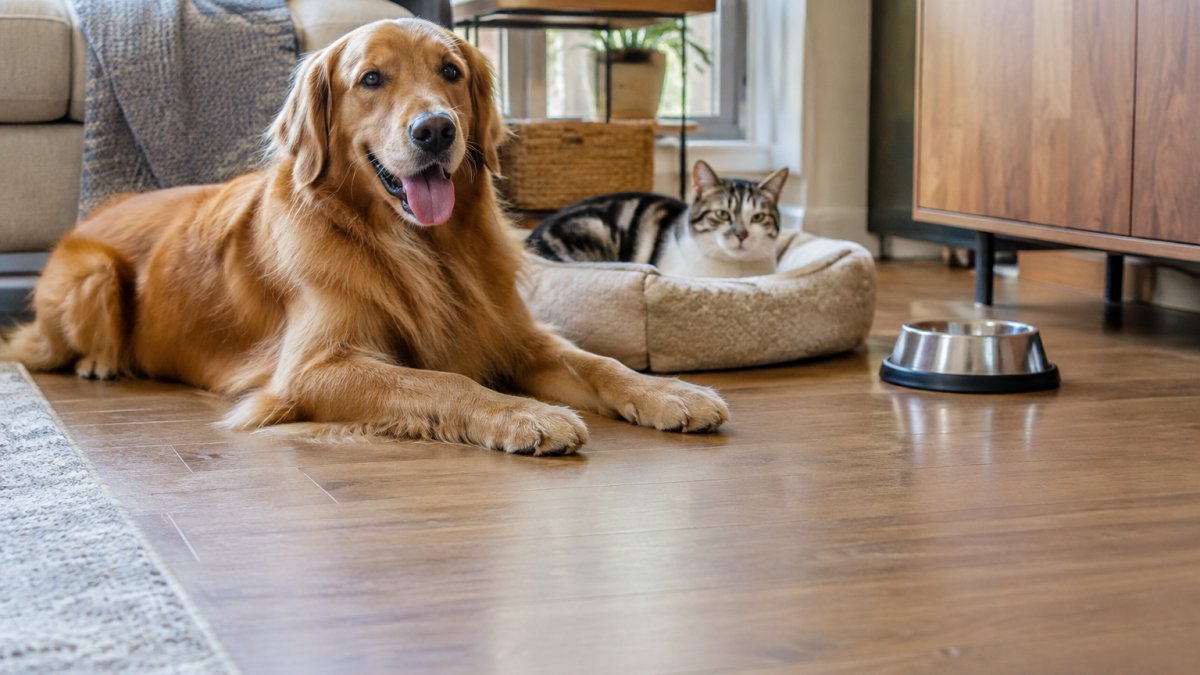
The right floor for a pet home depends less on the species on the couch than on claws, accidents and traffic. A floor chosen for looks alone can start showing claw marks and water damage within a couple of years. Choosing the best flooring for homes with pets means matching the surface to the animal and the daily routine, not the showroom sample.
A 70-pound dog sprinting to the door lands differently than a cat walking a windowsill. Nails scratch, accidents soak in, and muddy paws grind grit into any finish. Before you shop, answer three questions: how heavy is the pet, does it have accidents indoors, and how much traffic crosses the room each day?
Matching Flooring to Dogs, Cats and Daily Foot Traffic
Use this matrix to narrow the field before you ever look at samples:
| Pet and household situation | First choice | Reason |
|---|---|---|
| Large dog, high traffic | Luxury vinyl plank with a thick wear layer | Resists claws and moisture |
| Puppy or senior dog with accidents | Waterproof luxury vinyl plank or tile | Spills stay on the surface |
| Cats only, light traffic | Laminate or engineered hardwood | Claws matter more than water |
| Multiple pets, busy entryway | Porcelain tile | Hardest surface, easiest cleanup |
| Pet home that wants real wood | Engineered hardwood with a tough finish | Wood look with better stability |
Small dogs and cats rarely damage a decent wear layer. Big dogs, puppies and senior pets with bladder issues drive the decision toward waterproof surfaces.
Luxury Vinyl Plank Flooring: The Default Pick for Most Pet Homes
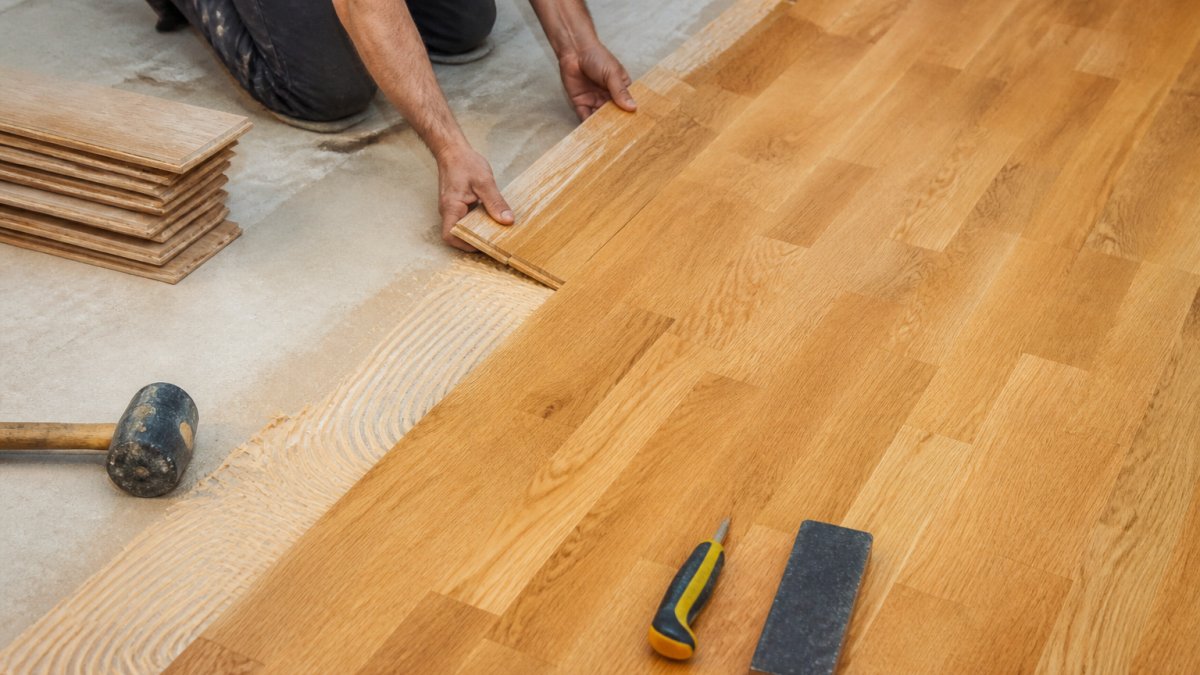
Luxury vinyl plank flooring is often considered a strong all-around choice for pet households. It handles claws, accidents and daily wear without the maintenance of natural wood. The planks click or glue down over most subfloors, clean up with a damp mop, and typically cost less than solid hardwood.
It is not flawless. Heavy furniture can dent it, and cheap planks with a thin wear layer scratch like any other floor. Buy the thicker product and you avoid most complaints.
Wear Layer Thickness and What It Means for Claws
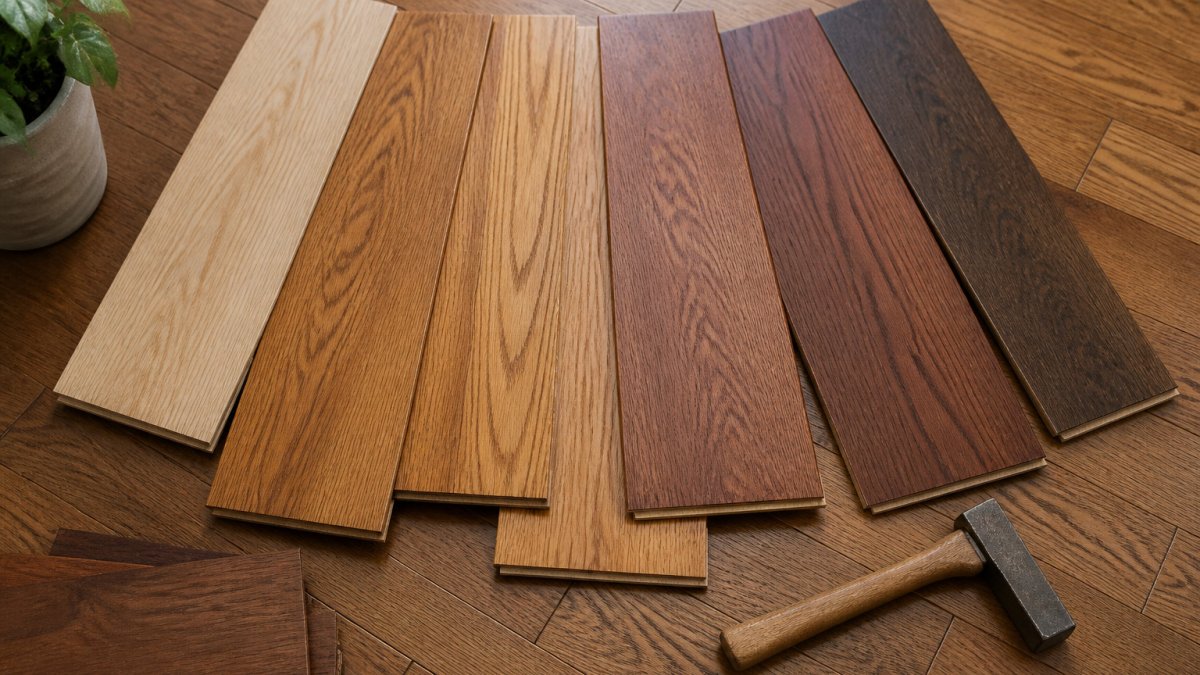
The wear layer is the clear top coat that takes the abuse. A thicker wear layer resists claw marks and scuffs better than a thin one. For dogs, choose a plank with a substantial wear layer and a textured surface; smooth, high-gloss finishes show every scratch. Matte and wire-brushed textures hide wear far better in a busy home.
Best Flooring for Dogs That Pee: Waterproof Beats Water-Resistant
Waterproof flooring is generally the better choice for dogs that have accidents indoors. Waterproof planks and tiles keep moisture on top of the surface, while water-resistant products only slow absorption. A single accident left overnight can still damage a water-resistant floor at the seams.
Watch out: "water-resistant" laminate and engineered wood can swell at the edges after repeated accidents, and that damage is often permanent. If your dog has accidents, choosing a fully waterproof surface is the safer option. For wood floors already damaged by moisture, our guide on how to restore hardwood floors after water damage walks through the repair options.
Best Flooring for Pets and High Traffic: Where Wear Layer and Core Matter
High-traffic pet homes punish the core as much as the surface. A rigid core keeps planks from flexing under running paws, and a thick wear layer handles the scratches. Together they decide whether the floor lasts five years or fifteen.
Entryways, hallways and kitchen paths take the worst of it. If your household sees constant foot traffic plus a large dog, prioritize a rigid-core plank with a textured finish. For a deeper look at durability in busy homes, see our guide to choosing durable wood for high traffic.
Best Flooring for Dogs' Nails: Scratch Resistance Compared
Scratch resistance separates floors that survive a dog's nails from floors that show every step. Damage from claws depends on three things, the hardness of the top surface, the thickness of the protective layer above the pattern, and whether the finish is glossy enough to reveal every mark.
Here is how the common materials actually compare under claws:
- Porcelain tile. The hardest common surface, rated 7 or higher on the Mohs hardness scale, so claws cannot cut it. Damage shows up as chips at edges and grout wear, not scratches.
- Luxury vinyl plank. A vinyl wear layer is softer than porcelain but thick enough to resist claws when specified correctly. A 20-mil wear layer is the practical minimum for a large dog; 12-mil planks are fine for cats and small dogs but show scuffs in heavy traffic.
- Laminate. The melamine wear layer is hard and resists claws well until it chips or the core swells. Once the top layer fails, the printed pattern underneath is exposed and cannot be repaired.
- Engineered hardwood. A real wood veneer with a factory finish. The finish resists light clawing, but a large dog's nails can dent the wood beneath it, and dents cannot be sanded out without refinishing the veneer.
- Solid hardwood. The softest option in this comparison. Claws and grit scratch the finish, and dents follow. It can be refinished multiple times, which is its saving grace, but each refinish removes wood.
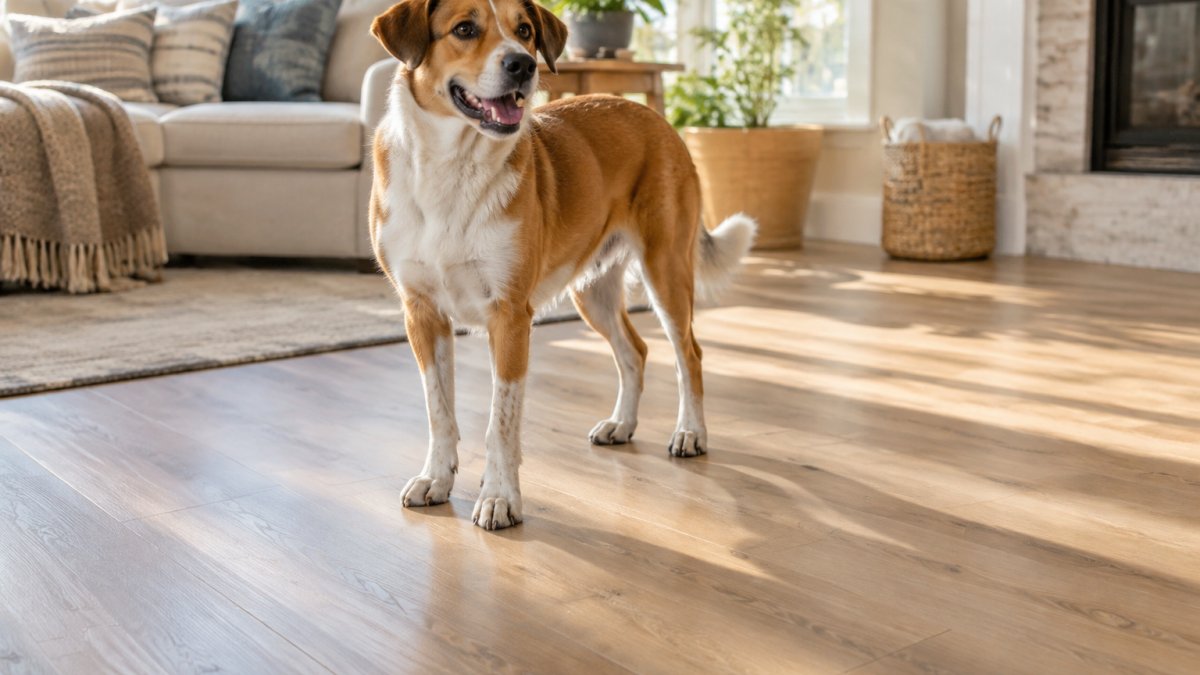
The finish matters as much as the material. A matte or wire-brushed texture scatters light and hides fine claw marks; a high-gloss surface acts like a mirror and shows every pass. For finish comparisons, read our guide on how to choose the best hardwood floor finish.
Watch out: a thick wear layer does not make a floor scratch-proof. Grit trapped under paws acts like sandpaper on any finish, so a doormat and regular sweeping do more for scratch resistance than upgrading the plank alone.
Tile, Laminate and Engineered Hardwood: Where Each One Wins and Loses
Each material has its own strengths and trade-offs. Choosing well means understanding where each one performs best and where it falls short.
Ceramic and Porcelain Tile
Porcelain tile is among the hardest common flooring types and is generally resistant to claws, accidents and stains. Ceramic tile costs less but chips more easily. Both feel cold and hard underfoot, and grout lines trap dirt. Use tile in mudrooms, kitchens and pet feeding areas rather than entire living spaces.
Laminate and Hybrid Resilient Flooring
Laminate offers scratch resistance at a low price, and hybrid resilient flooring adds a waterproof core. Laminate's weakness is moisture: standing water seeps into the seams and swells the core. Hybrid planks address that issue and can be a good value for pet homes on a budget.
Engineered Hardwood and Refinished Solid Wood
Engineered hardwood gives you a real wood surface with better stability than solid planks. It resists moisture shifts and can often be refinished once. Solid wood can be refinished multiple times, which matters in an older home with worn floors. Both need a tough finish and quick cleanup after accidents. If you are weighing engineered planks, our articles on whether engineered hardwood is worth the investment and whether you can refinish engineered wood floors cover the trade-offs.
Traction, Noise and Comfort Under Paw
Traction keeps older dogs and cats steady on their feet. Slick, high-gloss surfaces cause slips, especially for senior pets with joint issues. Textured planks, matte finishes and area rugs give paws something to grip.
Noise matters too. Hard surfaces amplify the click of nails, and a thick underlayment muffles it. If comfort and quiet rank high, choose a resilient plank with an attached pad and add rugs in the rooms your pet uses most.
What Pet Flooring Really Costs Over Its Life
Total installed cost and lifecycle value matter when comparing options. Pricing depends on the material, room size, subfloor condition and trim work, so a quote is the best way to get accurate figures.
Pricing depends on the material, room size and subfloor condition, so we recommend requesting a quote for current pricing. Weigh the purchase price against how often you will repair or replace the floor, since a higher upfront cost for a durable, waterproof plank may reduce the need for early replacement.
Watch out: the cheapest plank per square foot is not always the cheapest floor over its life. A thin wear layer can wear through sooner, while a thicker plank may hold up longer.
Frequently Asked Questions
What type of flooring is most durable for pets?
Porcelain tile and luxury vinyl plank with a thick wear layer are generally well suited to pet households. Porcelain resists claws and water completely but is hard underfoot. LVP with a wear layer of 20 mil or more handles daily scratching and standing water from accidents, and it is warmer and quieter than tile. Laminate ranks close behind on scratches but swells if liquid sits on its seams, so it suits accident-free households better than puppies or senior dogs.
Is LVP or laminate better with dogs?
LVP is often a practical choice for dog households because its core is waterproof. A dog that pees or knocks over a water bowl can damage laminate seams, while LVP shrugs off standing moisture. Laminate has a hard, scratch-resistant surface that handles nails well, and it often costs less. If your dog is house-trained and you want the lowest price, laminate works. If accidents, drool or muddy paws are part of daily life, choose LVP.
Will dog pee ruin vinyl plank flooring?
Quality luxury vinyl plank flooring resists urine on its surface, but the risk sits at the seams and edges. Liquid that pools there can wick underneath if the planks are not tight or the subfloor is uneven. Wipe accidents up promptly, use an enzyme cleaner rather than ammonia, and have the installation checked for gaps. Well-installed waterproof LVP with sealed seams handles occasional accidents without damage.
What flooring holds up best to dog nails?
Tile and vinyl plank with a wear layer of at least 20 mil are generally resistant to nail scratches. Laminate also performs well thanks to its hard overlay. Engineered hardwood and solid wood show scratches sooner, especially with large or high-energy dogs, though a factory finish and area rugs in run zones extend their life. Keep nails trimmed and place mats at doorways where dogs turn and dig in.
Choosing a pet-proof floor comes down to matching the surface to your animal and your traffic, then installing it correctly so seams and edges hold up. Freddie Sanchez Hardwood Floors brings expert wood floor installation, high standards of craftsmanship and durability, and constant communication from the first walkthrough to the final inspection. Get a free quote from Freddie Sanchez Hardwood Floors and start with a floor that holds up to every paw in the house.